
Reviewed · GOBUSTAN AND MUD VOLCANO TOURS
All inclusive! Qobustan, Mud Vulcano, Ateshgah & Yanardag Fire Mountain Tour
Qobustan’s ancient carvings and Azerbaijan’s bubbling mud volcanoes make a striking pair, and this private day tour adds two fire sites near Baku. In about seven hours, you move from Stone Age rock art to flames fed by natural gas.
I like the private pickup and transport, which saves you from sorting out several distant sights on your own. I also like the unusual mud-volcano transfer: the rough track calls for a Soviet-era Lada, turning a short drive into a small safari adventure.
The main point to check is the guide and lunch arrangement. Guides such as Farhad and Ertunc have been praised for being friendly and well informed, while Pasha’s English was still developing. Lunch is included, but its timing and quality may not suit everyone.
Key points to know before booking
- Qobustan packs real prehistoric interest: More than 6,000 carvings cover a site used by people between 5,000 and 40,000 years ago.
- The Lada ride is part of the fun: A rough road to the mud volcanoes requires a change from the main tour vehicle.
- You get four major stops: Qobustan Museum, rock art, mud volcanoes, Ateshgah Fire Temple, and Yanardag.
- The tour is private: Only your group participates, with pickup from Baku and a 10:00 am start.
- The price includes the basics: At $120.65 per person, lunch and entrance fees are included, along with private transport.
- Allow for a brisk pace: The schedule fits a lot into seven hours, so some stops may feel tightly timed.
Why this Baku day trip works
Baku is a modern capital with grand architecture, but some of Azerbaijan’s most unusual sights lie beyond the city. This tour gives you a quick way to reach four very different places without piecing together taxis, buses, museum tickets, and rural transport.
The day has a clear theme: earth, fire, and early human life. At Qobustan, you see where people carved animals, symbols, and scenes into stone. At the mud volcanoes, the ground bubbles and shifts. At Ateshgah and Yanardag, natural gas explains Azerbaijan’s old reputation as the Land of Fire.
You start at 10:00 am, and the full outing lasts about seven hours. That makes it a useful choice if you have limited time in Baku or want to reserve your evening for the city. The schedule is active but not built around long hikes. A moderate level of fitness is requested, and you should expect outdoor walking at several stops.
The tour is private, not a large shared coach trip. That matters because you can ask questions, keep your own group together, and avoid collecting strangers at several hotels. The tradeoff is price: $120.65 per person is easier to justify for two or more people sharing a private outing than for a solo visitor.
More fire-site trips from Baku:
- Baku: Gobustan, Volcanoes, Fire Temple and Yanardag Day Trip
★ 4.7 · 433 reviews - Gobustan & Mud, Fire Temple, Burning Mountain (Group & Private)
★ 4.5 · 418 reviews - Gobustan-Mud Volcan-Fire Temple and Mountain Tour/Entrance inc
★ 5.0 · 267 reviews
Qobustan Museum and 40,000 years of rock art
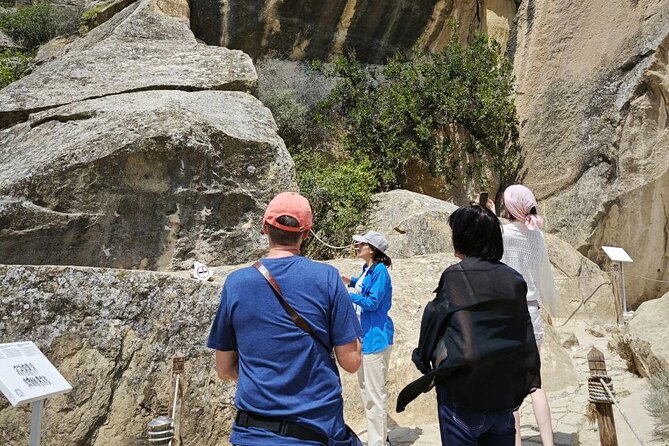
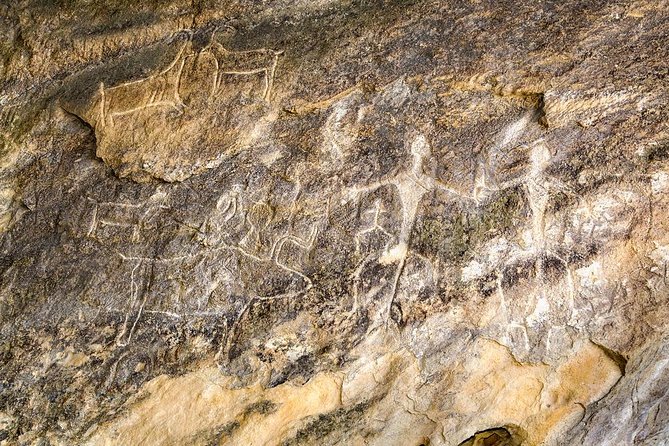
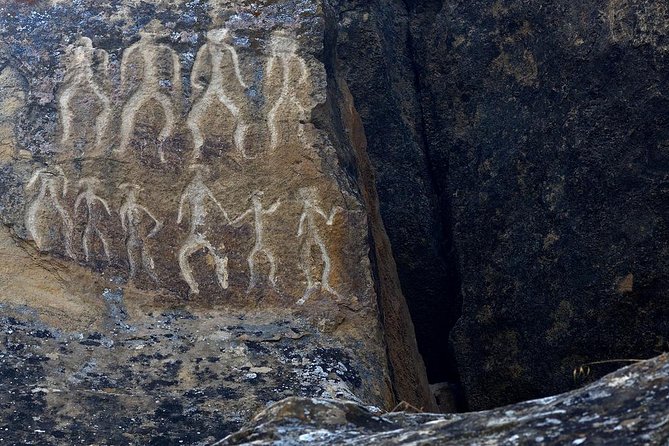
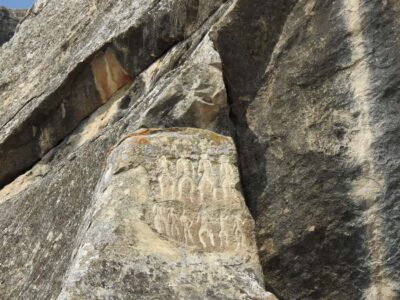
Qobustan is about 60 kilometers from central Baku, so the first part of the morning is a road trip rather than a quick city transfer. The reward is a site with more than 6,000 rock engravings, dating from roughly 5,000 to 40,000 years ago.
The Qobustan National Museum helps explain what you are seeing before you walk among the carvings. It presents the area as a long-used home, not just a collection of pictures on rocks. Remains of caves, settlements, and burials show that people used this place intensively during the wetter period after the last Ice Age.
You may see carvings of animals, people, and scenes linked to daily life. Their value is not only artistic. They offer clues about how early communities viewed hunting, movement, ritual, and the world around them.
Plan on about two hours here, including the museum and outdoor site. That is a sensible amount of time for a first visit. If prehistoric sites are your main interest, you may wish for longer. If you prefer a fast overview, the stop gives you enough context without taking up the whole day.
The site is part of a UNESCO-listed cultural area, which adds weight to the visit. Still, the experience depends on your guide explaining the markings clearly. Ask for help identifying the most important carvings rather than walking past them as ordinary scratches in the stone.
The Lada ride to Azerbaijan’s mud volcanoes
The mud volcanoes are one of the tour’s most distinctive stops. Azerbaijan is known for having many of these formations, where underground gases and mud push toward the surface. They are not fiery volcanoes. Their appeal is the strange, active ground and the otherworldly shapes it creates.
The road is poor, so you leave the main vehicle and transfer to a Soviet-era Lada. This is not luxury transport, but it is exactly the sort of practical solution that makes the stop memorable. The rough ride becomes part of the experience, especially for children and anyone who enjoys a little mechanical adventure.
The visit lasts about 30 minutes. That is enough for a look and photographs, but it is not a long geological field trip. Mud conditions and weather can affect what you see, so keep your expectations sensible. The tour requires good weather, and poor conditions can lead to a different date or a full refund.
This is also the least polished part of the day. The Lada transfer can feel cramped or bumpy, and the rural road is not designed for comfort. I would treat it as a fun local adventure rather than a flaw. If you need smooth, predictable transport at every stage, this stop may test your patience.
Ateshgah Fire Temple and the story of sacred flames
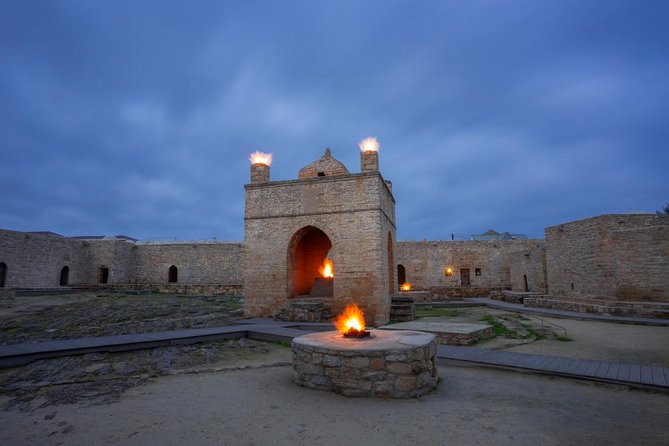
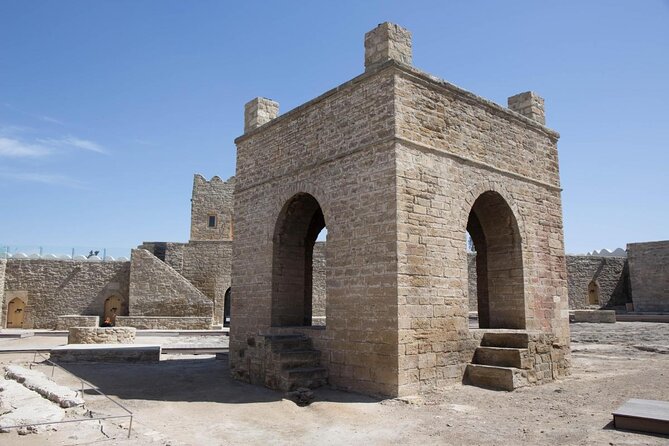
After Qobustan, the tour turns toward the Absheron Peninsula and Ateshgah Fire Temple. The site is linked to natural gas flames that once burned through openings in the ground. Historical accounts describe seven flame-producing holes, and local worship took place here before the temple associated with Indian fire worship was built in the late 17th century.
The temple is important because it brings several strands of regional history together. It reflects local fire worship, the movement of Indian communities, and the practical reality of living in an area where gas could ignite naturally.
You have about an hour at Ateshgah. That gives you time to examine the central fire area, the surrounding rooms, and the structure’s enclosed design. A guide adds real value here because the building alone does not explain the religious and cultural background.
The site is easier to appreciate after Qobustan. The first stop shows the very early human past. Ateshgah then shows how people gave spiritual meaning to the natural forces beneath their feet.
One useful expectation: this is a historic fire temple, not simply a place to see a large open flame. The site’s appeal comes from its setting, architecture, and story. The natural fire display may not be the sole focus of what you see, so listen for the explanation of how the temple functioned.
Other petroglyph and mud volcano runs from Baku:
- Baku: Gobustan, Mud Volcano, Fire Mount, Temple Lunch Entry
★ 4.9 · 3,246 reviews - BEST Gobustan, Volcanoes & Absheron Fire Tour (Group or Private)
★ 5.0 · 1,254 reviews - Gobustan and Absheron tour (All inclusive)
★ 5.0 · 1,014 reviews - Baku: Gobustan Absheron Tour Entry Tickets included
★ 4.9 · 329 reviews
Yanardag, the hillside that keeps burning
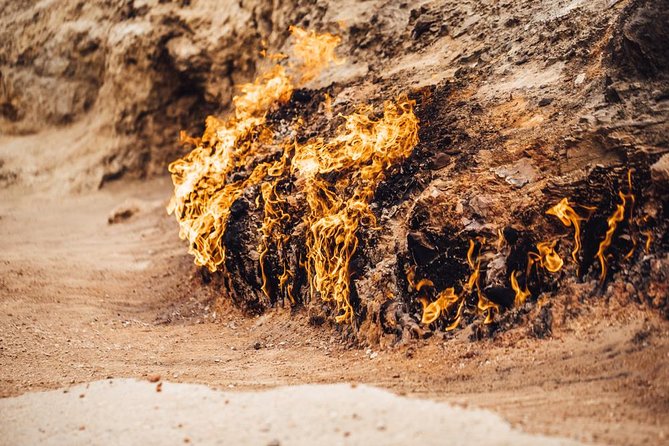
Yanardag, or Fire Mountain, is the final major stop. Here, natural gas burns continuously from a thin sandstone layer on a hillside near the Caspian Sea. The flames can rise about three meters, making this one of Azerbaijan’s most direct encounters with its natural gas reserves.
The visit lasts about an hour. Compared with Qobustan, it is a simpler stop: you watch the flames, take photographs, and hear how gas reaches the surface. The power of Yanardag comes from its plainness. There is no machine creating the fire and no staged performance. The hillside burns because of what lies below.
Seeing Yanardag after Ateshgah gives the day a useful progression. At the temple, fire was given religious meaning. At Yanardag, you see the natural force itself. That contrast helps explain why fire has played such a large part in Azerbaijan’s identity.
The site can be windy, hot near the flames, or less dramatic depending on conditions. You should not expect a huge wall of fire. The flames rise from a limited stretch of hillside, but the fact that they burn continuously makes the stop worthwhile.
Lunch, timing, and what all-inclusive means here

The $120.65 price includes lunch and attraction entrance fees, so you do not need to budget separately for the main admissions. Two fridge magnet souvenirs are also advertised as part of the experience, though you should confirm these with the provider because one account reported not receiving them.
Lunch is the most uncertain part of the package. It is included, but the timing can come late in the day, and one account described the meal as oily and disappointing. Another described lunch as very good and served back in the city. The practical lesson is simple: do not book this tour solely for the meal, and consider carrying a small snack.
The route covers a lot of ground. Qobustan alone is roughly 60 kilometers from Baku, and the day also reaches the Absheron Peninsula. The seven-hour duration includes driving, visits, the vehicle change, and lunch, so you should expect a steady pace rather than a slow day with long breaks.
A few accounts also describe feeling rushed at times. That is understandable given the number of stops. The tour works best if you want a strong first look at the region, not if you want to study every museum display or sit quietly at each site.
The guide can shape the entire day
The company uses different guides, and names associated with this route include Farhad, Ertunc, and Pasha. Farhad is described as both a good driver and an informative, soft-spoken guide. Ertunc is also described as friendly and well informed.
Pasha has been praised for being patient and helpful, though his English was not yet fluent. That distinction matters because Qobustan and Ateshgah benefit from explanation. The sights are still worth seeing without a perfect guide, but you may get less historical detail if communication is difficult.
Because this is a private tour, you can ask the guide to clarify points or adjust the pace within the fixed schedule. At the same time, the route includes several timed stops, so do not assume you can add extra attractions around Baku.
Communication before pickup is important. The driver is expected to keep the contact line open and arrive on time, but you should make sure your pickup details and preferred language are clear when booking.
Comfort, transport, and the practical tradeoffs
Private transport is one of the strongest parts of this experience. You are not managing several separate transfers, and pickup from Baku makes the morning straightforward. The vehicle is described as comfortable for the main route, but the Lada section is intentionally rougher.
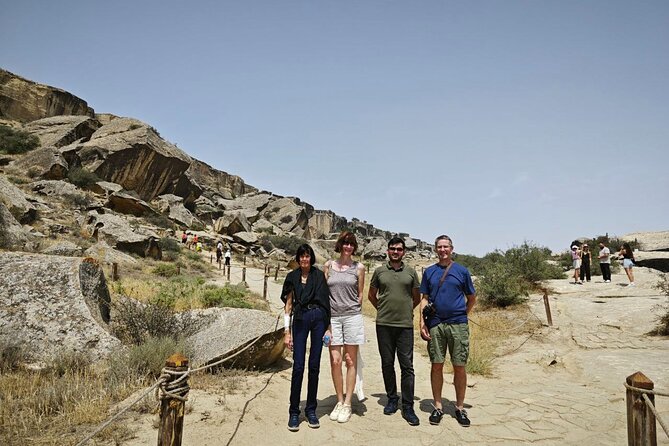
Wear shoes suitable for outdoor walking and uneven ground. Qobustan and the mud volcano area are not city pavements, and the tour asks for moderate physical fitness. You do not need an extreme level of fitness, but you should be comfortable getting in and out of vehicles and walking around open sites.
The experience is offered with a mobile ticket and free cancellation up to 24 hours before the start time. Changes or cancellations inside that window are not accepted for a refund. Since weather affects the mud volcano stop and outdoor visits, poor conditions may lead to a new date or a full refund.
The tour is near public transportation, though the key convenience is the included pickup. The exact pickup details should be confirmed at booking, especially if you are staying outside central Baku.
Who should book this seven-hour tour?
I would choose this tour if you want to see the major sights outside Baku in one organized day. It suits first-time visitors, couples, families with older children, and small groups who value private transport over the lowest possible price.
Children may especially enjoy the mud volcano transfer and the fire at Yanardag. The day also gives younger visitors varied sights, rather than asking them to spend hours at one archaeological site.
History fans will appreciate the combination of prehistoric carvings, museum displays, a fire temple, and a natural gas flame. Nature-focused visitors will like the volcanoes and Yanardag, though neither stop is a long wilderness outing.
I would hesitate if you want a relaxed lunch, lengthy time at every stop, or a polished luxury vehicle throughout. I would also think twice if your main goal is a fluent, lecture-style English guide. Guide quality can vary, and the schedule leaves little room for slow exploration.
Should you book the Qobustan and fire sites tour?
Book it if you want maximum coverage in a single day and like unusual sights more than standard city sightseeing. The best parts are the UNESCO-listed Qobustan carvings, the bumpy Lada ride to the mud volcanoes, and the contrast between Ateshgah’s sacred fire and Yanardag’s natural flames.
At $120.65 per person, the value depends on your group size. For a private group, the price covers transport, admissions, lunch, and a large amount of driving. For one person, it is a much bigger spend, but it still saves you the trouble of arranging four separate stops.
Go in with realistic expectations about lunch, the pace, and the guide’s English. Carry a snack, wear practical shoes, and confirm the souvenir promise if it matters to you. With those points in mind, this is a strong choice for seeing Azerbaijan’s most unusual sights beyond Baku in a compact, well-organized day.
FAQ
Where does the tour begin?
The tour begins with pickup in Baku at 10:00 am.
How long does the experience last?
The tour lasts approximately seven hours.
Is the tour private?
Yes. Only your group participates in the activity.
Are entrance fees included?
Yes. Entrance fees for the listed attractions are included.
Is lunch included?
Yes, lunch is included in the tour price.
Do I need to change vehicles?
Yes. You change to a Soviet-era Lada for the rough road to the mud volcanoes.
How much walking is involved?
A moderate level of physical fitness is recommended. You will walk at outdoor archaeological and fire-related sites, but the tour is not described as a strenuous hike.
Can I cancel for a refund?
You can cancel up to 24 hours before the start time for a full refund. Cancellations or changes made less than 24 hours before the start time are not accepted, and poor weather may result in a different date or a full refund.
Just added in Baku
- From Baku: Guba-Khinalig Day Trip★ 5.0 · 12 reviews
- From Baku: Gobustan Rock Art and Mud Volcanoes Tour★ 5.0 · 6 reviews
- From Baku: Gobustan 4×4 Private Tour – Private★ 5.0 · 3 reviews
- From Baku: Gobustan Day Tour★ 5.0 · 7 reviews
- From Baku: Gobustan Guided Day Trip with Transfers★ 3.9 · 11 reviews
- From Baku: Shamakhi and Gabala scenic tour★ 5.0 · 4 reviews
- From Baku: Gabala Day Trip★ 4.0 · 11 reviews
- From Baku: Gabala Cable Car, Nohur Lake & Juma Mosque Trip★ 4.5 · 6 reviews
Gobustan and Mud Volcano Tours, compared.
Gobustan, Mud Volcano, Fire Mount, Temple Lunch Entry
Read our review →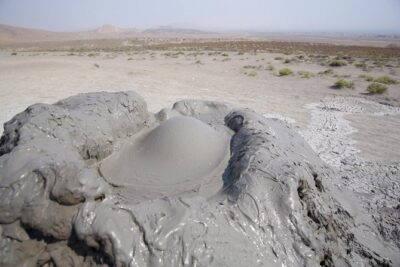
BEST Gobustan, Volcanoes & Absheron Fire Tour (Group or Private)
Read our review →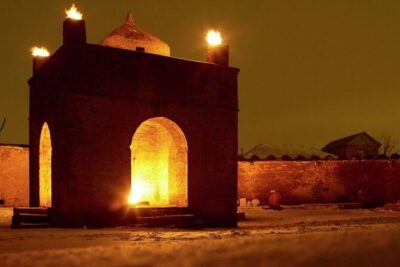
Gobustan, Volcanoes, Fire Temple and Yanardag Day Trip
Read our review →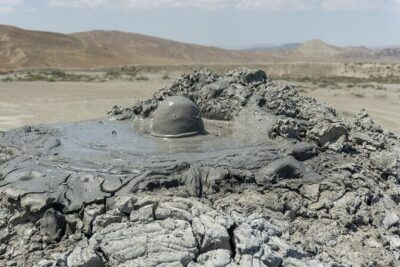
Gobustan & Mud, Fire Temple, Burning Mountain (Group & Private)
Read our review →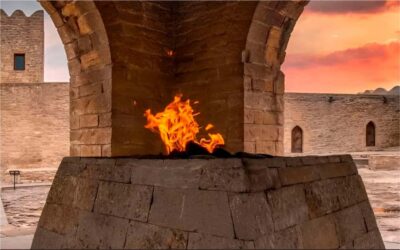
Mud Volcan-Fire Temple and Mountain Tour/Entrance inc
Read our review →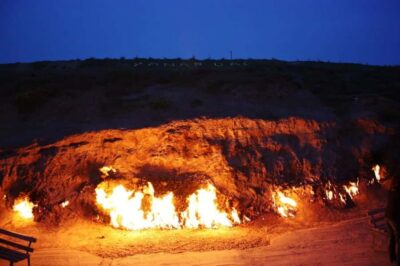
Gobustan Mud Volcanoes Temple & Entry tickets included
Read our review →Browse the lists this tour appears in