
Reviewed · BAKU CITY TOURS
The Best Baku City Tour
Baku is at its best when old stone walls, oil-era mansions, Soviet planning, and glossy modern towers appear in the same view. This tour gives you that contrast in a compact three to four-hour walk, beginning in Icherisheher and reaching the Caspian waterfront and Highland Park. I like the mix of major sights and lesser-known stops, especially the miniature book museum and Palace of Happiness. I also like that guides such as Abdullah, Mohammad, and Huseyn Ourbakli have been praised for explaining both past events and present-day life in clear, friendly terms.
The main caution is that the advertised route is ambitious for a few hours. One visitor reported missing several listed stops, so you should confirm the exact plan with your guide before setting out. The tour is also more useful as an overview than as a slow visit to every monument.
Key points to know before booking
- A private tour for $22.10 per person: The price is strong value if you want a personal introduction to Baku without paying for a full-day excursion.
- A wide-ranging Old City route: You see the Maiden Tower, Palace of the Shirvanshahs, Muhammad Mosque, miniature books, and other historic buildings.
- More than a standard monument walk: The route includes the Palace of Happiness, former Taghiyev School for Girls, Fountains Square, and Caspian Boulevard.
- Strong guide-led interpretation: Abdullah is frequently named, with Mohammad and Huseyn Ourbakli also associated with highly praised tours.
- Some admission fees are separate: The Maiden Tower and Armenian Church are marked as not included, while several other stops are viewed from outside or have included entry.
- A route with real walking demands: You need moderate physical fitness, and the steep approach to Highland Park can involve many stone steps.
Why this Baku tour makes sense for a first visit
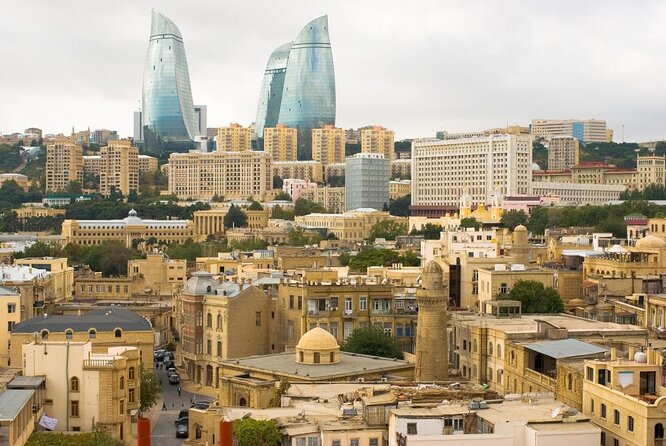
I would use this tour to get your bearings fast. Baku can feel like several cities placed side by side: the medieval walls of Icherisheher, grand buildings paid for by the oil boom, Soviet-era public spaces, and the polished waterfront of the modern capital. A guide helps connect those pieces instead of leaving you with a collection of attractive facades.
The price is $22.10 per person, which is modest for a private activity lasting roughly three to four hours. The value depends on what you want. If you prefer one or two major sights explored at length, this route moves too quickly. If you want a broad first look and useful historical context, it covers a lot for the money.
The experience begins and ends at Icherisheher, the Old City. It is a private activity, so only your group participates, although the exact guide and pace can vary. The tour is supplied as a mobile ticket, and confirmation is issued when you book.
The guides are a major part of the appeal. Abdullah is repeatedly praised for making history easy to follow and for discussing modern Azerbaijan as well as earlier periods. Mohammad is described as offering an insider view beyond the main tourist zone, while Huseyn Ourbakli is noted for patient, clear explanations. These names are useful when you confirm your booking, but you should not assume a particular guide is guaranteed unless the provider says so.
Other city days booked in Baku:
- From Baku: Gabala and Shamakhi Tour (Free Baku City Tour)
★ 4.8 · 695 reviews - Old and Modern Baku Tour ( Day & Night Time)
★ 5.0 · 400 reviews - Baku City Group Tour
★ 4.9 · 197 reviews
Icherisheher and the mystery of Maiden Tower
The Maiden Tower is the natural opening point. It rises from the southern edge of Baku’s walled Old City, dark and solid against the lighter stone around it. The tower is one of Azerbaijan’s best-known symbols, yet its original purpose remains uncertain. No surviving written record clearly explains when it was built or why it received the name Qiz qalasi, or Maiden Tower.
You get about 10 minutes here, and admission is not included. That timing suggests a guided exterior stop rather than a full museum visit. If climbing the tower matters to you, ask about the ticket and available time before the tour starts.
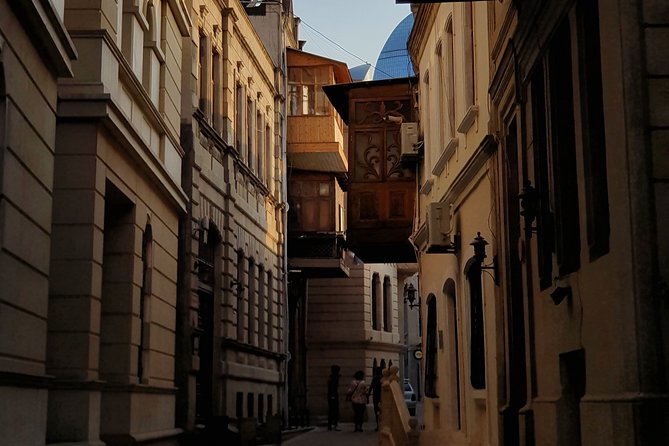
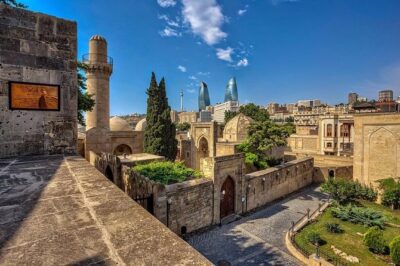
The surrounding Old City deserves more attention than the brief tower stop alone. Narrow lanes, defensive walls, courtyards, mosques, and palace buildings show how Baku developed before the oil boom changed its scale and fortunes. I like that the tour returns to this area several times, because the Old City is easier to understand after you have heard the basic story of Baku.
The Old City, including the Maiden Tower and Palace of the Shirvanshahs, became Azerbaijan’s first UNESCO World Heritage Site in 2000. You spend about 40 minutes in Icherisheher, though the total time may be spread across several nearby sights.
Palace of Happiness and Baku’s oil-era fortunes
The Palace of Happiness is one of the route’s more unusual buildings. Millionaire Murtuza Mukhtarov commissioned it as a Valentine gift for his second wife, who admired a similar building seen during a trip through Italy. He hired the Qasumov brothers to create a copy.
The story is more than a romantic curiosity. Mukhtarov rose from a modest background and became a major supplier of equipment to Baku’s growing oil industry. His personal success reflects the sudden wealth that reshaped the city in the late nineteenth and early twentieth centuries.
You spend about 10 minutes here, with admission included. This is a quick architectural and historical stop, not a long interior visit. It works well for people who enjoy the human stories behind grand buildings. If you only want famous monuments, it may feel like a detour, but I consider it one of the stops that gives the tour personality.
Taghiyev School and Azerbaijan’s early parliament
The former Taghiyev School for Girls now houses the Institute of Manuscripts of Azerbaijan. Its past reflects several major turns in the country’s modern story.
From 1901 to 1918, it served as the Empress Alexandra Russian Muslim Boarding School for Girls. In late 1918, philanthropist Haji Zeynalabdin Taghiyev gave the building to the parliament of the first Democratic Republic of Azerbaijan. That parliament, which operated until the Bolshevik invasion in April 1920, was the first European-style parliament in the Muslim world.
The stop lasts about 15 minutes and admission is included. You may not have time for a full interior study, but the building gives your guide a chance to explain education, philanthropy, national identity, and the brief life of Azerbaijan’s first republic.
This is a good example of why a guide helps in Baku. The architecture alone is appealing, but the building becomes much more memorable once you understand how its role changed within less than two decades.
Same base, a different sort of day:
- Baku: Gobustan, Mud Volcano, Fire Mount, Temple Lunch Entry
★ 4.9 · 3,246 reviews - Baku: Guba, Shahdag, Laza & Lunch w/ Free City & Night Tour
★ 4.8 · 1,455 reviews - BEST Gobustan, Volcanoes & Absheron Fire Tour (Group or Private)
★ 5.0 · 1,254 reviews - Gobustan and Absheron tour (All inclusive)
★ 5.0 · 1,014 reviews
A tiny museum with a very large collection
The Museum of Miniature Books is a welcome change of pace. It opened in 2002 and displays a collection assembled by Zarifa Salahova over 30 years. The collection includes more than 6,500 books from 64 countries.
You spend about 20 minutes here, with admission included. The display includes miniature editions from post-revolutionary Russia and the Soviet period, along with books from Georgia, Ukraine, Belarus, Central Asia, Europe, and elsewhere. Works by writers such as Pushkin, Gogol, Dostoyevsky, Chukovsky, and Barto are included.
You should not expect a large museum visit. The attraction is compact, and the pleasure comes from looking closely at the tiny printed volumes. It is especially suited to anyone interested in books, collecting, or unusual museums. For families, it can also provide a short break from architectural history.
Muhammad Mosque and the layered Old City
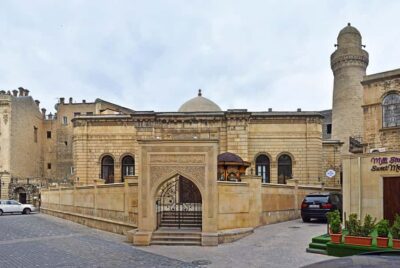
The Muhammad Mosque, also called Siniggala Mosque, dates to the eleventh century. The second name refers to its damaged minaret. In 1723, during the Russo-Persian War, a Russian shell struck the minaret after Baku refused to surrender. A storm then pushed the Russian ships away from the city, and local people interpreted the event as divine protection.
The stop lasts about 10 minutes, with admission included. The story is a reminder that Baku’s buildings carry traces of conflict as well as faith and daily life. The mosque is not simply an old structure to photograph. Its damaged tower records a moment when military power, religion, and local belief collided.
The nearby Juma Mosque also appears in the route. It has functioned as a mosque since the twelfth century, though the present building dates from 1899 and was funded by Baku philanthropist Khadja Shikhali Dadashev. Earlier religious use of the site may have included fire worship, a subject your guide can place within Azerbaijan’s long religious past.
The route also passes the former Armenian Church of St. Gregory the Illuminator, built in 1887. It survived the Soviet period but was closed and damaged after the Armenian population left Azerbaijan during the Nagorno-Karabakh conflict. It is not open to the public, and admission is not included. Treat this as an exterior historical stop, not a church visit.
Fountains Square and the city beyond the walls
Fountains Square gives you a change of setting. It is a central public space lined with shops, restaurants, hotels, boutiques, and places to sit. Its name comes from the many fountains installed during the Soviet period.
The square is useful for watching Baku’s everyday rhythm. The route description places it near the walls of Icherisheher and along Nizami Street, so you can see how the medieval core gives way to commercial central Baku.
This is also where the tour’s promise of local life matters most. A guide can explain what you are seeing beyond the monuments, including how the historic center fits into the modern city. One guide, Mohammad, is specifically associated with showing classic sights alongside areas where local residents live outside the main tourist zone.
Civic buildings and the grand Baku style
The Baku City Executive Power building was completed between 1900 and 1904. Polish architect Iosif Goslavski used Baroque forms and classical construction methods. Red brick imported from Italy and colored marble give the facade a formal, almost theatrical quality.
The building’s central emblem features three golden torches, a reference to Azerbaijan as the land of fire. You spend about 10 minutes here, with admission included. It is a short exterior-focused stop, but it helps explain the architectural confidence created by Baku’s oil wealth.
The Azerbaijan State Philharmonic Hall adds another layer. Built from 1910 to 1912, it was designed by Armenian architect Gabriel Ter-Mikelov in Italian Renaissance and German Rococo styles. Its design drew inspiration from the Monte-Carlo Casino. It began as a club for Baku’s wealthy elite and later became home to the Philharmonic Society, promoting Azerbaijani classical and folk music.
These buildings are valuable because they show Baku’s international connections. The city’s historic center is not only medieval stone. It also reflects European architects, local patrons, Russian imperial influence, and the wealth generated by oil.
Palace of the Shirvanshahs, the heart of the route
The Palace of the Shirvanshahs is the strongest reason to spend time in Icherisheher. The complex includes nine buildings, including courtyards, palace rooms, a crypt, cistern, baths, mosque, and pavilions. The restored spaces help you picture daily life within the palace walls.
About 20 minutes are set aside here, and admission is listed as free. That does not necessarily mean you will receive a long interior tour. The timing is enough for an overview, photographs, and a clear explanation of the complex, but you may want to return independently if medieval architecture is your main interest.
I would pay close attention here, even if you are not usually a palace person. The complex brings together government, religion, domestic life, water storage, burial, and defense in one compact setting. It is the stop that best anchors Baku’s older story.
Caspian Boulevard and the view from Highland Park
Baku Boulevard runs along the Caspian shore. The promenade began in 1909, during the era when oil barons were building mansions and the waterfront was being expanded piece by piece. Today, the parkway stretches for several kilometers and links major public spaces along the coast.
The route includes two short Boulevard stops, each about 15 minutes. The first is listed with included admission, while the later stop is free. These are not attraction-ticket visits. They are chances to walk, see the waterfront, and understand how Baku presents itself as a modern Caspian capital.
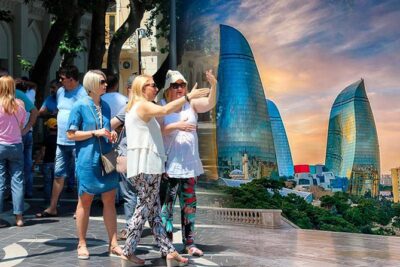
Highland Park gives you the best broad view of the city and bay. It is the highest point in Baku, with the Flame Towers, parliament area, and Alley of Martyrs nearby. You get about 30 minutes here, with no admission charge.
The physical effort matters. You can reach the park by funicular from the Boulevard in roughly seven to eight minutes, or climb the long stone stairs. The tour requires moderate fitness, so ask your guide how this part will be handled. If you have trouble with stairs, the funicular or a taxi may be preferable, but the supplied details do not confirm that either is included.
The view is a fitting final note. From above, Baku’s old walls, formal oil-era buildings, modern towers, and Caspian shore make sense as one city.
What the price includes, and what it does not
At $22.10 per person, this is a good buy for a private introduction, especially if you are traveling with a small group and want conversation rather than a large scheduled group. The strongest value comes from the guide’s explanations, not from paid admissions.
Several stops are included, including the Palace of Happiness, former Taghiyev School for Girls, Museum of Miniature Books, Muhammad Mosque, Old City, Baku City Executive Power building, and some of the palace and waterfront visits. The Maiden Tower and Armenian Church are marked as not included, and the Maiden Tower ticket is specifically excluded.
The route contains many stops, so keep your expectations realistic. You will see a broad selection of places, but you may not have time to enter every building or linger at every site. One report describes a tour that did not cover several advertised locations, which makes a quick confirmation worthwhile.
Who should book this tour?
I would recommend it to first-time visitors, short-stay visitors, couples, and anyone who wants a local guide to explain Baku’s complicated past and present. It also suits people who enjoy architecture but want more than a procession of facades.
It is less suitable if you want an unhurried museum day, guaranteed access to every interior, or a route built around one historical period. The pace and walking demands may also be tiring for anyone who has difficulty with stairs or uneven Old City streets.
Book if you want a compact overview, personal conversation, and a good mix of famous and less expected stops. Before the day begins, confirm the meeting time, guide’s name, route, and which admissions are included. Free cancellation is available up to 24 hours before the start time. Poor weather or failure to reach the minimum number of participants can lead to a new date or a full refund.
FAQ
How long does the Baku city tour last?
The experience lasts approximately three to four hours.
Where does the tour begin and end?
It begins at Icherisheher in Baku and ends back at the same meeting point.
Is this a private tour?
Yes. Only your group participates in the activity.
How much does the tour cost?
The listed price is $22.10 per person.
Is the Maiden Tower admission included?
No. Admission to the Maiden Tower is not included.
Is the tour suitable for people with limited mobility?
The activity requires moderate physical fitness. Highland Park may involve climbing long stone stairs, although the park can also be reached by funicular or taxi.
Is the tour available with a mobile ticket?
Yes. A mobile ticket is provided.
What happens if the weather is poor?
The experience requires good weather. If it is canceled because of poor weather, you will be offered another date or a full refund.
Just added in Baku
- From Baku: Guba-Khinalig Day Trip★ 5.0 · 12 reviews
- From Baku: Gobustan 4×4 Private Tour – Private★ 5.0 · 3 reviews
- From Baku: Gobustan Rock Art and Mud Volcanoes Tour★ 5.0 · 6 reviews
- From Baku: Gobustan Day Tour★ 5.0 · 7 reviews
- From Baku: Gobustan Guided Day Trip with Transfers★ 3.9 · 11 reviews
- From Baku: Shamakhi and Gabala scenic tour★ 5.0 · 4 reviews
- From Baku: Gabala Day Trip★ 4.0 · 11 reviews
- From Baku: Gabala Cable Car, Nohur Lake & Juma Mosque Trip★ 4.5 · 6 reviews
Baku City Tours, compared.
Best of Baku: 4-Hour City Tour Historic and Modern Landmarks
Read our review →
Historic and Modern Baku Tour ( Day & NIght Tour)
Read our review →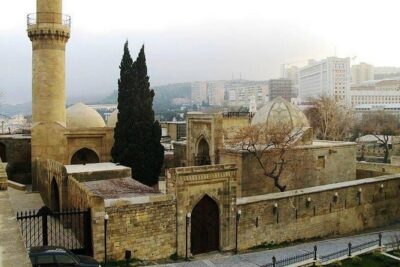
Baku City Tour with Heritage Tours / All Entrance Fees Inc
Read our review →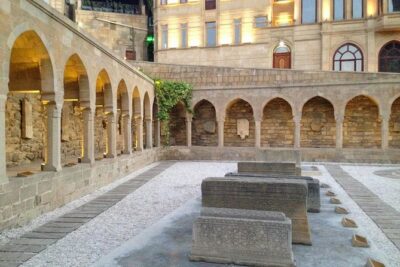
Baku Old City Tour (officially by Old City Tours)
Read our review →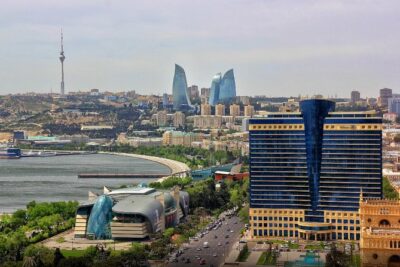
Browse the lists this tour appears in