
Reviewed · GOBUSTAN AND MUD VOLCANO TOURS
Baku: Gobustan, Mud Volcanoes, Ateshgah, and Yanardag Tour
Gobustan’s ancient carvings and Azerbaijan’s naturally burning hills tell two very different stories about the same country. One reaches back thousands of years to hunters, rituals, and early settlements; the other explains why fire became so important to local belief and culture. This tour links both chapters in a single, private day from Baku.
I like the private transport, which keeps a long day more comfortable and flexible, and I like the mix of museums, open-air sites, and religious history. Guide Mushfiq has been especially praised for his English and his passion for Azerbaijan’s past, even helping one couple find good dinner spots in Baku’s Old Town afterward.
The main drawback is cost planning. The $99 price does not include about $24 in admission fees, lunch, or personal expenses, and some outdoor walking at Gobustan and the mud volcanoes can be hot, dusty, and uneven.
Key points to know before booking
- Gobustan combines an interactive museum with ancient rock art, so you get context before seeing the carvings outdoors.
- The mud volcanoes are a close-up, active geology stop, but the ground may be rough and the visit is not suited to wheelchair users.
- Ateshgah explains the area’s fire-worship traditions, with cells, artifacts, and links to Zoroastrianism and Hindu worship.
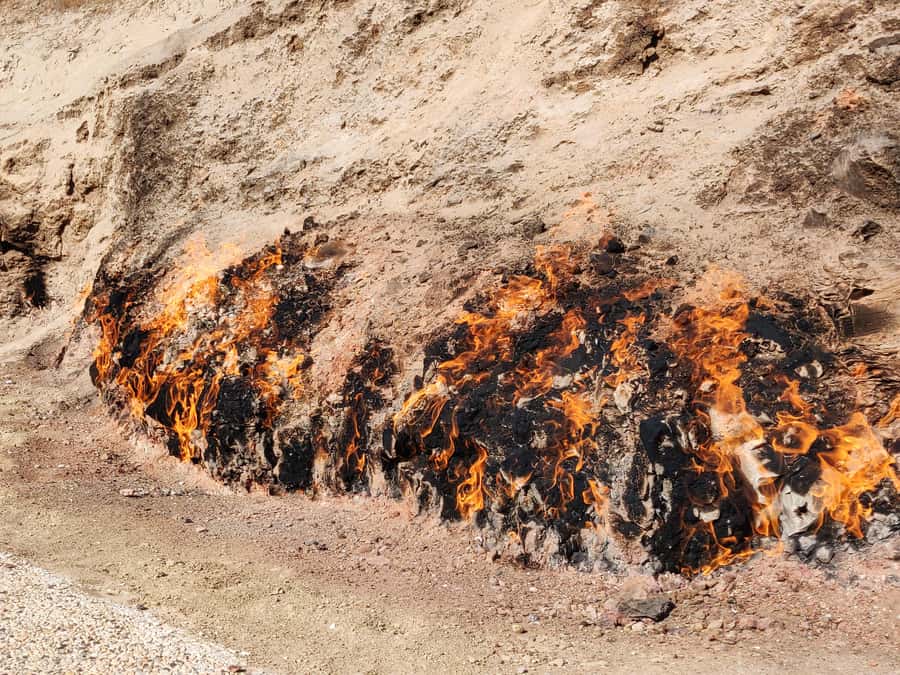
- Yanardag is a natural gas fire on a hillside, not a man-made flame, and it adds a striking final stop.
- The day lasts about nine hours, with pickup and drop-off at hotels or other locations in Baku.
- The real cost is closer to $123 before lunch, once the listed entry fees are added.
Why this full-day route works
Baku is polished, modern, and easy to explore on foot, but the Absheron Peninsula gives you a much older and stranger picture of Azerbaijan. This route moves from prehistoric carvings to bubbling mud, then to sacred fire. The stops are varied enough that the day does not feel like four versions of the same museum.
I also like the order. Gobustan comes first, when you are fresh enough for the outdoor rock site. The mud volcanoes follow as a short, unusual geology stop. After lunch in central Baku, the tour continues to Ateshgah and Yanardag, where fire becomes the central theme.
Because this is a private group with private transportation, you are not tied to the pace of a large coach. That matters on a nine-hour outing. You can ask questions, spend more time where the guide has the most to explain, and avoid the awkward stop-and-go feeling that often comes with a crowded group tour.
The English-speaking guide is an important part of the experience. Mushfiq is specifically praised for his clear English and strong grasp of Azerbaijan’s history. A good guide makes a real difference at Gobustan and Ateshgah, where bare stones and old walls need explanation before their importance becomes clear.
More fire-site trips from Baku:
- Baku: Gobustan, Volcanoes, Fire Temple and Yanardag Day Trip
★ 4.7 · 433 reviews - Gobustan & Mud, Fire Temple, Burning Mountain (Group & Private)
★ 4.5 · 418 reviews - Gobustan-Mud Volcan-Fire Temple and Mountain Tour/Entrance inc
★ 5.0 · 267 reviews
Gobustan Museum: start with the human story
Your first major stop is the Gobustan Museum, with about two hours set aside for the Gobustan visit and guided explanation. This is a smart opening because the museum prepares you for the rock carvings outside rather than leaving you to interpret them alone.
The museum uses touch screens and 3D panoramas to show how people lived in the area from roughly 5,000 to 20,000 years ago. You can also see historical material dating from about the fourth to second millennia BC. The displays cover the local natural setting, population, cultural development, and archaeological work.
I find this useful because petroglyphs can be easy to skim past. A carved animal, boat, dancer, or hunting scene may look simple until you understand that it records how early people saw their world. The museum gives you that basic frame before you stand among the rocks.
The indoor portion also gives you a break from the sun. Bring water and sunscreen, but do not assume the museum makes the whole morning easy. You will still continue outdoors to the rocks, where comfortable shoes matter.
Gobustan’s rock drawings and caves
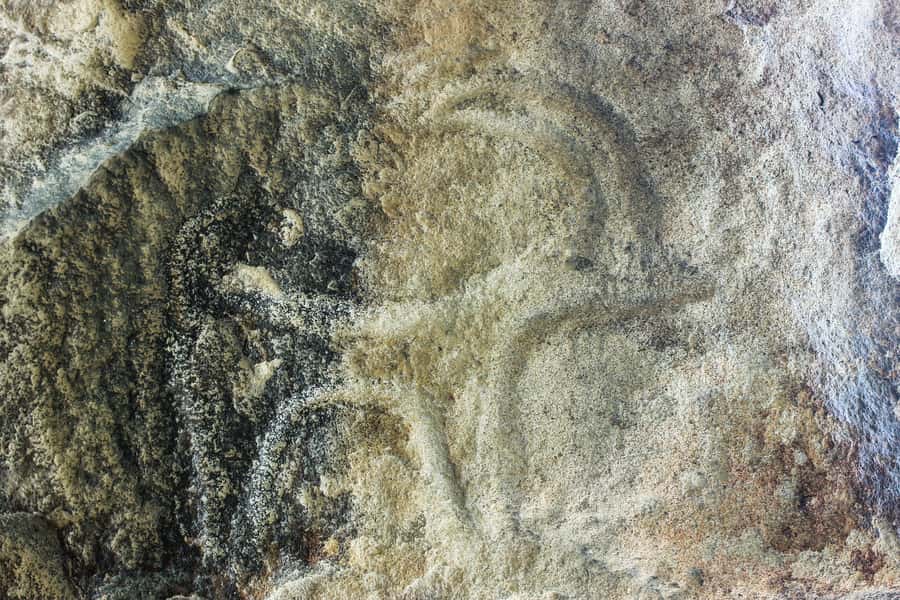
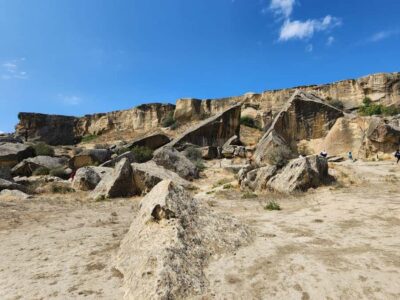
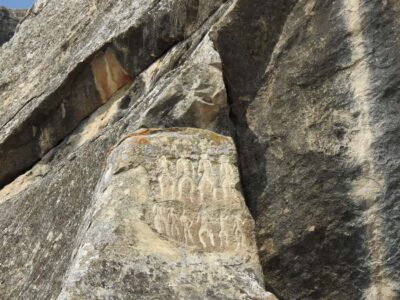
At the Gobustan rocks, you can see ancient carvings and caves spread through a dry, open setting. More than 6,000 rock drawings have been recorded in the area, with examples from different periods. Scientists began identifying and studying them in the 1930s.
This is the cultural heart of the tour. The drawings offer clues about ancient customs, beliefs, work, and daily life. You are not simply looking at old marks on stone. With a guide, you can consider what the images suggest about hunting, ceremony, movement, and the way people understood animals and nature.
The outdoor site is also where the tour becomes more physical. You may walk over uneven ground and climb near the rock formations. The supplied information does not give a precise walking distance, so plan for a proper outdoor visit rather than a quick roadside photo stop.
This portion will suit you best if you enjoy archaeology but do not need a large monument or grand building to hold your attention. The carvings are subtle. Their value comes from their age and meaning, not from size or decoration.
Take your camera, but keep it secondary to listening. The guide can explain why certain carvings matter, while the museum’s displays help connect them to a much wider period of human settlement.
Mud volcanoes: Azerbaijan’s strange natural feature
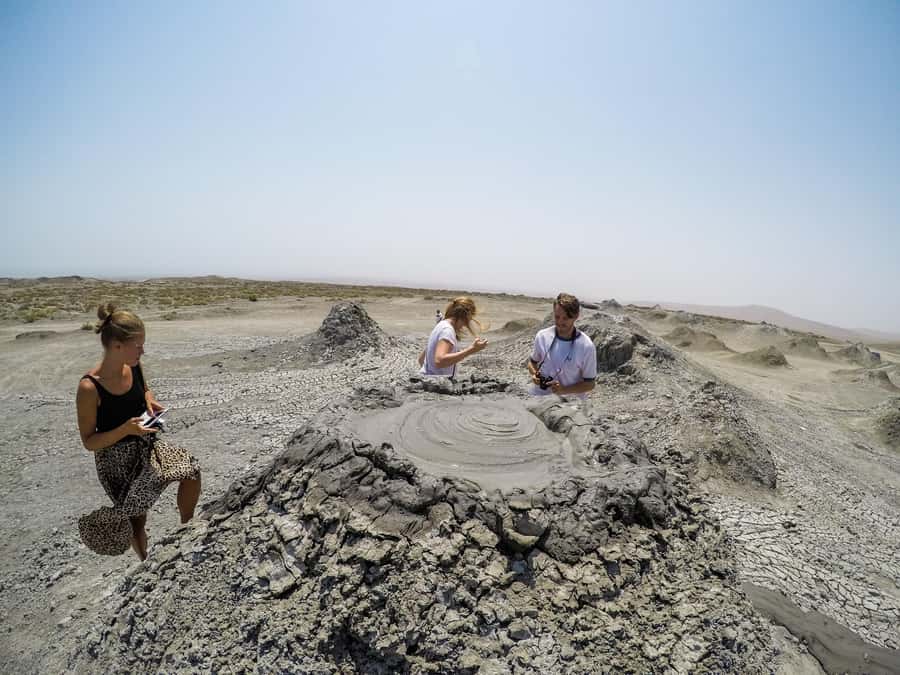
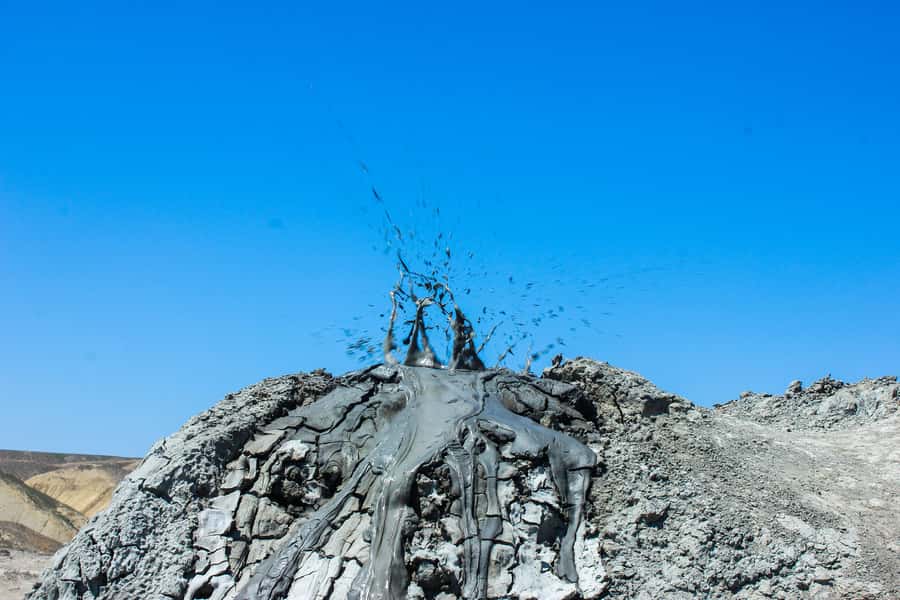
The mud volcanoes take about 40 minutes and provide a sharp change from the ancient art. Azerbaijan has about 350 of the world’s roughly 800 mud volcanoes, making the country a major center for this unusual geological feature.
These are not the lava-filled mountains you may picture. They produce mud, clay, gases, and small eruptions. The tour takes you close to active craters, where you can climb and look at the formations from nearby.
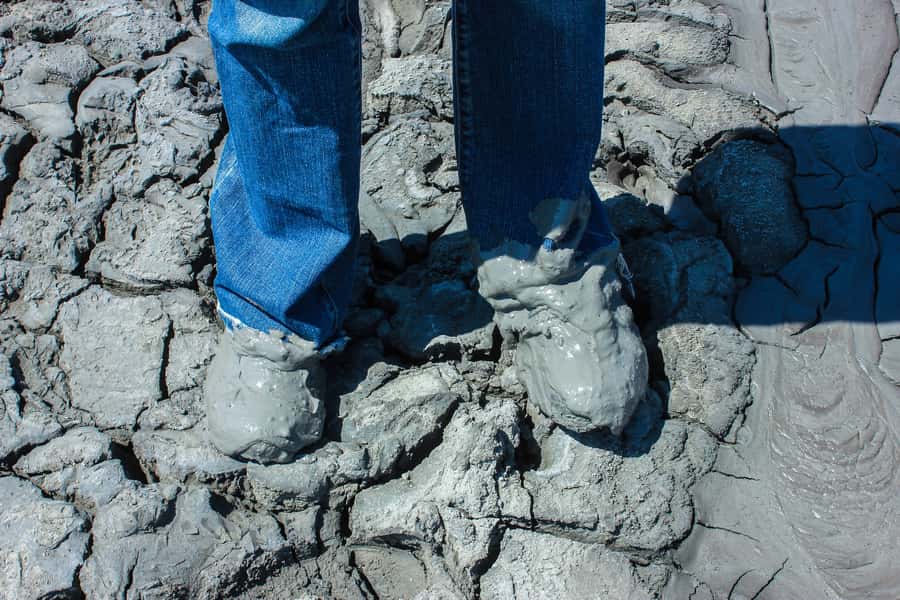
That close access is part of the appeal, but it is also the point where sensible footwear and care matter most. The ground can be uneven, and the visit is not suitable for wheelchair users. You should also expect an exposed outdoor setting, so water, sunscreen, and sun protection are practical choices.
The guide explains the reported uses of the mud and clay. Material from the volcanoes is used in chemical and construction industries and in pharmacology. Volcanic clay and mud are also used in treatments connected with the nervous system, skin conditions, and rheumatism.
Do not treat this as a spa visit or a medical treatment. The value here is seeing the source of the material and understanding its place in local industry and traditional use. The craters are the memorable part, especially if you have never seen a mud volcano before.
Other petroglyph and mud volcano runs from Baku:
- Baku: Gobustan, Mud Volcano, Fire Mount, Temple Lunch Entry
★ 4.9 · 3,246 reviews - BEST Gobustan, Volcanoes & Absheron Fire Tour (Group or Private)
★ 5.0 · 1,254 reviews - Gobustan and Absheron tour (All inclusive)
★ 5.0 · 1,014 reviews - Baku: Gobustan Absheron Tour Entry Tickets included
★ 4.9 · 329 reviews
Lunch break in Baku
After the first part of the tour, you stop for lunch in Baku city center. Lunch is not included, so you should budget separately. The information provided does not name a restaurant or include a set menu, which means the exact dining experience is not fixed.
That can be a plus if you prefer choice, but it also means you should ask your guide about the plan for the stop. A lunch break divides the day at a useful point. By then, you have completed Gobustan and the mud volcanoes, and you get time indoors before the afternoon fire sites.
One practical advantage of the private format is being able to clarify timing with your guide. If you are traveling with family or have dietary needs, ask about the lunch arrangement early in the day rather than waiting until everyone is hungry.
Ateshgah Fire Temple and the old fire traditions
Ateshgah is the tour’s strongest cultural link between place and belief. The complex was used as both a Hindu and Zoroastrian place of worship, and the first mention of the temple dates to the seventh century AD.
You will see a courtyard with cells for fire worshippers and historical exhibits connected with archaeological finds. The cells help you picture the site as a place where pilgrims and worshippers stayed, rather than just a preserved building to photograph.
The guide’s explanation is especially valuable here. Fire has a long connection with the Absheron Peninsula, where natural gas can rise through the ground. That physical feature helped shape religious practice and pilgrimage, including links with Iran and India.
The visit lasts about an hour, giving enough time for the main buildings and the exhibits without turning the stop into a rushed photo call. Ateshgah is also more structured than Gobustan, so it offers a calmer change after the rough outdoor ground.
I would pay close attention to the difference between the site’s ancient associations and its later historical use. The temple is not simply one unchanged religious building from one period. Its story includes Zoroastrian and Hindu connections, pilgrims, fire worship, and material found during archaeological work.
Yanardag and the Burning Mountain
The final featured stop is Yanardag, or Burning Mountain, a natural gas flame burning on a hillside on the Absheron Peninsula. The name means Burning Mountain, and the fire is described as having continued since ancient times.
Yanardag takes about 40 minutes. It is a compact stop, but the flame gives the day a memorable ending. Unlike the petroglyphs, which reward patient interpretation, the fire is immediate. You can see the natural gas flame for yourself and understand why this region became associated with sacred fire.
Pilgrims from Iran and India still come to the site. That detail gives Yanardag a human dimension beyond geology. You are looking at a natural feature, but also at a place shaped by belief and pilgrimage.
Keep your expectations measured. This is not a huge mountain covered in fire. It is a burning hillside, and the visit is relatively short. Its interest comes from the combination of natural gas, local tradition, and the way it completes the story begun at Ateshgah.
Taken together, Ateshgah and Yanardag make more sense than either stop alone. The temple shows how people built religious practice around fire. Yanardag shows the natural phenomenon that helped make fire so important here.
Price, included transport, and extra costs
The tour costs $99 per person. That includes hotel or other pickup and drop-off in Baku, private transportation, an accredited English-speaking guide, and visits to Gobustan, the mud volcanoes, Ateshgah, and Yanardag.
The listed admission fees are separate:
- Gobustan: $6
- Mud volcanoes: $9
- Ateshgah and Yanardag: $9
That adds about $24, bringing the known total to roughly $123 per person before lunch and personal spending. This is the number I would use when comparing the tour with other full-day options.
The value is strongest for two or more people who want a private vehicle and a guide focused on their questions. You are paying for a long route, transport beyond Baku, four distinct stops, and guided context. If you only want to see one site, the full-day price may feel high. If you want all four without arranging separate taxis or tours, the cost is easier to justify.
The private format also removes some uncertainty. Pickup and drop-off are included, and you finish back in Baku at Fountain Square. The tour does not include lunch, so keep cash or another payment method ready for that part of the day.
Who will enjoy this tour most
I would recommend this day to you if you want more than Baku’s central sights and enjoy history, archaeology, religion, and unusual natural features. It works particularly well for first-time visitors who want a broad introduction to Azerbaijan outside the capital.
Families with older children may like the variety. The mud volcanoes and burning hillside are easier to remember than a long sequence of formal museums, while the 3D displays at Gobustan can help younger visitors picture prehistoric life.
The tour is less suitable if you have limited mobility. The mud volcano stop involves climbing near craters, and the activity is not suitable for wheelchair users. You should also think carefully about the nine-hour length and the amount of outdoor exposure.
Wear comfortable shoes and bring water, sunscreen, and a camera. Those are not decorative suggestions. Gobustan and the mud volcanoes are outdoor sites, and the day includes walking over natural ground.
The tour is conducted in English and uses a private group rather than a large shared group. That is useful if you want to ask about Zoroastrianism, the petroglyphs, or the geology without waiting for a crowded group to move on.
Should you book this Baku day tour?
Book it if you want one organized day that ties together prehistoric art, unusual geology, and Azerbaijan’s fire traditions. The route is varied, the private transport is practical, and a strong guide such as Mushfiq can turn the sites into a connected story rather than four unrelated stops.
Before booking, set aside about $24 for the listed admissions, plus lunch. Choose another plan if you need wheelchair access, dislike outdoor walking, or prefer to explore at a very slow pace.
For most visitors with one free day beyond Baku, this is a worthwhile use of it. You see places that are difficult to combine efficiently on your own, and you finish with a clear sense of why Gobustan, Ateshgah, and Yanardag matter to Azerbaijan.
FAQ
How long does the tour last?
The tour lasts about nine hours, including pickup from Baku, visits to the four main sites, a lunch break, and return to Baku.
Where does the tour start and finish?
Pickup is available from hotels or other locations in Baku. The tour ends back in Baku, with drop-off at Fountain Square.
Is transportation private?
Yes. Private transportation is included, and the activity is offered for a private group.
Is the tour conducted in English?
Yes. The tour includes a live English-speaking guide.
What sites are included?
The tour includes Gobustan Museum and the Gobustan rock art site, the mud volcanoes, Ateshgah Fire Temple, and Yanardag Burning Mountain.
Are entrance tickets included in the price?
No. The listed fees are $6 for Gobustan, $9 for the mud volcanoes, and $9 for Ateshgah and Yanardag.
Is lunch included?
No. Lunch is not included. A lunch break takes place in central Baku after the first part of the tour.
What should I bring?
Bring comfortable shoes, a camera, sunscreen, and water.
Is the tour suitable for wheelchair users?
No. The activity is not suitable for wheelchair users, particularly because of the outdoor terrain and the mud volcano visit.
Just added in Baku
- From Baku: Guba-Khinalig Day Trip★ 5.0 · 12 reviews
- From Baku: Gobustan 4×4 Private Tour – Private★ 5.0 · 3 reviews
- From Baku: Gobustan Rock Art and Mud Volcanoes Tour★ 5.0 · 6 reviews
- From Baku: Gobustan Day Tour★ 5.0 · 7 reviews
- From Baku: Gobustan Guided Day Trip with Transfers★ 3.9 · 11 reviews
- From Baku: Shamakhi and Gabala scenic tour★ 5.0 · 4 reviews
- From Baku: Gabala Day Trip★ 4.0 · 11 reviews
- From Baku: Gabala Cable Car, Nohur Lake & Juma Mosque Trip★ 4.5 · 6 reviews
Gobustan and Mud Volcano Tours, compared.
Gobustan, Mud Volcano, Fire Mount, Temple Lunch Entry
Read our review →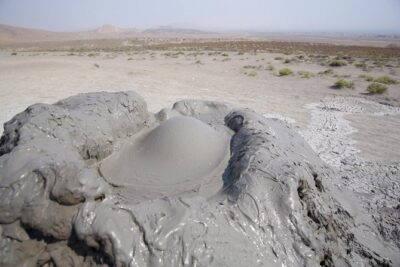
BEST Gobustan, Volcanoes & Absheron Fire Tour (Group or Private)
Read our review →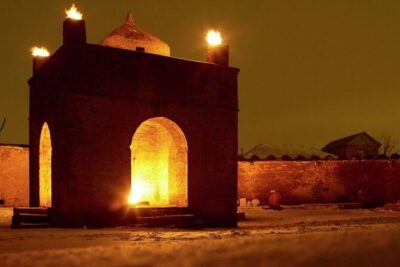
Gobustan, Volcanoes, Fire Temple and Yanardag Day Trip
Read our review →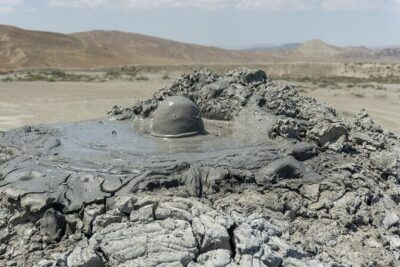
Gobustan & Mud, Fire Temple, Burning Mountain (Group & Private)
Read our review →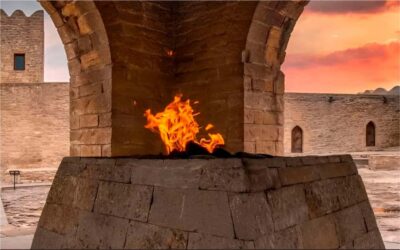
Mud Volcan-Fire Temple and Mountain Tour/Entrance inc
Read our review →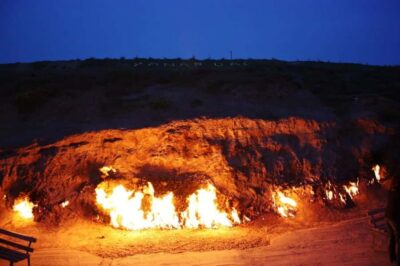
Gobustan Mud Volcanoes Temple & Entry tickets included
Read our review →Browse the lists this tour appears in