
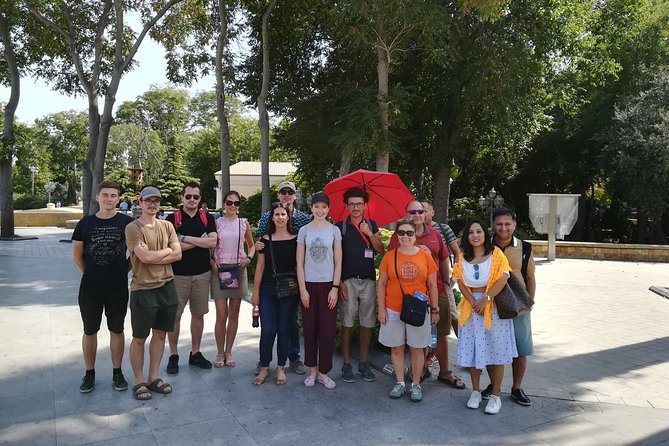
Reviewed · BAKU OLD CITY TOURS
Baku Oil Heritage & Old Town Walking Tour
Baku’s oil story is written in stone. This 2.5-hour walking tour connects the walled Old City with the grand palaces and public buildings built when oil money transformed a Caspian trading town into a cosmopolitan capital. You get history, architecture, politics, and everyday life in one compact walk.
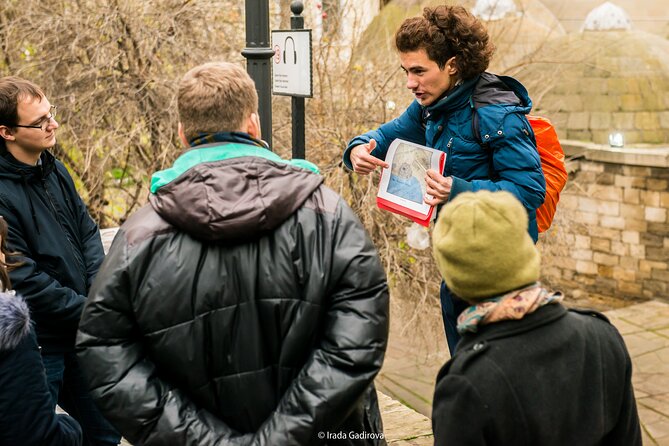
I like two things here. First, a personal guide can explain why a palace was built, who paid for it, and how it fits Azerbaijan’s modern story. Second, the route uses old photos and prepared diagrams, which help you picture Baku before its streets filled with grand oil-boom buildings. Guides Gani and Lina have both led especially engaging walks.
The main drawback is that the tour stays outside most major sights. You see the Maiden Tower and Shirvanshahs’ Palace from the street, but admission is not included, so this is an introduction rather than a full museum visit.
Key points at a glance
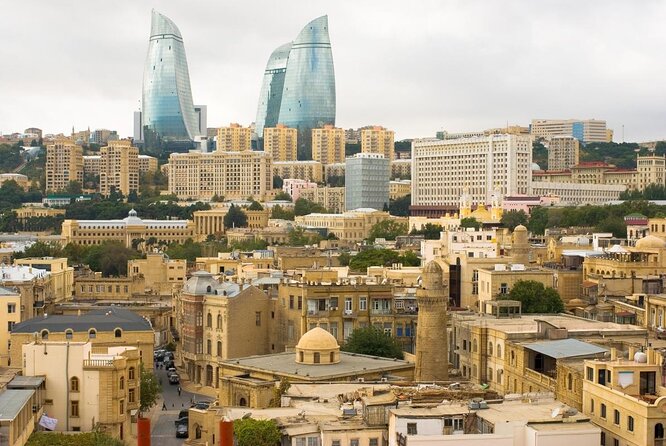
- Oil wealth in plain view: See how Baku’s first oil boom shaped palaces, gardens, schools, and civic buildings.
- Old City essentials: Walk through Icherisheher to the Gosha Gala gate, Maiden Tower, Muhammad Mosque, Shirvanshahs’ Palace, and the Museum of Miniature Books.
- A guide-led history lesson: Gani is often praised for his humor, clear English, photos, diagrams, and ability to answer questions.
- A useful first-day tour: The route gives you a working map of central Baku and ideas for what to visit next.
- No transport required: The experience begins and ends at Fountain Square, with the sights reached on foot.
- Good value for context: At $70 per person, you are paying for private guiding and interpretation, not entrance tickets or a meal.
Why Baku’s oil story makes this walk different
Many Old Town walks focus on medieval walls and photogenic lanes. This one adds the force that made modern Baku possible: petroleum.
By the late nineteenth and early twentieth centuries, oil wealth brought investors, engineers, merchants, architects, and ambitious local families to Baku. Fountain Square, now a central spot for leisure and entertainment, was once part of the main trading area of the oil-boom city. That change is the thread running through the tour.
You will also hear about the social cost and wider effects of modernization. The story includes Soviet influence, secular education, Muslim women’s schooling, changing public life, and Azerbaijan’s path toward its first independence. That broader frame matters. Baku is not just a collection of beautiful façades. Its buildings reflect competition, philanthropy, family pride, foreign influence, and political change.
I especially like this approach for a first visit. A guide can point out how one street links medieval Baku, Imperial Russian rule, the oil boom, the Soviet period, and the modern capital. Without that context, you may admire the buildings but miss why they are there.
More walks through the walled city from Baku:
- Guba Khinalug & Candy Cane Mountains tour (by Old City Tours)
★ 4.5 · 208 reviews - Gabala + Shamakhi tour (by Old City Tours)
★ 4.5 · 198 reviews - Baku Walking Tour (Old City)
★ 5.0 · 127 reviews
Starting at Fountain Square
The walk begins at Fountain Square on Nizami Street, and it ends there too. That makes the meeting point easy to find and keeps the route central.
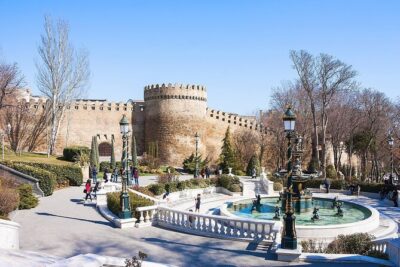
Allow about 10 minutes for the opening stop. Your guide sets the scene by explaining how this area developed from an oil-boom trading street into one of central Baku’s main public spaces. It is a useful introduction because you begin with the city’s commercial rise before moving into the older fortified quarter.
This is also a practical place to start your Baku sightseeing. Since the tour returns here, you can continue to a meal, shopping, or another central attraction afterward. The experience does not include lunch, so plan your meal separately.
Entering Icherisheher through the Gosha Gala gate
The Old City, known as Icherisheher, takes up roughly an hour of the walk. You enter through the Gosha Gala gate and follow narrow streets within the fortress walls.
The first major lesson is that Baku was not born as a modern oil capital. The citadel walls date from the twelfth century, and the Old City preserves a much older urban core. Your guide uses historic photographs to show how the area looked and changed over time.
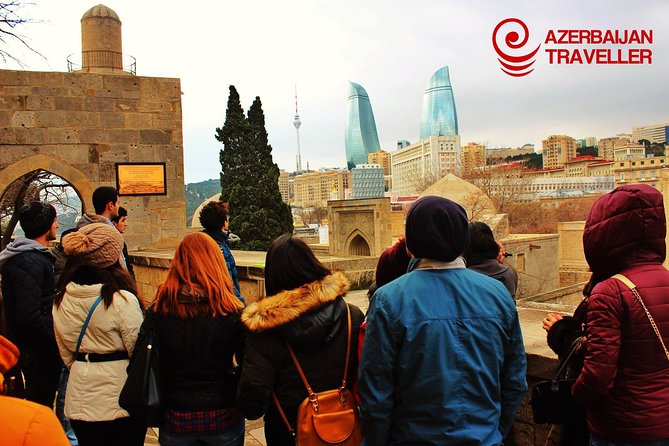
At the Maiden Tower, the explanation is given outside. You do not enter the tower, so this stop is best understood as a visual and historical introduction. The same applies to the Shirvanshahs’ Palace. You learn what you are seeing, but the tour does not replace a separate visit inside either attraction.
That limitation can be a benefit if your time is short. You cover several key sites without standing in museum queues. If you want interiors, exhibits, and a slower look at the monuments, return later and pay the admission fees yourself.
The route also includes the twelfth-century Muhammad Mosque and the Museum of Miniature Books. The mosque adds another layer to the Old City’s religious and architectural story. The miniature book museum is a pleasant change of pace from towers and walls, though the tour’s stop is primarily part of the walking route rather than a long museum visit.
The best part of Icherisheher is the movement between landmark and lane. You may begin at a major monument, then turn into a narrow street where the scale changes at once. A personal guide helps explain those transitions instead of leaving you with a list of dates.
From medieval walls to Imperial Russian Baku
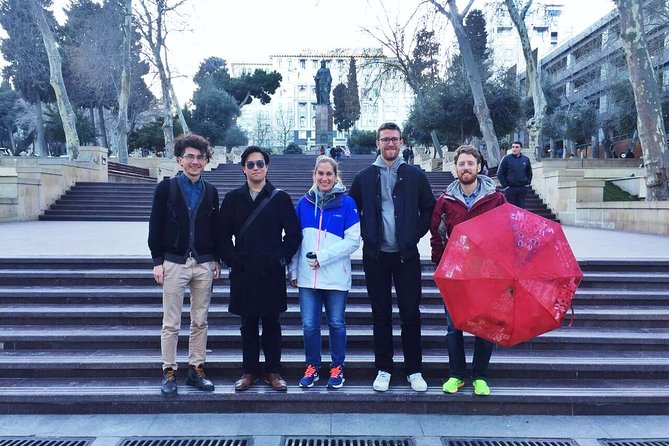
After the Old City, the walk follows Istiglaliyyat Street, formerly known as Nikolayevskaya and Kommunisticheskaya. This was one of the main streets of Imperial Russian-era Baku, and it shows how the city expanded beyond its fortress walls.
This section is where the oil-boom theme becomes most visible. Oil barons spent money on homes, civic buildings, schools, cultural institutions, and memorial projects. The buildings were not all designed in one style. European influences sit beside local concerns and the ambitions of a wealthy Muslim elite.
The route takes in Governor’s Garden, the Town Hall, Philharmonic Hall, the Palace of Happiness, the Institute of Manuscripts, Ismailiyya Palace, the Literature Museum, and the statue of Nizami. You do not need to memorize every name. The value is seeing the concentration of public and private ambition along one stretch of the city.
The guide’s commentary is important here. Baku’s architecture can look like a parade of unrelated European façades if you explore alone. The stories behind the buildings explain why the city acquired such an unusual mixture of Gothic, Russian, Italian, and other European influences during the oil boom.
Other walks through Baku:
- Baku: Stunning Walking Tour of Historical and Modern City
★ 4.9 · 270 reviews - Baku Old Town Walking Tour with a Local
★ 5.0 · 64 reviews - Baku Downtown Original Walking Tour
★ 5.0 · 36 reviews - Baku Old City Wonders: A Walking Tour Through Time
★ 5.0 · 36 reviews
Philharmonic Fountain and the Ali and Nino connection
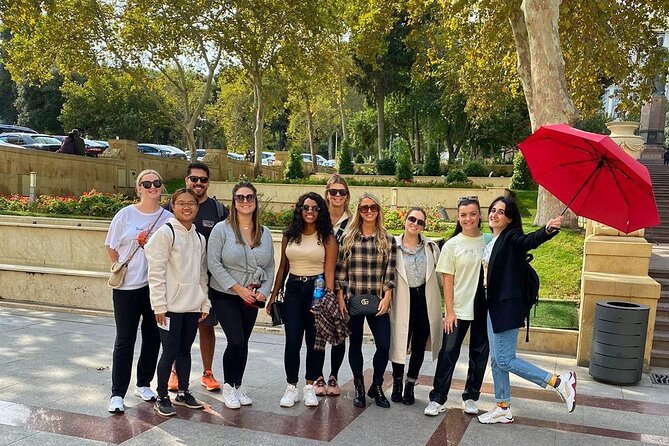
At Philharmonic Fountain, expect about 10 minutes. The stop focuses on one of the gardens created as Baku expanded beyond the fortress.
The garden is linked to Ali and Nino, the famous novel set in the Caucasus. That connection gives the stop a literary and human angle. Instead of looking only at stone and dates, you get a sense of how Baku has been imagined as a meeting point for cultures, religions, and political forces.
This is also a good photo pause. Since the experience is entirely on foot, short stops like this break up the longer stretches between buildings. The pace is designed for explanation rather than a quick checklist.
Baku City Executive Power and the oil-boom city hall
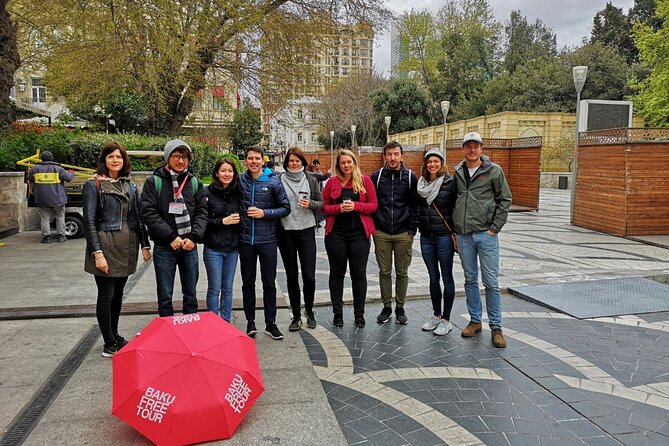
The Baku City Executive Power building, formerly the Town Hall, gets another 10-minute stop. It is one of the clearest examples of the monumental architecture linked to Baku’s oil wealth.
The building helps explain how a growing city wanted to present itself. European architectural influence was not just decorative. It reflected the city’s international connections and the presence of people from different backgrounds who came to Baku during the oil boom.
I find this part useful because it moves the conversation from private fortunes to public identity. Oil money paid for grand personal projects, but it also changed how Baku governed, represented itself, and planned its central streets.
Saadet Sarayi and the personal side of oil wealth
Saadet Sarayi, also called the Palace of Happiness, offers one of the tour’s more personal stories. It concerns an oil baron and his wife, and the building now serves as a marriage registry.
That present-day use gives the site extra meaning. You are not looking at an abandoned relic. The palace remains tied to marriage and family life, echoing the story attached to its original purpose.
This is the sort of detail a guide can make memorable. The building becomes more than an ornate façade. It becomes a story about love, wealth, status, and the way old buildings continue to serve modern Baku.
The former Taghiyev School for Girls
The former Taghiyev School for Girls, now the Institute of Manuscripts of Azerbaijan, is one of the most important stops for understanding social change.
The school was the first secular school for Muslim women, and the guide uses it to explain modernization in Baku and Azerbaijan’s eventual move toward its first independence. This is a valuable counterpoint to the oil barons’ palaces. The city’s transformation was not only about rich men commissioning elaborate buildings. It also involved education, women’s public roles, and debates about the future of society.
If you want more than architecture, pay close attention here. This stop connects a single building to questions about access to education and the changing place of women in Azerbaijani life.
Ismailiyya Palace and the memory of a son
Ismailiyya Palace is another 10-minute stop and one of the route’s strongest architectural moments. An oil baron commissioned it in memory of his son, and the building is designed in a Venetian Gothic style.
The story combines grief, wealth, and public display. A private loss became a major architectural landmark. The building also shows how oil money allowed Baku’s elite to commission structures that would have been impossible in an ordinary trading city.
The stop works best when paired with the other palaces. Saadet Sarayi tells a family and marriage story. Ismailiyya tells a story of memory and mourning. Together, they show how personal events shaped Baku’s public appearance.
What the guide adds to the experience
The guide is the reason to choose this tour instead of simply following a map. Gani receives especially strong praise for his humor, clear explanations, polished English, and ability to keep a group attentive for the full 2.5 hours. He also answers questions at length rather than rushing from one site to the next.
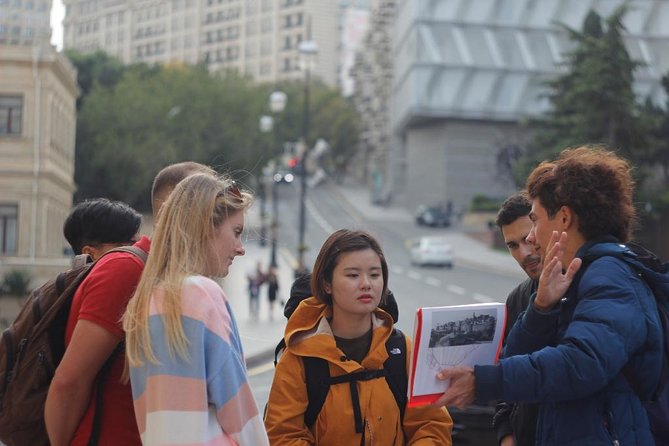
His use of old photos and diagrams is a real advantage. Historic Baku is difficult to picture when all you see is the modern street in front of you. Visual aids help you compare past and present, especially around the Old City and oil-boom buildings.
Lina also leads the walk and offers a warm introduction to Icherisheher. Practical advice can be part of the experience too, including suggestions for Azerbaijani food, vegetarian choices, baklava, local phrases, and what to see next.
The tone appears friendly rather than formal. That suits Baku, where the most useful information often comes through stories about people, family, food, and daily life. You should still expect a history-focused walk, not a food tour or a performance.
Price, pace, and what you actually receive
The cost is $70 per person. That is not a bargain walking tour, but the value depends on how much you want from the guide.
You are paying for a private guide’s attention, a carefully connected route, historical interpretation, and a short introduction to several major parts of central Baku. You also receive bottled water. Private transportation and lunch are not included, and the tour does not cover admission fees.
For a visitor who wants to see monuments from outside and understand their place in the city, the price is reasonable. For someone planning to enter the Maiden Tower and Shirvanshahs’ Palace during the same outing, the final cost will be higher once admissions are added.
The walk lasts about 2 hours and 30 minutes. Most travelers can participate, and the experience is near public transportation. It is listed with a maximum of 30 participants, although the description emphasizes a private guide and personal attention. If group size matters to you, confirm the arrangement before booking.
Book at least a day ahead if possible. The experience is often reserved about 25 days in advance, which suggests that popular dates can fill early.
Who should book this Baku walk
I would choose this tour at the start of a Baku stay. It gives you a useful mental map and helps you decide which interiors deserve a return visit.
It suits you especially well if you:
- Want Baku’s oil story explained through real buildings
- Prefer walking and conversation to a bus tour
- Like architecture but need historical context
- Have only a short time in the city
- Want help with food ideas and later sightseeing
- Enjoy asking questions during a tour
Families can also find it workable. The route includes stories, pictures, and varied stops rather than one long lecture. The pace has been enjoyed by children as young as 10 and 12, according to the supplied experience information.
You may want something else if your main goal is entering museums, spending a long time at each monument, or escaping the heat through indoor attractions. This is an outdoor walk, and it requires good weather. Wear comfortable shoes, bring sun protection, and keep in mind that the tour operates on foot.
Cancellation is free up to 24 hours before the start time. Inside that window, the amount paid is not refunded. Poor weather or failure to meet the minimum number of participants can lead to a rescheduled experience or full refund.
Should you book the Baku Oil Heritage and Old Town Walking Tour?
Yes, if you want a strong first look at Baku and care about the stories behind the façades. The route brings together the medieval Old City, oil-boom wealth, Imperial Russian planning, women’s education, literature, and Soviet-era change without requiring a full day.
The key question is how you like to sightsee. If you want to enter every major monument, book separate admissions and allow more time. If you want a guide to connect the city’s most important sights and make Baku easier to understand, this is a sound choice.
I would book it early in a Baku visit, ideally on a clear day. Ask for Gani or Lina if the schedule allows, and keep the rest of the afternoon open for a meal or a return visit inside the places you only saw from the street.
FAQ
How long does the Baku Oil Heritage and Old Town Walking Tour last?
The tour lasts approximately 2 hours and 30 minutes.
Where does the tour begin and end?
It begins at KFC9RCP+28F on Nizami Street in Baku, near Fountain Square, and ends back at the meeting point.
Does the tour enter the Maiden Tower or Shirvanshahs’ Palace?
No. The guide explains both sites from outside, using historic photos where appropriate. Admission fees are not included.
Is transportation included?
No. Private transportation is not included. The experience is a walking tour and is near public transportation.
What is included in the price?
Bottled water and the guided walking experience are included. Lunch and admission fees are not included.
Can I cancel for a full refund?
Yes, if you cancel at least 24 hours before the experience start time. Cancellations or changes made within 24 hours are not refunded. If bad weather or insufficient participants causes the tour to be canceled, you are offered another date or a full refund.
More Historical Tours in Baku
- Best of Baku: 4-Hour City Tour Historic and Modern Landmarks
★ 4.7 · 63 reviews - Baku: Historic and Modern Baku Tour ( Day & NIght Tour)
★ 4.5 · 60 reviews - Baku City Tour with Heritage Tours / All Entrance Fees Inc
★ 4.5 · 52 reviews - Baku Historical and modern tour in 2-3 hours+FREE Night tour
★ 5.0 · 41 reviews
Just added in Baku
- From Baku: Guba-Khinalig Day Trip★ 5.0 · 12 reviews
- From Baku: Gobustan 4×4 Private Tour – Private★ 5.0 · 3 reviews
- From Baku: Gobustan Rock Art and Mud Volcanoes Tour★ 5.0 · 6 reviews
- From Baku: Gobustan Day Tour★ 5.0 · 7 reviews
- From Baku: Gobustan Guided Day Trip with Transfers★ 3.9 · 11 reviews
- From Baku: Shamakhi and Gabala scenic tour★ 5.0 · 4 reviews
- From Baku: Gabala Day Trip★ 4.0 · 11 reviews
- From Baku: Gabala Cable Car, Nohur Lake & Juma Mosque Trip★ 4.5 · 6 reviews
Baku Old City Tours, compared.
Baku Old City Tour (officially by Old City Tours)
Read our review →
Baku Old City Wonders: A Walking Tour Through Time
Read our review →
Gobustan & Absheron Tour with Free Old City Walking Tour
Read our review →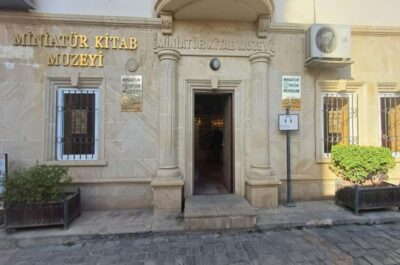
The Best 5 Sightseeing Spots Gobustan + Old City Tour
Read our review →Browse the lists this tour appears in