
Reviewed · GOBUSTAN AND MUD VOLCANO TOURS
Qobustan rock arts, Mud Volcanoes, Fire temple Ateshgah, Yanardag
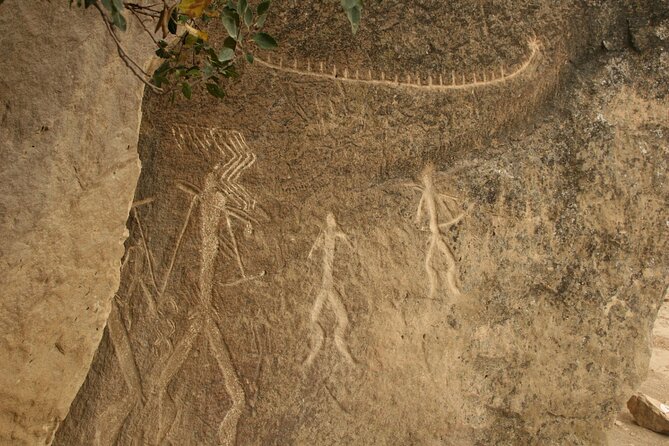
Azerbaijan’s famous fire sites and ancient rock carvings sit far beyond Baku’s modern center, and this private nine-hour tour links them in one full day. You’ll see natural flames at Ateshgah and Yanar Dag, bubbling mud volcanoes, and more than 6,000 prehistoric rock drawings at Qobustan.
I like the efficient route and the chance to have a local multilingual guide explain how Zoroastrian beliefs, natural gas, oil fields, and early human settlement connect. I also like the private vehicle for up to seven people, especially since the sights are spread out.
The main drawback is the pace. You spend only about 15 minutes at Yanar Dag and 30 minutes at Ateshgah, while the long road time makes this a full day rather than a quick outing. Lunch is not included, and museum tickets cost extra.
Key points to know before booking
- Four very different sights in one day: Fire worship, prehistoric art, mud volcanoes, and an active natural flame all fit into one route.
- Qobustan is the historical centerpiece: The reserve contains more than 6,000 drawings spread across about 1,000 rocks.
- The mud volcano stop is the most unusual: Azerbaijan has about 350 of the world’s roughly 800 mud volcanoes.
- The tour is private: Your group alone participates, with room for up to seven people.
- The $250 price works best for a full group: Split seven ways, the transport and guide cost is much easier to justify.
- Plan for extra costs: Lunch is not included, and museum admission is listed as $15 per person.
Why this route explains Azerbaijan’s land of fire
This excursion works because its stops tell one connected story. You begin with sacred fire, see a mountain flame that still burns from underground gas, visit mud volcanoes linked to oil and gas fields, and finish among the marks left by people who lived here thousands of years ago.
The subject is not only ancient history. It is also geology. Underground gas reaches the surface at some places and catches fire. Mud volcanoes push up a mixture of mud and liquid. Oil and gas deposits occur in areas linked with these eruptions. At Qobustan, stone surfaces preserve human activity in a dry part of the country.
I find that combination more useful than visiting four unrelated attractions. You get a clearer sense of why fire has such a strong place in Azerbaijan’s identity. The guide’s role matters here, since each site needs context to make sense.
The tour begins at 9:00 AM and lasts about nine hours. Pickup is offered, and you travel in a private, air-conditioned vehicle with WiFi onboard. Since the tour is private, you can expect your own group rather than a mixed coach party, though the available details do not specify the exact pickup area or vehicle model.
More fire-site trips from Baku:
- Baku: Gobustan, Volcanoes, Fire Temple and Yanardag Day Trip
★ 4.7 · 433 reviews - Gobustan & Mud, Fire Temple, Burning Mountain (Group & Private)
★ 4.5 · 418 reviews - Gobustan-Mud Volcan-Fire Temple and Mountain Tour/Entrance inc
★ 5.0 · 267 reviews
Ateshgah Fire Temple and the old sacred flame
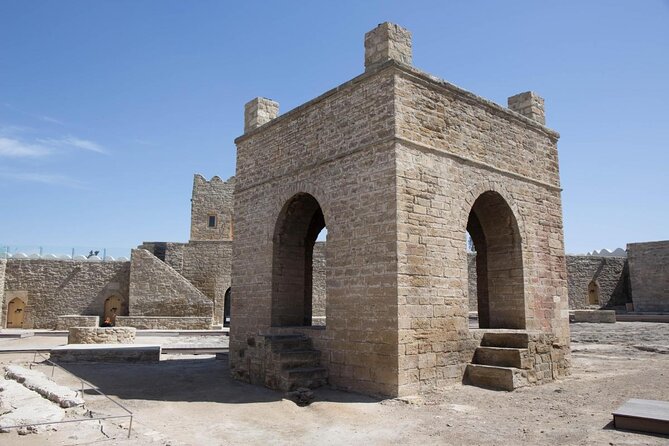
Ateshgah is often called the Fire Temple of Baku. Its importance comes from both the natural gas fires once found here and the religious communities that gathered around them.
The temple in its current form was built during the 17th and 18th centuries by a Hindu community based in Baku and connected with Sikhs. Yet the site had an older religious role. Zoroastrians, known for honoring fire, considered naturally burning flames sacred and came here to worship.
Your stop lasts about 30 minutes. That is enough to see the temple complex and hear the basic story, but it is not a long museum visit. If you like architectural detail or want time to study displays carefully, the schedule may feel tight.
The key thing to understand is that Ateshgah is not simply an old building with a dramatic name. It reflects several layers of belief and travel across the region. Natural gas created the fire, Zoroastrian worship gave it spiritual meaning, and later Hindu and Sikh communities built the structure you see today.
The stop is listed without an admission charge in the schedule, while the general cost information says museum tickets are not included and totals about $15 per person. I would budget for that amount so you are not caught short. The supplied details do not separate the fee by attraction.
Yanar Dag, where the hillside still burns
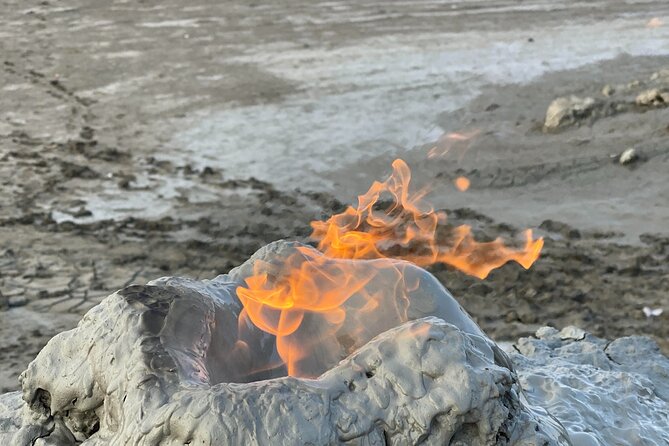
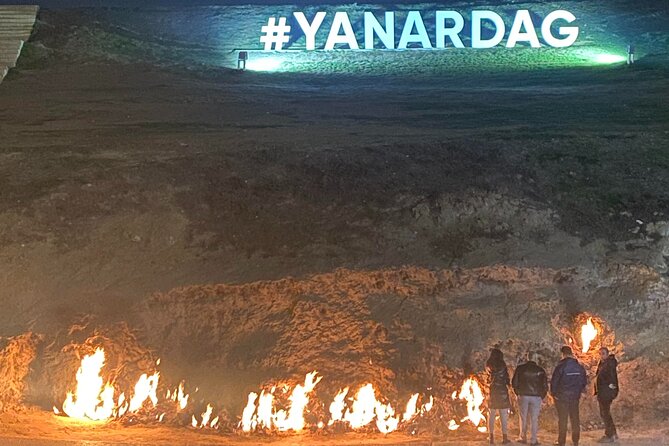
Yanar Dag means burning mountain, and it is one of Azerbaijan’s best-known natural flame sites. Gas rising from below the ground reaches oxygen and ignites, producing a flame along the hillside.
Your visit here lasts about 15 minutes. That makes it a quick photo and explanation stop rather than a long walk or extended nature visit. The short time is practical because the main attraction is concentrated in one location, but you should not expect a broad trail system or a full afternoon at the site.
Yanar Dag helps explain the phrase land of fire in a direct way. Ancient Zoroastrians viewed such flames as signs of divine power, and fire altars were built near natural gas outlets. Today, the site gives you a visible link between Azerbaijan’s geology and its religious past.
I would place Ateshgah and Yanar Dag together in your mind. Ateshgah shows how people built a sacred place around fire. Yanar Dag shows the natural force itself. The two stops are close in theme, but they offer different experiences.
Mud volcanoes, the strangest stop of the day
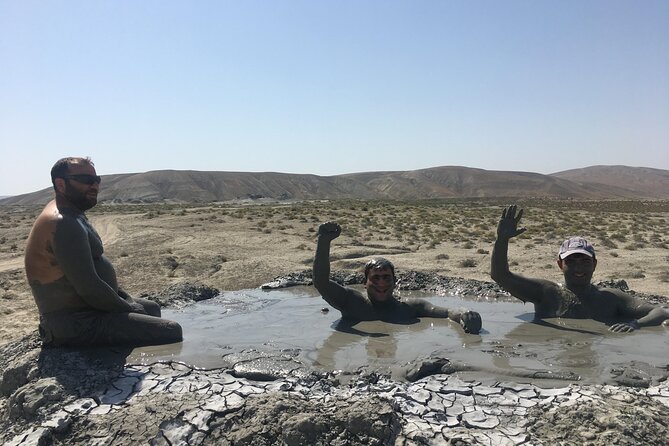
The mud volcanoes are likely to be the most unusual part of the outing. Instead of red-hot lava, these volcanoes release mud and liquid from below the surface. Azerbaijan has around 350 of the world’s approximately 800 mud volcanoes, giving the country an unusually large share.
The tour allows about an hour here. The exact appearance and level of activity can vary, so you might find bubbling mud, low cones, and wet patches rather than a dramatic eruption. The provided information does not guarantee a particular eruption or specify the exact volcano visited.
These formations are connected with oil and gas fields, including areas such as Lokbatan, Garadagh, Neft Dashlari, and Mishovdagh. The mud and liquid have also been used as raw materials in chemical, construction, and pharmaceutical work.
The Mars connection is another reason this stop attracts attention. NASA geologists have studied Azerbaijan’s mud volcanoes while researching Mars. That does not make the site a space exhibit, but it gives you a useful reason to look closely at the strange, otherworldly forms.
Bring sensible shoes and expect outdoor conditions. The supplied information does not promise paved paths, shade, or facilities, so I would avoid delicate footwear and carry water. The stop is free according to the tour details, though the full admission information separately advises budgeting for museum tickets.
Other petroglyph and mud volcano runs from Baku:
- Baku: Gobustan, Mud Volcano, Fire Mount, Temple Lunch Entry
★ 4.9 · 3,246 reviews - BEST Gobustan, Volcanoes & Absheron Fire Tour (Group or Private)
★ 5.0 · 1,254 reviews - Gobustan and Absheron tour (All inclusive)
★ 5.0 · 1,014 reviews - Baku: Gobustan Absheron Tour Entry Tickets included
★ 4.9 · 329 reviews
Qobustan’s rock art and the earliest human stories
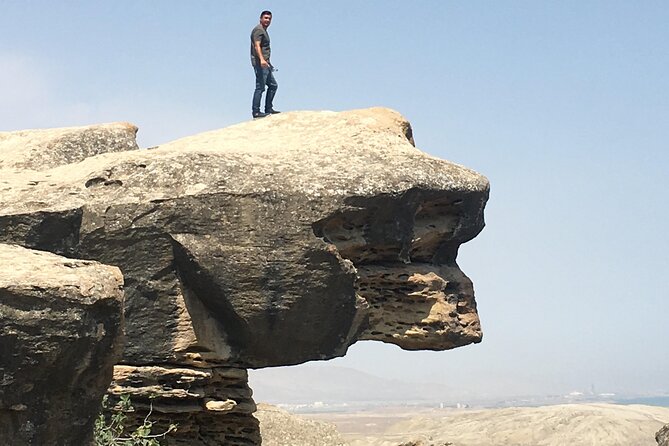
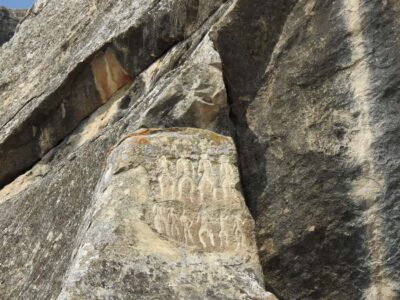
Qobustan National Historical-Artistic Preserve is the most substantial stop on the route. Located about 60 kilometers from Baku, it functions as an open-air museum and is listed as a UNESCO World Heritage Site.
The reserve is valued for the quality and density of its rock carvings. More than 6,000 drawings cover about 1,000 rocks, while the wider area has produced more than 100,000 artifacts. These marks record people, animals, hunting, and daily life from ancient periods.
You have about an hour at the Qobustan museum and reserve. That is enough for a guided overview and a look at the main material, but the numbers tell you how much is here. You will not examine every carving in one visit. The guide can help you focus on the important examples and explain what the images reveal about early communities.
The museum portion gives you context before or alongside the outdoor rock art. That matters because petroglyphs can be easy to skim past if you do not know what you are seeing. A professional local guide can point out patterns and explain how archaeologists interpret the drawings.
Qobustan is also the part of the day most likely to reward travelers who enjoy archaeology. If your main interest is dramatic scenery, the mud volcanoes and burning sites may leave a stronger impression. If you want evidence of ancient human life, Qobustan is the heart of the tour.
How the nine-hour schedule feels
The listed stop times add up to about two hours and 45 minutes. The rest of the day is taken by driving between Baku, the Absheron fire sites, the mud volcano area, and Qobustan. That is normal for this route, but it is worth understanding before you book.
The benefit is simple: you avoid arranging separate taxis, buses, or day tours for distant places. The private vehicle also gives your group a quieter setting than a large coach. Air conditioning will be welcome, particularly during warmer months.
The cost is $250 per group of up to seven people. For two people, that is $125 each before tickets and lunch. For seven, it works out to about $36 per person, making the value much stronger. A small group of friends or family can get a private guide and transport at a reasonable shared cost.
Lunch is excluded. The available details do not state where or when lunch happens, so ask the provider about the day’s food break before departure. Museum tickets are also extra, with the total listed at $15 per person.
The tour is booked around 11 days ahead on average, suggesting that you should not leave it until the last minute if your Baku dates are fixed. Confirmation is received at booking, and the experience is offered daily from 9:00 AM to 6:00 PM during the stated operating period.
Who will get the most from this tour
I would choose this excursion if you have only a short stay in Baku and want to cover the city’s best-known sights beyond the center. It is especially useful for first-time visitors who want background on Zoroastrianism, ancient settlement, natural gas, and Azerbaijan’s oil-producing ground.
Families and groups of friends can make good use of the private format. The vehicle holds up to seven people, and the guide can focus on your group instead of following a large tour crowd. Service animals are allowed, and most people can participate.
The route also suits anyone who likes variety. You move from a religious monument to a flame on a hillside, then to mud volcanoes and prehistoric art. No single stop has to carry the whole day.
I would hesitate if you dislike long drives, want a slow museum visit, or prefer to spend several hours at one archaeological site. The schedule gives you an overview of each place, not a specialist’s extended study. Yanar Dag in particular is brief.
Practical tips for a smoother day
Wear shoes suitable for outdoor ground, especially for the mud volcano stop and Qobustan. The supplied details do not describe the paths, so practical footwear is safer than fashion shoes.
Carry money for lunch and about $15 per person for museum admission. Even though some stop descriptions show free admission, the overall tour information says museum tickets are not included. Treat the $15 figure as your working budget.
Use the drive time to ask questions. The best version of this tour depends on the guide connecting the sites rather than merely naming them. Ask about Zoroastrian fire worship, the Hindu and Sikh connection at Ateshgah, the oil fields near mud volcanoes, and how the Qobustan drawings are dated.
Weather matters. The experience requires good conditions. If poor weather forces cancellation, you can choose another date or receive a full refund. You can also cancel for a full refund up to 24 hours before the start time. Changes or cancellations made less than 24 hours ahead are not accepted for a refund.
Should you book the Qobustan and fire sites tour?
Book it if you want an efficient private day from Baku and you care more about covering major sights than lingering at one location. The strongest parts are the local guide, the private transport, the unusual mud volcanoes, and Qobustan’s remarkable collection of rock art.
The value depends heavily on group size. At $250, it is expensive for one or two people once lunch and tickets are added. For four to seven people, it becomes a much more sensible way to see distant attractions without arranging transport yourself.
My final advice is to confirm the pickup details, museum ticket costs, and lunch plan before paying. If you do that and accept the long driving day, this is a practical introduction to Azerbaijan’s ancient people, sacred flames, and restless ground.
FAQ
How long does the tour last?
The tour lasts approximately nine hours.
How much does the private tour cost?
The price is $250 per group of up to seven people.
What attractions are included?
The route includes Ateshgah Fire Temple, Yanar Dag, Azerbaijan’s mud volcanoes, and Qobustan National Historical-Artistic Preserve Museum.
Is transportation included?
Yes. Private transportation in an air-conditioned vehicle is included, along with WiFi onboard.
Is a guide included?
Yes. A professional multilingual local guide is included.
Are lunch and museum tickets included?
No. Lunch is not included. Museum tickets are also listed as extra, with the total stated as $15 per person.
Is this a private group experience?
Yes. Only your group participates, with up to seven people.
Can I cancel for a refund?
Yes. You can cancel at least 24 hours before the start time for a full refund. Poor weather may also lead to a different date or a full refund.
Just added in Baku
- From Baku: Guba-Khinalig Day Trip★ 5.0 · 12 reviews
- From Baku: Gobustan 4×4 Private Tour – Private★ 5.0 · 3 reviews
- From Baku: Gobustan Rock Art and Mud Volcanoes Tour★ 5.0 · 6 reviews
- From Baku: Gobustan Day Tour★ 5.0 · 7 reviews
- From Baku: Gobustan Guided Day Trip with Transfers★ 3.9 · 11 reviews
- From Baku: Shamakhi and Gabala scenic tour★ 5.0 · 4 reviews
- From Baku: Gabala Day Trip★ 4.0 · 11 reviews
- From Baku: Gabala Cable Car, Nohur Lake & Juma Mosque Trip★ 4.5 · 6 reviews
Gobustan and Mud Volcano Tours, compared.
Gobustan, Mud Volcano, Fire Mount, Temple Lunch Entry
Read our review →
BEST Gobustan, Volcanoes & Absheron Fire Tour (Group or Private)
Read our review →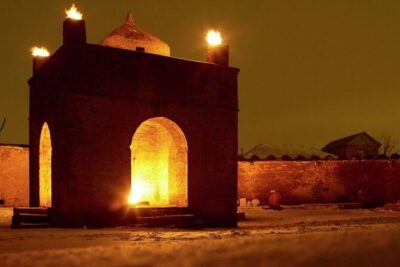
Gobustan, Volcanoes, Fire Temple and Yanardag Day Trip
Read our review →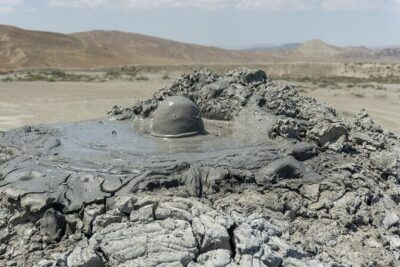
Gobustan & Mud, Fire Temple, Burning Mountain (Group & Private)
Read our review →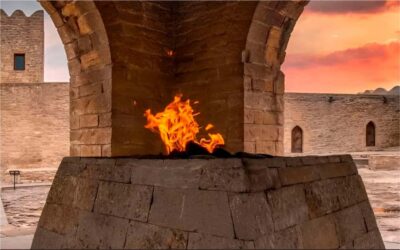
Mud Volcan-Fire Temple and Mountain Tour/Entrance inc
Read our review →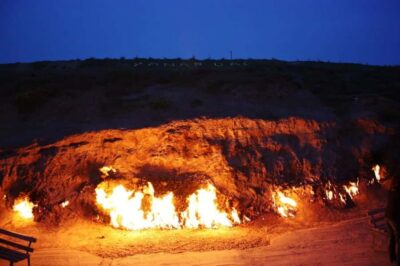
Gobustan Mud Volcanoes Temple & Entry tickets included
Read our review →Browse the lists this tour appears in