
Reviewed · GOBUSTAN AND MUD VOLCANO TOURS
From Bakü: Sightseeing – Ateshgah – Yanardag – Gobustan
Azerbaijan’s strangest sights sit outside Baku: a temple built around sacred fire, flames rising from a mountainside, bubbling mud volcanoes, and prehistoric rock drawings. This full-day outing links them in one sweep, giving you a useful look at both ancient Azerbaijan and its unusual natural forces.
I like the efficient route and the personal feel of a private sedan with hotel pickup and drop-off. I also like that guides such as Habil Gudratli explain more than the bare facts and can make the day feel relaxed rather than rushed. The catch is cost: at $116 per person, entrance fees and lunch are extra, and one less enthusiastic assessment found the day unremarkable for the price.
Key points to know before booking
- Ateshgah Temple gives you a close look at a pentagonal fire-worship complex with a central altar.
- Yanardag offers natural flames licking across a ten-meter stretch of stratified earth.
- Gobustan’s mud volcanoes add a curious, otherworldly stop to the day.
- The 3D Bio Museum and Open Air Rock Museum connect modern interpretation with ancient carvings.
- A private sedan and hotel service make this easier than arranging several remote stops yourself.
- Lunch and entry tickets cost extra, so budget beyond the $116 tour price.
Why this day outside Baku works
Baku is polished, modern, and easy to explore on foot in parts. The Absheron Peninsula and Gobustan show you a different Azerbaijan, one shaped by underground gas, volcanic mud, religious pilgrimage, and early human settlement.
That contrast is the main reason to book this experience. You are not spending the day at one large museum or a single viewpoint. Instead, you move between several compact sites with very different moods.
The route also suits you if your time in Azerbaijan is short. A single day covers Ateshgah, Yanardag, Gobustan’s museum complex, mud volcanoes, and the rock carvings. You will not study each place at great length, but you will see the main sights without having to arrange separate taxis or excursions.
The experience includes a professional guide and comfortable sedan transportation, with pickup and drop-off at your Baku hotel. The language options are English, Azerbaijani, and Turkish. A private car matters here because some stops are spread far apart, and the day involves more road time than a simple city tour.
More fire-site trips from Baku:
- Baku: Gobustan, Volcanoes, Fire Temple and Yanardag Day Trip
★ 4.7 · 433 reviews - Gobustan & Mud, Fire Temple, Burning Mountain (Group & Private)
★ 4.5 · 418 reviews - Gobustan-Mud Volcan-Fire Temple and Mountain Tour/Entrance inc
★ 5.0 · 267 reviews
Ateshgah Temple and the story of sacred fire
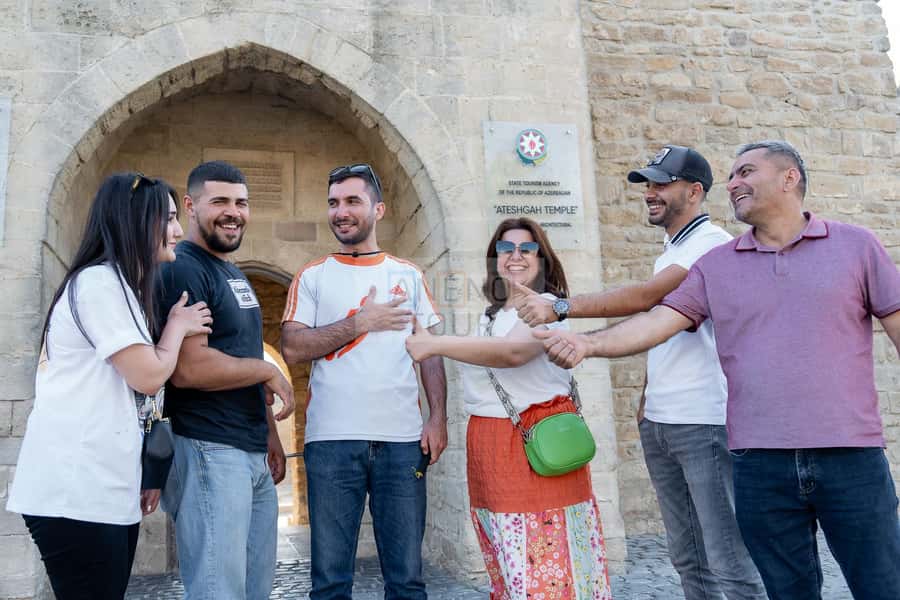
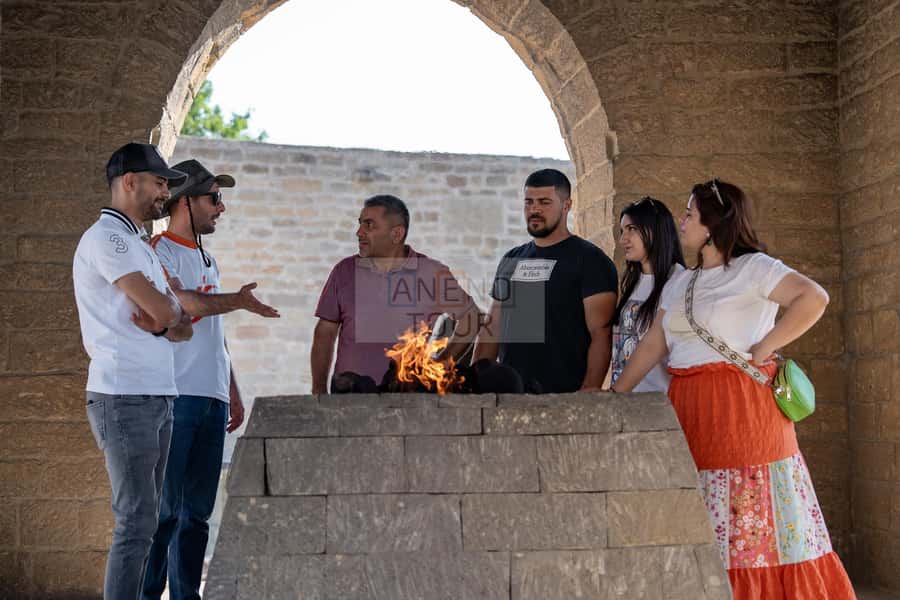
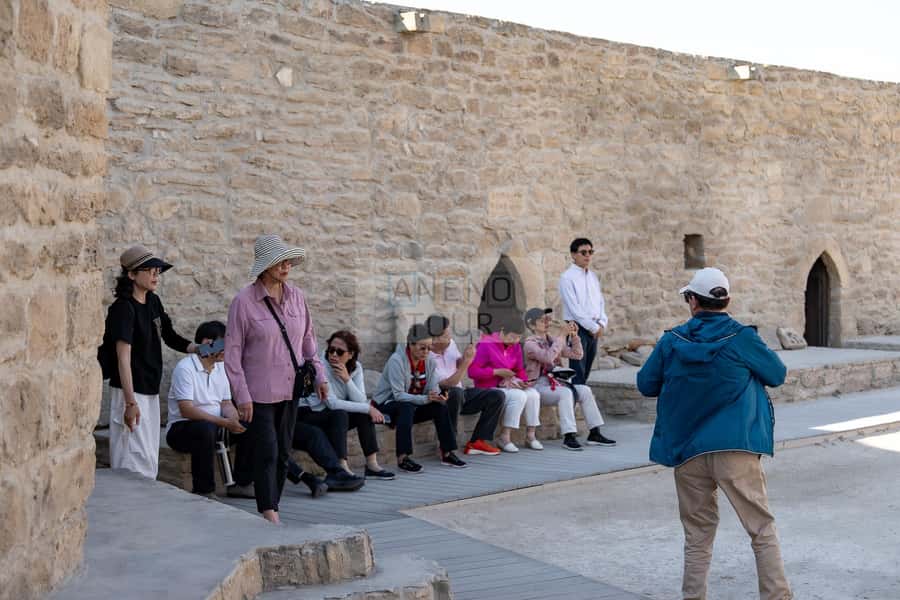
Your first major stop is Ateshgah, often called the Fire Temple. The complex has a distinctive pentagonal shape, with an altar in the center. It was a pilgrimage site for fire worshippers and was connected with the Hindu community based in Baku, including Sikh worshippers.
The temple is valuable because it helps explain why fire became such a powerful symbol in this part of Azerbaijan. Natural gas once emerged from the ground in places across the Absheron Peninsula. Before modern fuel systems and scientific explanations, a flame that seemed to burn without wood could easily be treated as sacred.
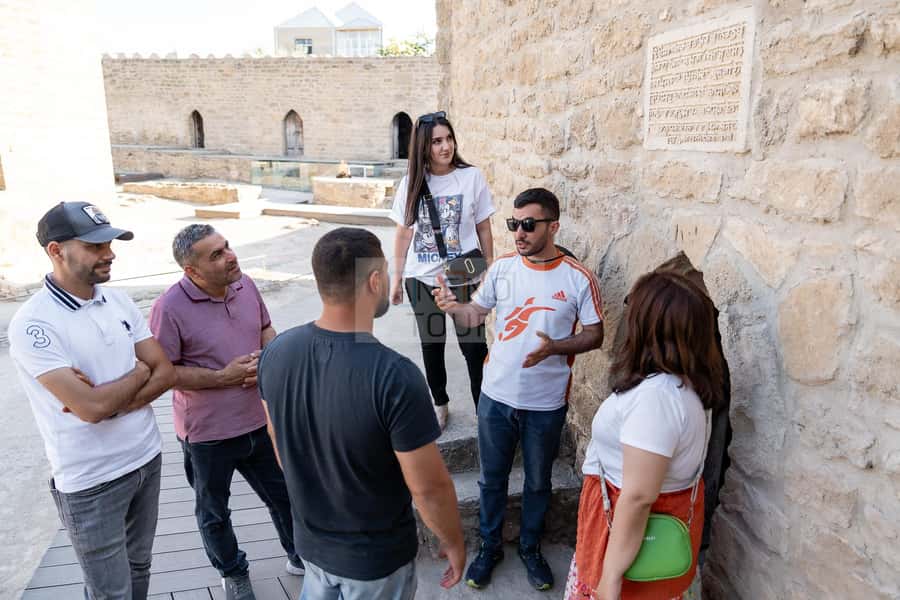
Look closely at the structure rather than racing straight to the central altar. The enclosed layout, stone walls, and small chambers help you picture a religious complex built around ritual and pilgrimage. Your guide can provide the cultural background that the site itself cannot always explain clearly.
The stop is more about atmosphere and context than size. Ateshgah is not a vast ruin, so you should not expect hours of exploration. Its importance comes from the meeting of geography and faith: underground gas shaped religious practice, and religious practice shaped the monument you see today.
I would pay close attention to the guide here. This is the kind of place where a few clear explanations make a large difference. Without context, you may see a handsome stone courtyard and an altar. With context, the building becomes part of Azerbaijan’s long relationship with fire.
Yanardag’s flames across the bare earth
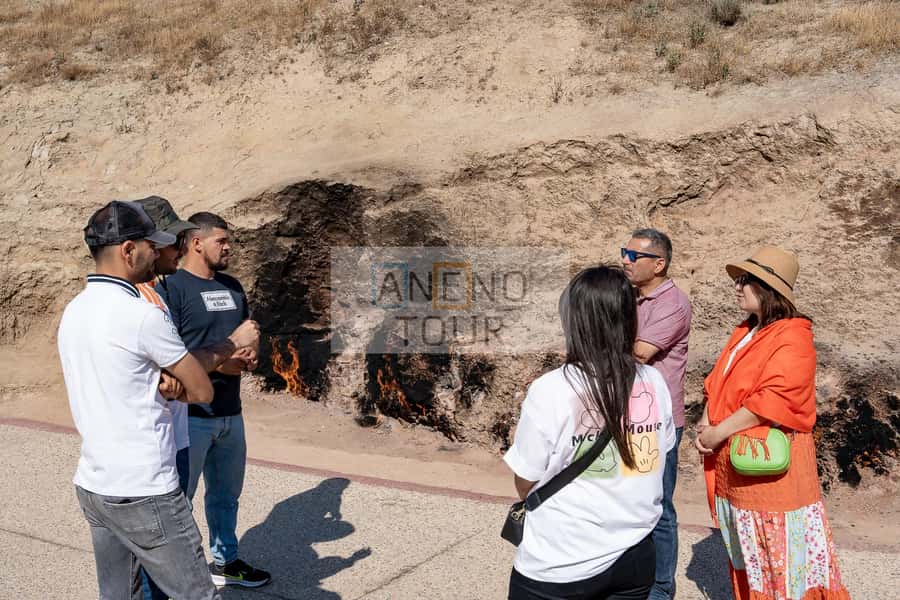
Yanardag, or Fire Mountain, is one of the day’s most memorable stops. Here, natural flames burn along a section of exposed, stratified earth. The fire reaches across a space about ten meters long, with tongues of flame rising from the ground.
This is a natural phenomenon, but it is also a carefully managed attraction. Yanardag is a state-protected conservation area, so you visit a designated site rather than wandering freely across the slope.
The scene is simple and striking. Fire comes directly from the earth, without a torch, hearth, or visible fuel source. The flames are not a huge wall of fire, so keep your expectations sensible. The appeal lies in seeing a steady natural flame in an otherwise bare setting.
This stop also makes more sense after Ateshgah. At the temple, you see how natural fire shaped worship. At Yanardag, you see the physical source of the wonder more directly. The two places belong together, and visiting both in one day gives the subject a clear beginning and middle.
Bring comfortable shoes, even though the stops are not presented as demanding hikes. Visitors with back problems, heart problems, mobility impairments, or wheelchair users may find the overall outing unsuitable. The tour also advises against bringing pets or large bags.
Gobustan’s 3D Bio Museum
Gobustan adds another layer to the day. The 3D Bio Museum gives you a modern way to understand the region before or alongside the open-air sites. Its value is practical: it can help you make sense of what you will see outside instead of treating the rock drawings as isolated marks on stone.
The museum is part of the Gobustan portion of the outing, which links natural features, modern interpretation, and prehistoric art. A guide can connect the exhibits to local culture and explain how the area fits into Azerbaijan’s wider story.
Do not expect a large city museum experience. The attraction is included as a focused stop within a packed day. If you enjoy seeing a subject explained with visual displays before examining the real site, you will likely appreciate this part.
The museum also gives the schedule some balance. Ateshgah and Yanardag focus on fire. Gobustan shifts attention to early human life and the land itself. That change keeps the day from feeling like a series of similar monuments.
Other petroglyph and mud volcano runs from Baku:
- Baku: Gobustan, Mud Volcano, Fire Mount, Temple Lunch Entry
★ 4.9 · 3,246 reviews - BEST Gobustan, Volcanoes & Absheron Fire Tour (Group or Private)
★ 5.0 · 1,254 reviews - Gobustan and Absheron tour (All inclusive)
★ 5.0 · 1,014 reviews - Baku: Gobustan Absheron Tour Entry Tickets included
★ 4.9 · 329 reviews
Mud volcanoes, Azerbaijan’s oddest natural stop
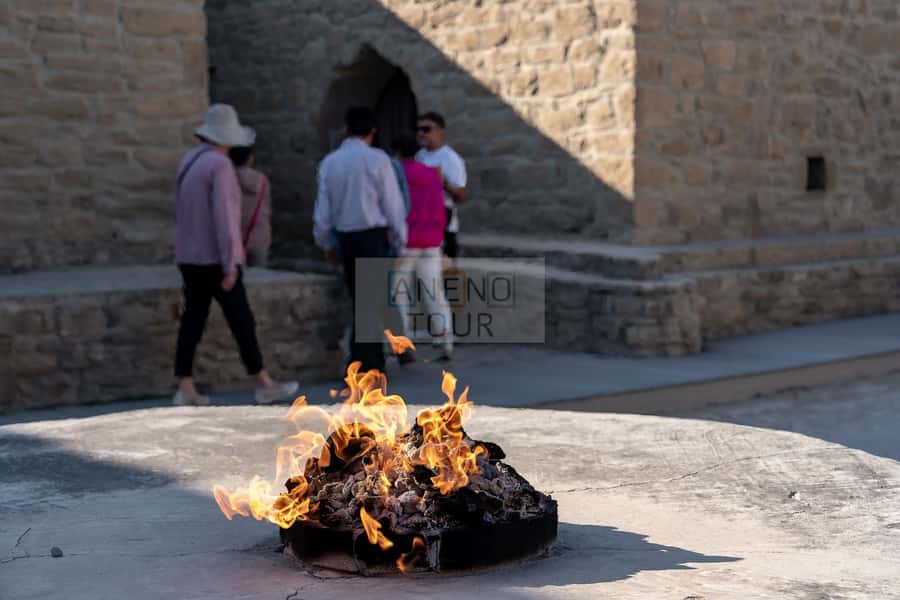
The Gobustan mud volcanoes are a major reason many people choose this outing. They are often described as a kind of modern Mars, and that comparison makes sense as a quick visual shorthand. The ground is marked by mud formations rather than the more familiar greenery or stone ruins you may expect from a day outside Baku.
This is the stop that can make the trip feel most unusual. You are not simply viewing a historic building or a museum display. You are looking at a natural result of underground geological activity, with mud pushed toward the surface.
Conditions at natural sites can vary, so treat this as an outdoor stop rather than a polished attraction. Wear shoes that you do not mind using outdoors, and follow the guide’s instructions about where to walk. The provided information does not promise a fixed number of volcanoes, a set walking distance, or a guaranteed level of activity, so the exact impression may depend on conditions that day.
The mud volcanoes also add value to the guide’s role. Without explanation, the formations may look like odd mounds. With a clear account of how they form and why Gobustan is known for them, the stop becomes one of the day’s most distinctive lessons in local geology.
One positive account singled out the mud volcanoes as a favorite part of the outing. I can understand why. They offer something you cannot duplicate by visiting only Baku’s urban sights or standard historical monuments.
Gobustan’s open-air rock drawings
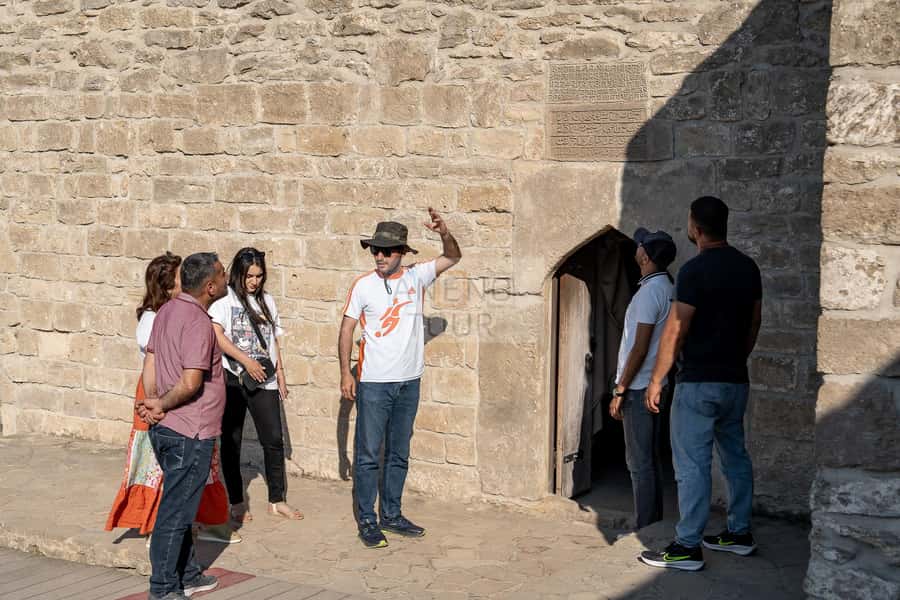
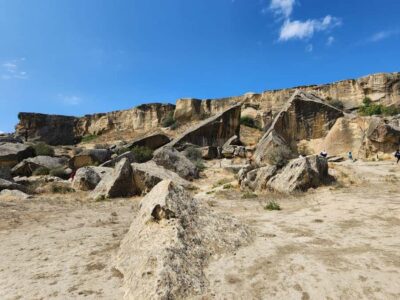
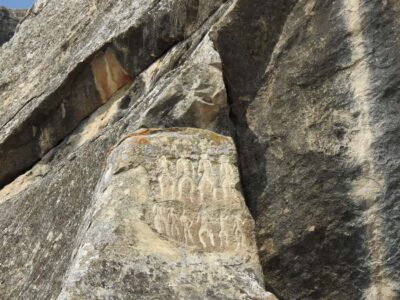
The Open Air Rock Museum is the cultural high point of the Gobustan section. Here you see original rock drawings created by people in the distant past. The carvings give the area a human scale, even when the surrounding setting feels stark and exposed.
Rock art rewards patience. The marks may not leap out at first, and you will benefit from having a guide point out what you are looking at. Figures, animals, and scenes can be easy to miss when you view the stone without direction.
This is where the tour’s cultural aim becomes clearest. Ateshgah tells you about sacred fire and later religious communities. Gobustan’s carvings take you much further back, toward the lives and beliefs of early people in the region.
The open-air setting is part of the experience, but it also means you should prepare for sun and uneven ground. Comfortable shoes are specifically advised. There is no reason to bring a large bag, and the tour does not allow luggage or oversized bags.
The rock museum may appeal less if you want fast-moving sights and dramatic photo stops. It asks you to look carefully and listen. If you enjoy archaeology, early art, and places where the original material remains in its setting, this is an important reason to make the trip.
How the route feels in a comfortable sedan
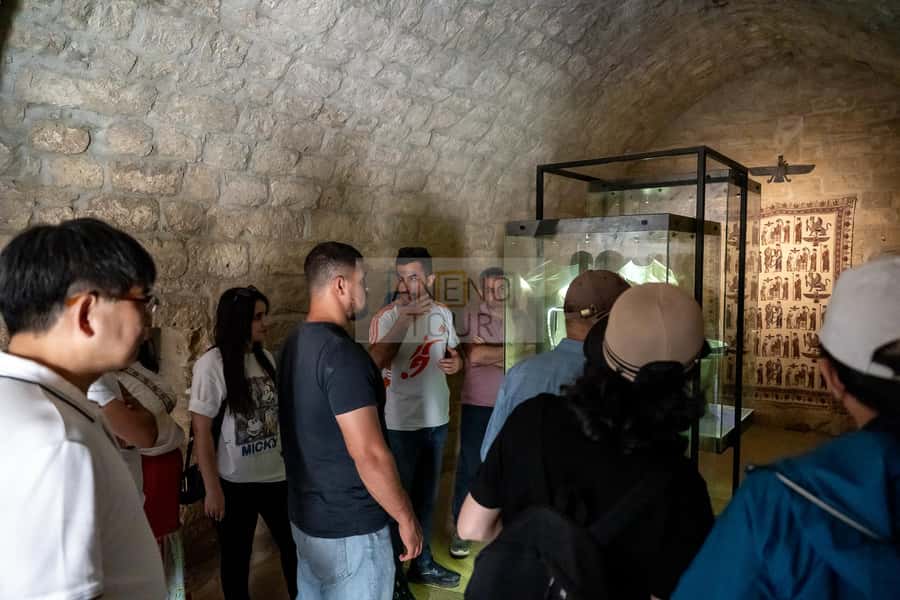
The transportation is a comfortable sedan, with pickup and return to your hotel in Baku. That arrangement removes much of the friction from a day involving several destinations outside the city.
You should still expect a full day of sightseeing and road travel. The supplied details do not give a fixed start time or exact duration, so confirm those points when booking. A schedule covering Ateshgah, Yanardag, Gobustan, the mud volcanoes, and both museum areas needs sensible pacing.
A private car can also make the day more adaptable than a large coach. You have a guide available to explain the sites, answer questions, and help keep the route moving. Habil Gudratli is named as one guide associated with the experience, and the strongest feedback about him focuses on his professional, friendly, and supportive manner.
That personal element matters most at places where signs may be limited. A good guide can explain the connection between fire worship, natural gas, geology, and rock art in a way that turns separate stops into one story.
Still, do not confuse a private sedan with a slow, leisurely tour of every location. The appeal is coverage. You see the key Absheron and Gobustan sights in one day, but each stop has a limited amount of time.
Lunch, entry fees, and the real cost
The listed price is $116 per person. That is not the final spend because food, drinks, and entrance fees are excluded.
The value depends on what you need. If you want hotel pickup, a private sedan, a professional guide, and several distant stops arranged in one day, the price can be reasonable for the convenience. You are paying not only for admission or transport, but also for route planning and a guide who can give the sites context.
If you are mainly looking for the cheapest way to reach one or two attractions, this is less compelling. One assessment specifically found that a similar trip could be bought more cheaply in Baku. That is a fair warning: compare the total cost of local alternatives before booking, especially if you are traveling alone.
Lunch is not included, but a restaurant stop can be arranged. Ask about the plan in advance so you know how much time is available and what you should budget for food. Since the day includes several outdoor stops, carry water unless your guide confirms that refreshments will be available.
You can reserve now and pay later, which helps if your Baku plans may change. Cancellation is allowed up to 24 hours before departure for a full refund, according to the provided terms.
Who will enjoy this Baku day trip
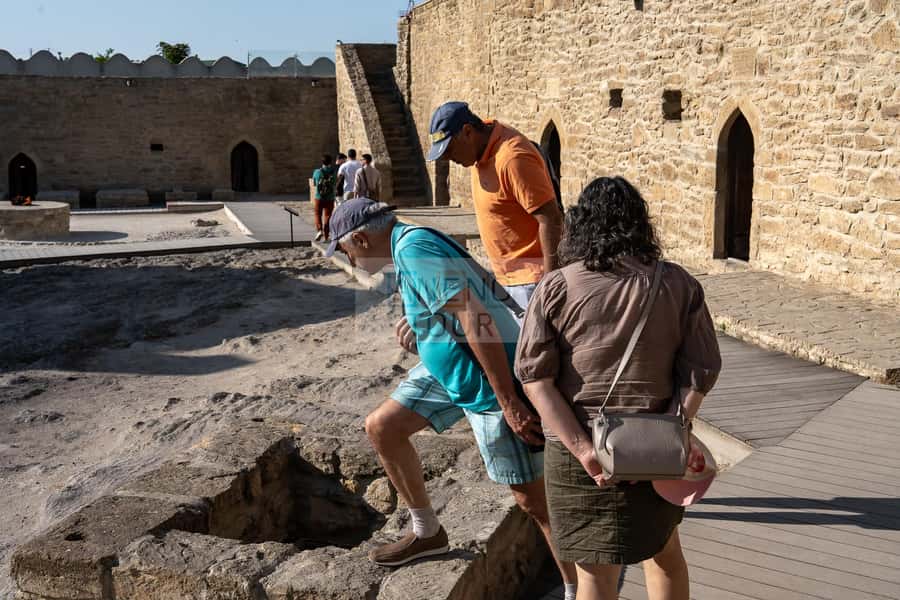
I would recommend this tour most strongly to first-time visitors with limited time in Baku. It gives you a broad introduction to the Absheron Peninsula and Gobustan without asking you to arrange separate transport.
It also suits you if you like unusual natural sights. Yanardag’s flames and the mud volcanoes are more distinctive than a standard collection of monuments. The combination makes the day memorable even if you have only a basic interest in geology.
History and archaeology fans will get the most from Ateshgah and the rock drawings. Families and groups of friends may also appreciate the private sedan format, provided everyone is comfortable with a full day of sightseeing and road travel.
I would be more cautious if you dislike packed itineraries, outdoor surfaces, or interpretive stops. The day covers a lot, and the Gobustan rock art may feel slow if you want constant action. People with back, heart, or mobility problems, and wheelchair users, should look for a more suitable option.
Should you book the Ateshgah, Yanardag, and Gobustan tour?
Book it if your priority is seeing the main Absheron and Gobustan sights in one day with hotel transport and a guide. The route has a strong mix: sacred fire at Ateshgah, natural flames at Yanardag, unusual mud volcanoes, modern museum displays, and ancient rock drawings.
Before paying, confirm the departure time, lunch plan, and entrance costs. Those extras affect the real value of the $116 price. If you prefer to travel slowly or can arrange cheaper local transport, compare alternatives. If you want a well-planned first look at Azerbaijan beyond Baku, the convenience and variety make this a sensible choice.
FAQ
What places does the tour visit?
The tour visits Ateshgah Fire Temple, Yanardag Fire Mountain, Gobustan’s 3D Bio Museum, Gobustan mud volcanoes, and the Gobustan Open Air Rock Museum.
Is hotel pickup and drop-off included?
Yes. Hotel pickup and drop-off in Baku are included, along with transportation in a comfortable sedan.
Are entrance fees included in the price?
No. Entrance fees are not included. Food and drinks are also separate expenses.
Is lunch provided?
No lunch is included, but a restaurant stop can be arranged.
What languages are available?
The tour is available with guides speaking English, Azerbaijani, or Turkish.
What should I bring?
Bring comfortable shoes. Pets and luggage or large bags are not allowed.
Just added in Baku
- From Baku: Guba-Khinalig Day Trip★ 5.0 · 12 reviews
- From Baku: Gobustan 4×4 Private Tour – Private★ 5.0 · 3 reviews
- From Baku: Gobustan Rock Art and Mud Volcanoes Tour★ 5.0 · 6 reviews
- From Baku: Gobustan Day Tour★ 5.0 · 7 reviews
- From Baku: Gobustan Guided Day Trip with Transfers★ 3.9 · 11 reviews
- From Baku: Shamakhi and Gabala scenic tour★ 5.0 · 4 reviews
- From Baku: Gabala Day Trip★ 4.0 · 11 reviews
- From Baku: Candy Mountains and Shahdag Tour★ 3.7 · 5 reviews
Gobustan and Mud Volcano Tours, compared.
Gobustan, Mud Volcano, Fire Mount, Temple Lunch Entry
Read our review →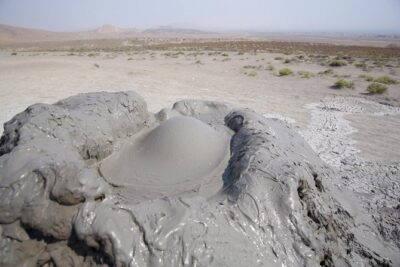
BEST Gobustan, Volcanoes & Absheron Fire Tour (Group or Private)
Read our review →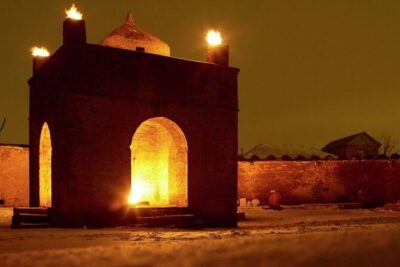
Gobustan, Volcanoes, Fire Temple and Yanardag Day Trip
Read our review →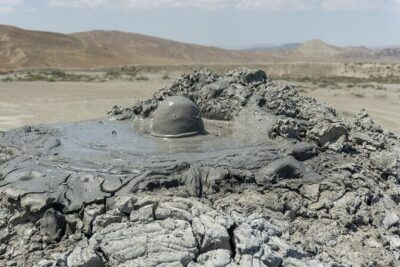
Gobustan & Mud, Fire Temple, Burning Mountain (Group & Private)
Read our review →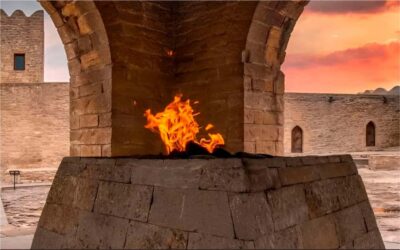
Mud Volcan-Fire Temple and Mountain Tour/Entrance inc
Read our review →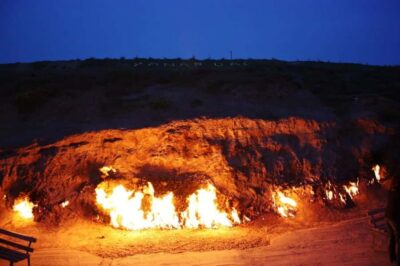
Gobustan Mud Volcanoes Temple & Entry tickets included
Read our review →Browse the lists this tour appears in