
Reviewed · TOURS IN BAKU
Full Day Sightseeing Tour of the main Attractions around Baku
Baku’s greatest surprises sit outside its polished center: mud bubbles in barren ground, flames rise from gas-fed hillsides, and ancient hunters left carvings on stone. This nine-hour small-group tour links those far-flung sights in one practical day, with guides such as Reza and Riad adding context along the way.
I like the all-in price, which covers transport, entrance tickets, lunch, and selected-hotel pickup. I also like the mix of history, faith, geology, and industry: Gobustan and Ateshgah feel very different from one another, while the mud volcanoes and Yanardag give the day some real spectacle.
The trade-off is time on the road and a brisk schedule. The mud volcano route can be rough enough to bother anyone prone to motion sickness, and the oil well is a quick stop rather than a full museum visit. Some people may also find a few attractions less dramatic than expected.
The five things to know before booking
- Gobustan puts ancient rock art at the center of the day, with about an hour to see this open-air archaeological reserve.
- The mud volcanoes are unusual rather than grand, bubbling cones and gas vents in an exposed setting reached by a potentially bumpy ride.
- Ateshgah connects Azerbaijan with Zoroastrian fire worship, making it more than a quick photo stop.
- Yanardag is a natural gas fire, not molten rock, and its flames may look modest or strong depending on conditions.
- Reza, Riad, Rena, and other guides are often praised for clear English and strong cultural explanations, so the guide can shape the whole day.
- The $60 price is strong for a full day, since lunch, tickets, vehicle, and selected hotel pickup are included.
Why this day outside Baku works
Baku is easy to explore on foot and by taxi, but the sights on the Absheron Peninsula and near Gobustan are spread out. Doing them independently means arranging several rides, checking opening details, and fitting lunch into a long route. This tour handles the basic mechanics in one sweep.
The group limit is 18 people. That is small enough for a guide to answer questions without creating the feel of a large coach excursion, though the actual vehicle may still feel compact when the group is full. The air-conditioned transport matters in Azerbaijan’s warm months, especially on a day with several outdoor stops.
The tour starts at 9:00 a.m. and lasts about nine hours. You return to the meeting point at the end. Pickup is offered from selected hotels, so check your accommodation before assuming door-to-door service.
The strongest part of the day is the variety. You move from an oil field and a mosque to mud volcanoes, prehistoric carvings, a fire temple, and a gas-fed hillside. It is a broad introduction to the forces that shaped Azerbaijan: petroleum, trade, religion, geology, and old settlement.
A few more things to do in Baku worth a look
- Sheki – Full Day Tour to Five Regions of Azerbaijan
★ 4.5 · 279 reviews - Full Day Trip in Baku (Gobustan & Absheron)
★ 5.0 · 72 reviews - Khizi Candy Mountains, Shahdagh Full Day Guided Tour
★ 4.5 · 61 reviews
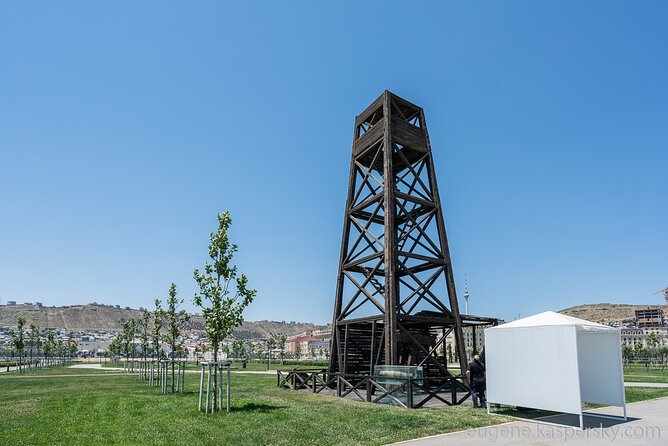
The first oil well and Bibi-Heybat Mosque
The opening stop is the so-called World’s First Oil Well near Bibi-Heybat. You spend about 10 minutes here, and admission is free. It is a short visit, but it gives useful context for Baku’s later growth and its long connection with petroleum.
Azerbaijani historians point to Russian archive documents showing that a well was drilled at the Bibi-Heybat field in 1846. That predates the beginning of commercial oil production in the United States by 13 years. The claim is best treated as a historical point tied to the site’s local importance, not as a sprawling museum experience.
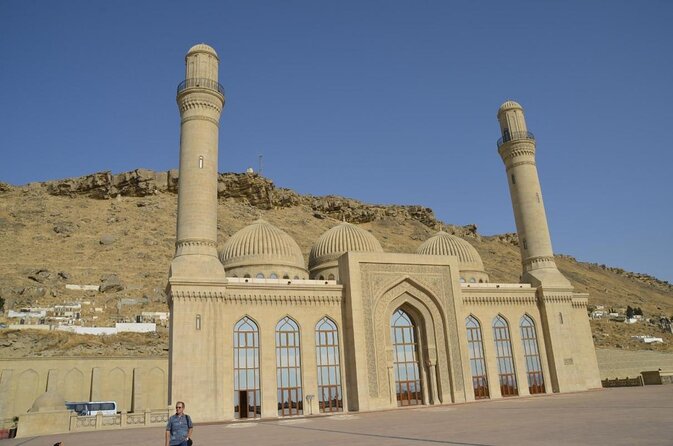
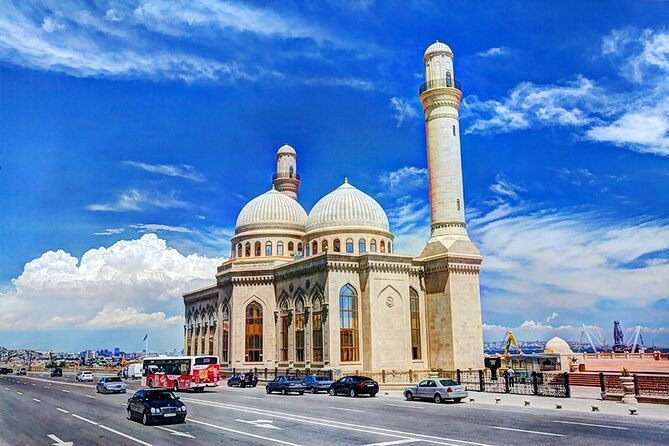
Next comes Bibi-Heybat Mosque, with about 20 minutes inside or around the site. The mosque sits near the mountains of Baku beside a large cemetery. Its name refers to Bibi-Heybet, described as a relative of the Prophet Muhammad, whose tomb is located here.
This is an active religious place, not simply an old monument. The site is associated with healing and pilgrimage, and many people have chosen burial nearby. Your guide can help explain the place’s religious role, which makes this short stop more meaningful than a quick exterior photograph.
Keep your expectations measured. Neither stop takes long, and the value comes mainly from the explanation and the connection between oil, faith, and the Baku area. If you prefer lengthy visits at each attraction, the pace may feel fast.
Mud volcanoes near Gobustan
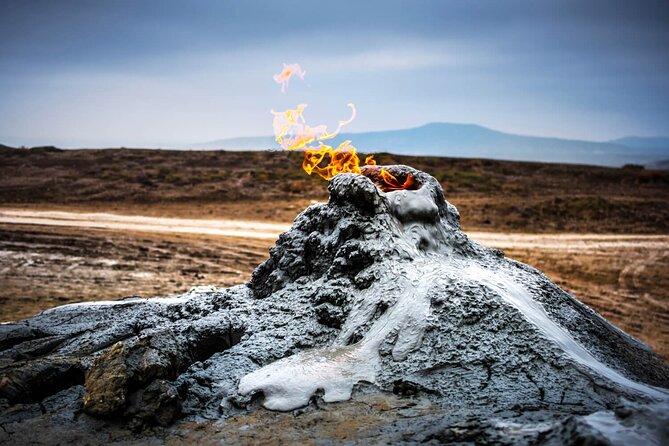
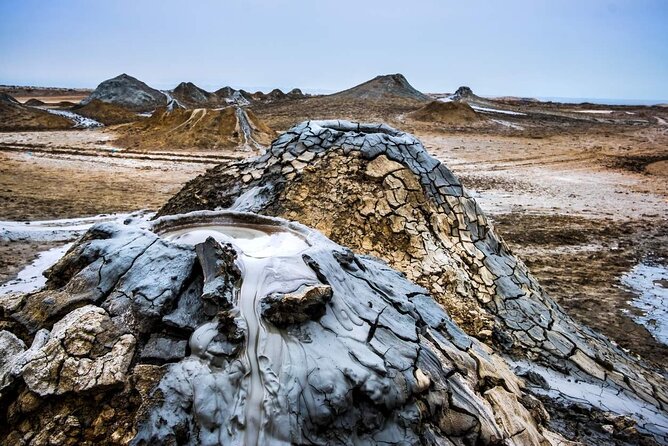
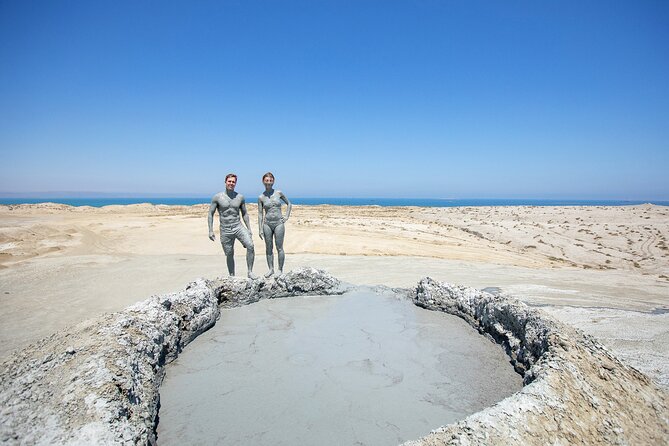
The mud volcanoes are one of the day’s oddest sights. You have about 25 minutes to see them, with admission included. These formations are not lava volcanoes. They push mud and gas through openings in the ground, forming low cones, craters, or raised mounds.
The effect can be surprisingly lively. You might see mud bubbling in small pools, with gas escaping from the earth. The appeal is scale and strangeness rather than height. This is a place where a simple natural process becomes a memorable photograph.
The route is the main concern. One person specifically noted that anyone prone to motion sickness should skip the mud volcano portion, and that is practical advice. The road or track can make this a rougher part of the outing than the paved city stops. If your stomach is sensitive, ask the operator in advance about the vehicle and the possibility of waiting elsewhere.
The stop may also be affected by wind and conditions. The setting is open and exposed, so bring water, sun protection, and shoes you do not mind wearing on dusty ground. Those details are not supplied as tour requirements, but they make sense for an outdoor stop of this kind.
Gobustan’s ancient carvings
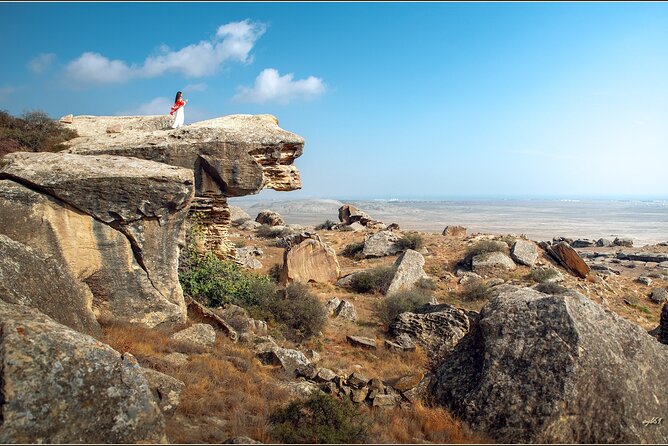
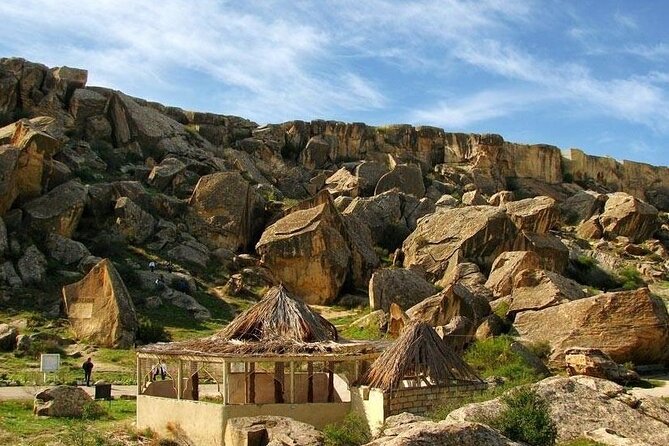
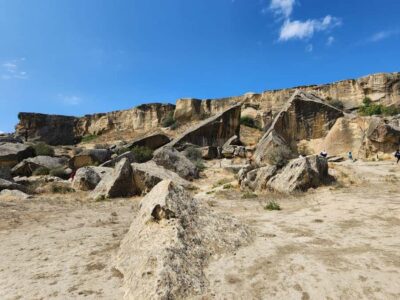
Gobustan receives about one hour, the longest single visit before the fire temple. It is an archaeological reserve and open-air museum with a large collection of ancient artifacts and rock art. For many people, this is the historical high point of the tour.
The carvings show that people used this area long before modern Baku and its oil industry. Your guide’s role matters here because the rock surfaces can be difficult to read without explanation. A good guide helps you notice figures, scenes, and patterns that might otherwise look like weathered scratches.
This stop also gives the day a needed change of pace. After the quick oil well, mosque, and mud volcano visit, you have time to look closely and ask questions. The site links Azerbaijan to early human activity without requiring a full day at a remote archaeological reserve.
The schedule still leaves only an hour, so you should not expect to see every corner of Gobustan. Think of it as a focused introduction. If ancient art is your main interest, you may wish for more time, but the hour is enough to understand why the reserve matters.
Same base, a different sort of day:
- Baku: Gobustan, Mud Volcano, Fire Mount, Temple Lunch Entry
★ 4.9 · 3,246 reviews - Baku: Guba, Shahdag, Laza & Lunch w/ Free City & Night Tour
★ 4.8 · 1,455 reviews - BEST Gobustan, Volcanoes & Absheron Fire Tour (Group or Private)
★ 5.0 · 1,254 reviews - Gobustan and Absheron tour (All inclusive)
★ 5.0 · 1,014 reviews
Lunch and the value of the package
Lunch is included, along with local taxes and entrance tickets. Several guides, including Reza and Riad, receive especially strong praise for making the meal part of an enjoyable day, and the food is often described as delicious or typical of the area.
The exact menu is not specified, so do not book expecting a particular dish. The important point is convenience. On a long route with scattered attractions, you do not have to search for a restaurant, negotiate a separate bill, or lose sightseeing time arranging food.
At $60 per person, the package offers good value if you want all the major stops in one day. Add up a private vehicle, several admissions, lunch, and a full day’s guiding, and the price looks reasonable. The value is less clear if you dislike group schedules or would rather spend an entire morning at Gobustan and skip the shorter stops.
Group discounts are available. Confirmation arrives at booking, and the tour requires a minimum number of participants. If that minimum is not met, the provider offers another date or experience, or a full refund.
Ateshgah Fire Temple and the old faith of fire
Ateshgah receives about one hour and is one of the most rewarding stops for anyone interested in religion. The site is known as a fire-worshipper temple, and its early structures date to the second and third centuries. Zoroastrianism spread through Azerbaijan in that period, and temples were built in several regions.
The temple at Surakhani functioned until the seventh century, when Islam was adopted in Azerbaijan. That transition gives the visit real substance. You are not simply looking at an unusual courtyard. You are seeing a place connected to an older religious tradition and to the cultural changes that followed.
The name Ateshgah is linked with fire, and the temple’s story fits Azerbaijan’s long association with natural gas. The visit works best when your guide explains how faith, flame, and the petroleum-bearing ground fit together.
An hour allows time to look around and hear the main story without making the stop feel rushed. It is also a useful counterpoint to Bibi-Heybat Mosque. One site reflects Islamic practice, while the other introduces an earlier tradition that shaped the region.
Yanardag, where gas burns from the ground
The final major stop is Yanardag, about 30 minutes from the schedule. It is a flaming hillside on the Absheron Peninsula where natural gas escapes from the upper soil and catches fire when it meets oxygen.
The flames are not caused by an underground river of lava. Rain and sand do not easily put them out because the gas continues to feed them. The result is one of Azerbaijan’s most distinctive natural sights, especially when you understand the geology behind it.
Yanardag is often the highlight for people who enjoy unusual natural attractions. The fire mountain is easy to grasp at a glance, yet the explanation adds depth. It also brings the day’s themes together: gas beneath the ground, ancient fire worship, and the modern oil economy.
Conditions affect the experience. Wind can make lighting a small demonstration difficult, and the visible flames may not look equally strong every day. The site is worth seeing, but you should not expect a huge theatrical blaze. Its charm lies in the fact that fire is coming directly from the earth.
The guide can make or break the day
The most consistent strength of this experience is the guiding. Reza, Riad, Rena, Riyadh, and Sabinah are among the names associated with particularly strong days, with praise for clear English, humor, cultural knowledge, and explanations of several religions.
That matters because many stops need interpretation. The first oil well is brief. The mud volcanoes are easy to misunderstand. Gobustan benefits from someone pointing out what the carvings mean, while Ateshgah needs historical and religious context. A guide who simply moves you from place to place would leave much of the value behind.
Communication before pickup is also part of the practical appeal. One account describes a courtesy WhatsApp message, a clean vehicle, and smooth pickup arrangements. Vehicle quality can vary, however. One person found the vehicle less satisfactory, while others described the van as comfortable and the driver as safe.
With a maximum of 18 people, you should have more access to the guide than on a large bus. Still, ask questions early and stay near the guide at outdoor sites. The itinerary has several short stops, and it is easy to miss useful explanations if you wander off.
Who should book this tour
I would choose this tour for a first visit to Baku when you want to see the main sights outside the city without building your own transport plan. It suits curious sightseers who like a blend of archaeology, religion, geology, and industry.
It is also a good fit for solo visitors and couples who want company but do not want a huge group. The included lunch, tickets, and pickup remove much of the day’s small planning work.
I would think twice if you get motion sick, dislike rough roads, or prefer slow visits. The mud volcano route is the biggest concern, and the schedule gives only 10 minutes at the oil well and 20 minutes at Bibi-Heybat Mosque. This is a survey of the region, not a leisurely study of every site.
Free cancellation is available up to 24 hours before the 9:00 a.m. start for a full refund. Changes or cancellations inside that window are not accepted for a refund, and bad weather can lead to a new date or full refund.
Should you book it?
Book it if you want an efficient, well-priced day beyond Baku and value a guide who can explain the area’s unusual mix of ancient art, Islamic tradition, Zoroastrianism, natural gas, and oil. The $60 price is especially appealing because it includes lunch, admissions, transport, and selected hotel pickup.
Skip it if motion sickness is a serious issue or if you want long, quiet visits at just one or two places. For most first-time visitors, though, this is a practical way to see the Absheron and Gobustan highlights in a single day, with enough variety to keep the route interesting.
FAQ
How long does the tour last?
The tour lasts about nine hours, beginning at 9:00 a.m. and ending back at the meeting point.
What is included in the price?
The price includes an air-conditioned vehicle, professional guide, entry tickets, lunch, local taxes, and hotel pickup from selected hotels.
How much does the tour cost?
The listed price is $60 per person. Group discounts are offered.
Is hotel pickup available?
Yes, pickup is offered from selected hotels. Confirm that your hotel is covered before booking.
How large is the group?
The tour has a maximum of 18 participants.
Which religious sites does the tour visit?
It visits Bibi-Heybat Mosque and Ateshgah Fire Temple. Ateshgah provides an introduction to Zoroastrianism and earlier fire worship in Azerbaijan.
Are the mud volcanoes included?
Yes. Admission to the mud volcanoes is included, and the visit lasts about 25 minutes.
Is lunch included?
Yes, lunch is included in the tour price.
What is the cancellation policy?
You can cancel up to 24 hours before the experience starts for a full refund. Cancellations or changes made less than 24 hours before the start time are not refunded or accepted. If poor weather or an insufficient number of participants cancels the tour, you are offered another date or experience, or a full refund.
Just added in Baku
- From Baku: Guba-Khinalig Day Trip★ 5.0 · 12 reviews
- From Baku: Gobustan 4×4 Private Tour – Private★ 5.0 · 3 reviews
- From Baku: Gobustan Rock Art and Mud Volcanoes Tour★ 5.0 · 6 reviews
- From Baku: Gobustan Day Tour★ 5.0 · 7 reviews
- From Baku: Gobustan Guided Day Trip with Transfers★ 3.9 · 11 reviews
- From Baku: Shamakhi and Gabala scenic tour★ 5.0 · 4 reviews
- From Baku: Gabala Day Trip★ 4.0 · 11 reviews
- From Baku: Gabala Cable Car, Nohur Lake & Juma Mosque Trip★ 4.5 · 6 reviews
Tours in Baku, compared.
Gobustan, Mud Volcano, Fire Mount, Temple Lunch Entry
Read our review →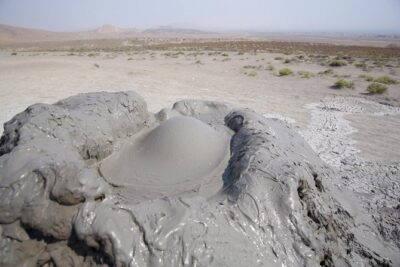
BEST Gobustan, Volcanoes & Absheron Fire Tour (Group or Private)
Read our review →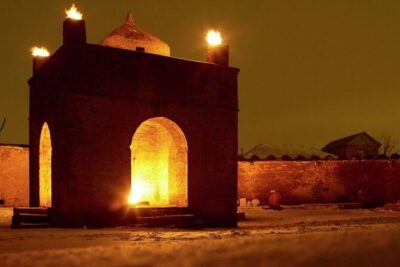
Candy Cane, Guba, Khinaliq village with Homemade Lunch
Read our review →
Guba & Sahdag Tour Lunch included and Laza Waterfall
Read our review →
Guba Khinalig & Candy Cane Tour with Homemade Lunch
Read our review →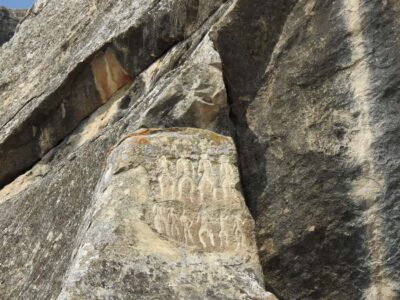
Gobustan, Volcanoes, Fire Temple and Yanardag Day Trip
Read our review →Browse the lists this tour appears in