
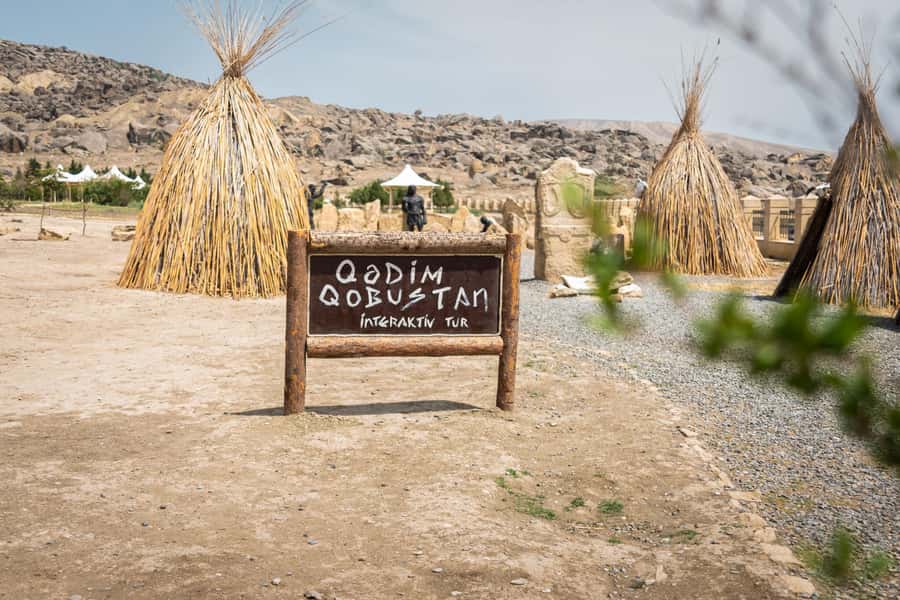
Reviewed · GOBUSTAN AND MUD VOLCANO TOURS
Baku: Half-Day Gobustan and Mud Volcanoes Tour with Entry
Azerbaijan packs some wonderfully odd sights outside Baku: mud volcanoes that bubble like gray soup, Stone Age drawings scratched into bare rock, and an old oil well tied to the country’s industrial past. This half-day outing links them with a stop at the ornate Bibiheybat Mosque, giving you a useful first look at Azerbaijan beyond the capital.
I like two things here. First, the route covers several places that are hard to combine by public transport, especially the remote volcanoes. Second, the tour is short enough to fit into a busy Baku schedule, and guides such as Leyla, Elcan, Solmaz, and Narmin have earned praise for their humor, patience, and clear storytelling. The drawback is the pace: four to five hours is tight, so some stops can feel hurried, especially after recent rain.
Key points to know before booking
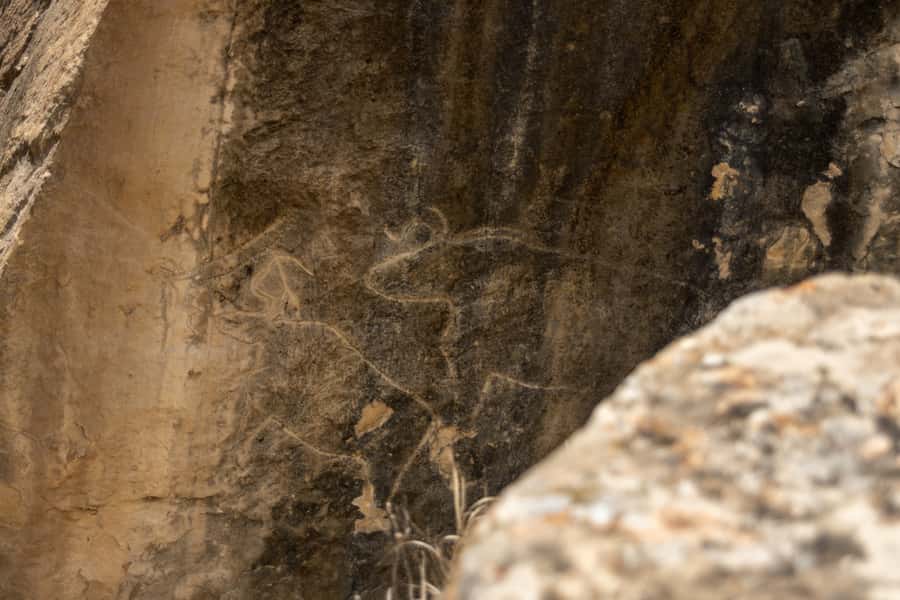
- Mud volcanoes are the tour’s most unusual stop: Expect bubbling cones, bare ground, and a rough ride in a Soviet Lada or similar SUV.
- Gobustan combines an indoor museum with outdoor rock art: You get context first, then see the petroglyphs and Stone Age setting.
- Bibiheybat Mosque is an active spiritual site: Women need to cover their hair to enter.
- The route includes an early oil well: It offers a quick link between Azerbaijan’s ancient past and its oil-driven modern history.
- The half-day format saves time: It normally runs in the first part of the day and lasts about four to five hours.
- Rain can change the plan: The mud volcanoes may be skipped when the unpaved route is too wet.
Why this half-day route works from Baku
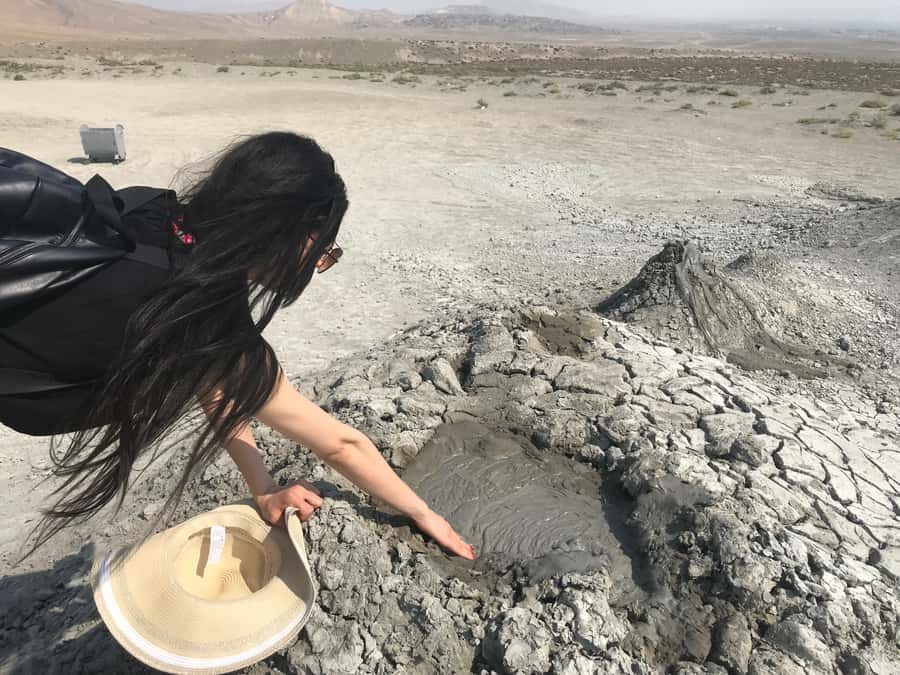
Baku is an easy base, but the most distinctive sights in the Absheron region are spread out. Gobustan lies roughly 70 kilometers from the city, and the mud volcanoes require a separate rough-road transfer from the main tour vehicle. Organizing all of this alone would take more effort than the $22 starting price suggests.
The tour gives you hotel pickup and drop-off, comfortable transport between the main stops, an English-speaking guide, and local taxes and fees. Russian and Turkish are also available. For a first visit to Azerbaijan, that makes the trip useful: you spend your time looking out the window and listening rather than sorting out rural transport.
The group may be shared or private, depending on the option you book. One small group had only two people, while other departures used a bus shared with people continuing on a longer day tour. That means the exact feel can vary. A small group may move quickly and feel personal. A larger group may be less flexible, but the vehicle has air conditioning and keeps the price low.
The schedule runs in the morning. You return to Baku around lunchtime on the half-day version, though the exact timing can depend on pickup arrangements and road conditions. I would avoid putting an important appointment immediately afterward. The route is efficient, but it is not designed for lingering at every stop.
Other petroglyph and mud volcano runs from Baku:
- Baku: Gobustan, Mud Volcano, Fire Mount, Temple Lunch Entry
★ 4.9 · 3,246 reviews - BEST Gobustan, Volcanoes & Absheron Fire Tour (Group or Private)
★ 5.0 · 1,254 reviews - Gobustan and Absheron tour (All inclusive)
★ 5.0 · 1,014 reviews
Bibiheybat Mosque and the first oil well
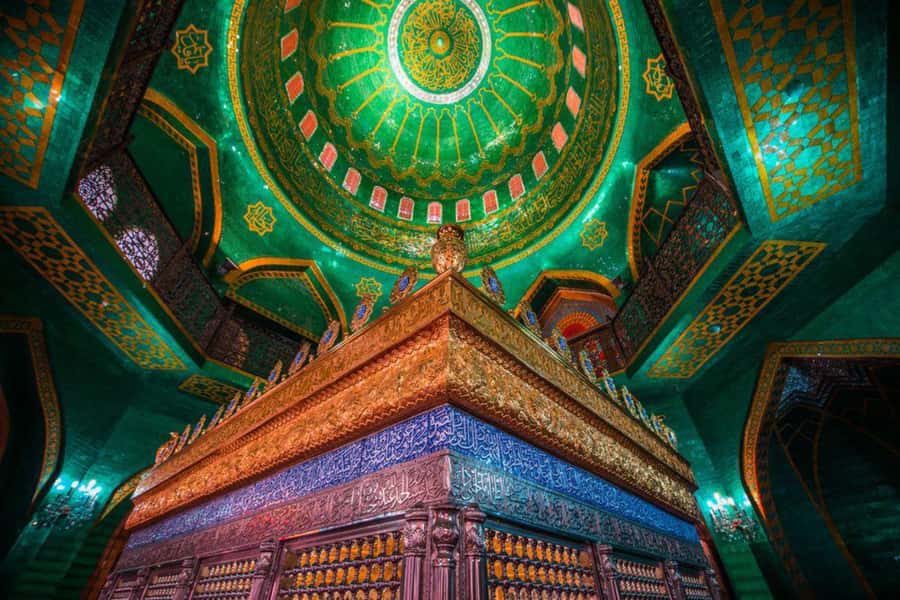
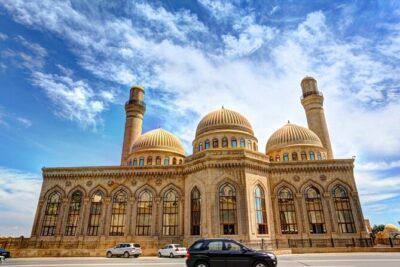
The first major stop is Bibiheybat Mosque, one of Azerbaijan’s important Islamic monuments. The mosque includes the tomb of Ukeyma Khanum, described as a descendant of the Islamic Prophet Muhammad, and it remains a spiritual center for Muslims in the region.
The visit gives the tour an important human and religious dimension before the more geological and archaeological stops. You are not just looking at old stones and strange mud cones. You are also seeing a living place of worship that still matters to local people.
Dress and behavior matter here. Women must cover their hair to enter the mosque, so bring a scarf if needed. The supplied information does not specify all clothing rules, so modest dress is the sensible choice. The stop is not only about architecture. It is a chance to understand why Bibiheybat continues to draw worshippers.
On the way to the mosque, the route passes what is described as the world’s first industrially drilled oil well. This is a brief roadside or passing sight rather than a full museum visit, so keep your expectations in check. Still, it is a useful detail. Azerbaijan’s oil story did not begin with modern skyscrapers and offshore platforms. The country has been tied to oil production for a very long time.
I like this early section because it places the rest of the day in context. Gobustan shows human life thousands of years ago. The oil well points to industrial change. Bibiheybat connects the region to faith and continuing religious life.
Gobustan Museum and Stone Age rock art
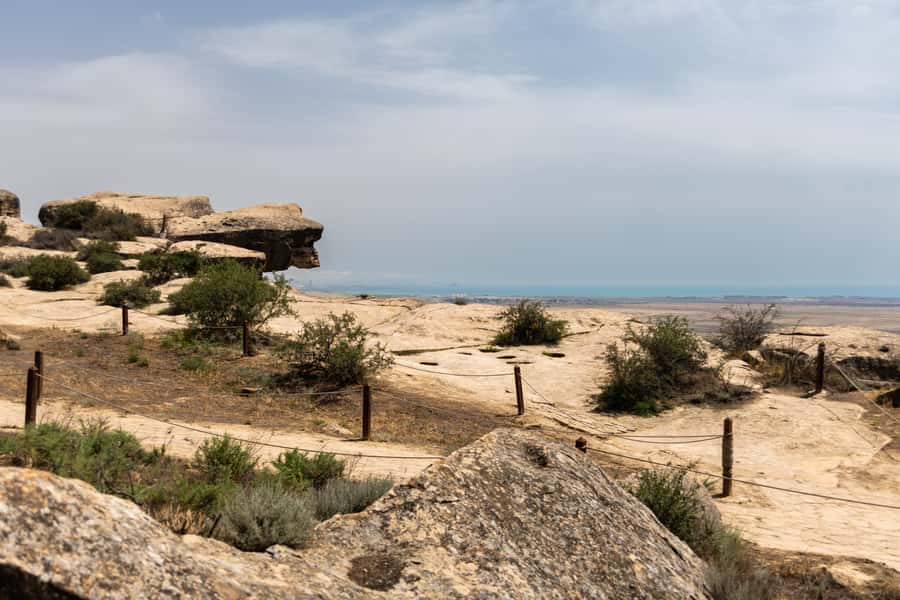
The Gobustan section is the archaeological heart of the trip. The museum is both indoor and outdoor, and it sits around 70 kilometers from Baku. You begin with information and displays, then move outside to see the rock formations and petroglyphs in their setting.
The drawings are the reason to choose this outing over a simple mud volcano transfer. Gobustan preserves images made by people in the Stone Age period, along with evidence of how earlier communities lived and viewed the world. The art is not presented in a polished city gallery. You see it among open rock and dry ground, which makes the setting part of the experience.
A guide adds real value here. Without explanation, some carvings can be difficult to spot or interpret. The guides praised for this route have been described as patient, friendly, and willing to answer questions. Elcan, for example, was singled out for explaining Azerbaijan with patience and honesty. Narmin was praised for telling stories about the places, while Mahabat was described as attentive and willing to answer questions.
That human element matters in Gobustan. The site can feel quiet and stark, and the meaning of individual carvings is not always obvious at first glance. A good guide helps you notice what you are seeing without turning the stop into a lecture.
The tradeoff is time. The half-day route has to get you to the volcanoes and back to Baku, so you may not have as long as you would on a private full-day visit. One practical way to handle this is to decide in advance what interests you most. If ancient art is your priority, stay close to the guide and ask your questions early. If the volcanoes are your main goal, accept that Gobustan will be a brisk visit.
Azerbaijan’s bubbling mud volcanoes
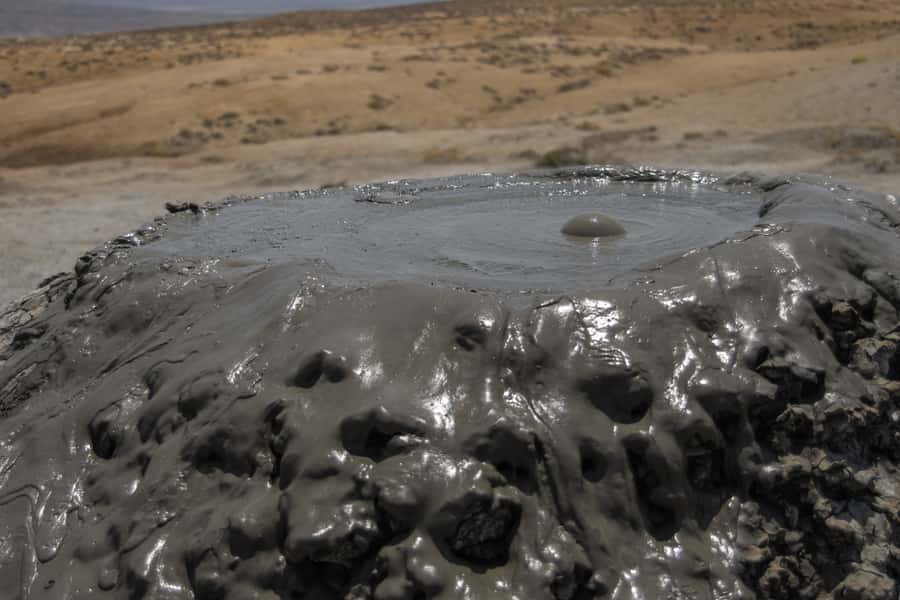
The mud volcanoes are the most memorable part for many people, and they are certainly the strangest. Azerbaijan is thought to have nearly 400 mud volcanoes, the largest concentration in the world. These are not conventional volcanoes with lava and towering red peaks. They produce mud, gases, and small eruptions, creating low cones and pools of gray or brown sludge.
The surrounding terrain can look bare, messy, and almost otherworldly. The volcanoes may bubble quietly, or they may make a more active display. They can reach impressive dimensions, with some of the largest examples in Azerbaijan including Boyuk Kanizadag and Toraghai. On this tour, you are visiting a group of mud volcanoes rather than climbing one enormous mountain.
The transfer is part of the fun. After the main vehicle reaches the Gobustan area, you switch to a Soviet SUV, often described as a Lada. The ride can be bumpy and rough, but it adds a memorable local touch. Tasmin called the off-road trip unexpected and fun. If you prefer smooth roads and quiet sightseeing, this may be the least comfortable part. If you enjoy a little mechanical adventure, it is likely to be a highlight.
Wear comfortable shoes that you do not mind taking onto dusty or muddy ground. The surface may be dry, but conditions change. Do not count on a neat paved path or a polished visitor center at the volcanoes. The appeal is the raw setting and the odd sight of mud bubbling from the earth.
Rain is the key practical concern. When the track is wet, the mud volcanoes may be skipped because the route is accessible only by car when dry enough. This is not a minor detail. If seeing the volcanoes is your main reason for booking, check the weather and understand that the company may need to change the plan for safety and access.
A few more things to do in Baku worth a look
- Baku: Atashgah Fire Temple & Burning Mountain Half-Day Tour
★ 4.0 · 35 reviews - Half-Day Baku City Sightseeing Tour
★ 5.0 · 23 reviews
A fast schedule with a useful mix of sights
This is not a slow sightseeing day. It is a compact loop that combines a mosque, an oil landmark, an archaeological site, and a geological curiosity. That variety is its strength, but it also explains why the schedule can feel rushed.
One guest felt the trip packed too much into too little time and suggested starting an hour earlier. Another found that the program ran exactly as advertised and that all three main places were worth visiting. Both views can be true. The route is efficient, but the experience depends on whether you prefer broad coverage or long visits.
I would choose this format if you have only a few days in Baku, want an introduction to the region, or do not want to arrange several vehicles yourself. It also works well for families and mixed-interest groups. Children may find the Soviet SUV and bubbling mud more memorable than a long museum visit, while adults can focus on the archaeological and religious context.
If you have a strong interest in Gobustan’s archaeology, a private or longer visit may suit you better. The same is true if you like photography and want time to wait for the right light. The half-day tour gives you a taste of each place, not a slow study of any one of them.
Guides, transport, and the human side of the trip
The guide can make or break a short tour because there is little spare time. The strongest guide names associated with this departure include Leyla, Layla, Elcan, Solmaz, Narmin, Nariman, Zaur Aghayarli, Aykhan, and Mahabat. Names and assignments can vary by date, so do not book on the assumption that one particular guide will lead your group.
The praise is consistent in a useful way: guides are described as friendly, energetic, funny, helpful, and clear. Leyla was especially noted for offering to take photos, explaining local history, and making the group feel comfortable. Nariman was praised for being helpful with children. Solmaz was described as kind and informative.
That style suits this route. You want someone who can explain a mosque respectfully, make old carvings understandable, and answer everyday questions about Azerbaijan without wasting time. A guide who feels approachable also helps when the day moves quickly.
Transport between Baku and the main sites is described as comfortable and air-conditioned. The Soviet SUV transfer is a different matter. It is not luxury transport, and the rough road is part of the experience. If you have back problems or dislike jolting rides, ask for current conditions before you commit. The provided details do not give a separate accessibility assessment, so you should raise specific mobility concerns with the operator.
Is $22 good value?
At $22 per person, this is a strong price for the amount of ground covered, particularly if hotel pickup, drop-off, transport, a guide, and the selected entry tickets are included. The main value is not just the admission fees. It is the time saved by connecting places that are awkward to reach independently.
Some booking choices exclude tickets. In that case, carry $6 for Gobustan National Park entry and $8 for the Soviet SUV transport to the mud volcanoes. Check the option carefully before paying, since the advertised price and the final cost can differ depending on whether tickets are included.
One person felt the tour cost a little high compared with cheaper full-day options, but chose it because the half-day timing suited the schedule. That is the right comparison. You are paying for a short, focused outing, not the lowest possible price per hour. If you want a longer route with more stops, another full-day tour may offer better value. If you want to be back in Baku before lunch, this format earns its keep.
There is one small money tip. A village stop for water was reported to have prices about three times higher than downtown Baku. Bring your own water from the city so you are not forced to buy at the most expensive stop.
Who should book this tour?
I would recommend it to first-time visitors who want to see more than Baku’s center without spending a full day away. It is also a good fit for people who value a guide, prefer hotel pickup, and do not want to solve the Gobustan and volcano transport puzzle alone.
You should book it if your priorities are:
- Seeing mud volcanoes without arranging a separate rural transfer
- Visiting Gobustan in a short morning
- Learning about the sites from an English, Russian, or Turkish-speaking guide
- Combining archaeology, religion, oil history, and unusual geology
- Keeping the cost near $22 when the included-ticket option is selected
Think twice if you need a relaxed pace, want extensive time for photography, or are visiting during wet weather mainly to see the volcanoes. The tour covers a lot, but it does so briskly.
For flexibility, cancellation is allowed up to 24 hours before departure for a full refund, and you can reserve now and pay later. Those terms are useful if your Baku plans may shift.
Final call: book it for variety and convenience
This is a good-value introduction to the sights outside Baku. The mud volcanoes and Soviet SUV ride supply the oddball fun, while Gobustan and Bibiheybat give the morning real cultural weight. The oil well adds another link between Azerbaijan’s old and modern identities.
Book it when you want several distinctive stops in four to five hours and are comfortable with a quick pace. Choose a longer or private outing when Gobustan deserves your full attention. Most of all, select the ticket-included option if available, bring water and comfortable shoes, and keep an eye on the rain forecast.
FAQ
How long does the Gobustan and Mud Volcanoes tour last?
The tour lasts about four to five hours and runs during the first part of the day.
What places does the tour visit?
The route includes Bibiheybat Mosque, a historic oil well, Gobustan Museum and its petroglyphs, Gobustan National Park, and a group of mud volcanoes.
Are entry tickets included?
Tickets are included only if you select the tickets-included option. With the tickets-excluded option, carry $6 for Gobustan National Park and $8 for transport to the mud volcanoes in a Soviet SUV.
Can the mud volcanoes be skipped?
Yes. During rainy weather, the mud volcanoes may be skipped because the route is accessible by car only when the track is dry enough.
What should I bring?
Bring comfortable shoes. You should also carry water, since a village stop may charge much more than shops in central Baku.
Do women need to cover their hair at Bibiheybat Mosque?
Yes. Women must cover their hair if they want to enter the mosque.
Which languages are available?
The tour is available in English, Russian, and Turkish.
Just added in Baku
- From Baku: Guba-Khinalig Day Trip★ 5.0 · 12 reviews
- From Baku: Gobustan 4×4 Private Tour – Private★ 5.0 · 3 reviews
- From Baku: Gobustan Rock Art and Mud Volcanoes Tour★ 5.0 · 6 reviews
- From Baku: Gobustan Day Tour★ 5.0 · 7 reviews
- From Baku: Gobustan Guided Day Trip with Transfers★ 3.9 · 11 reviews
- From Baku: Shamakhi and Gabala scenic tour★ 5.0 · 4 reviews
- From Baku: Gabala Day Trip★ 4.0 · 11 reviews
- From Baku: Gabala Cable Car, Nohur Lake & Juma Mosque Trip★ 4.5 · 6 reviews
Gobustan and Mud Volcano Tours, compared.
Gobustan, Mud Volcano, Fire Mount, Temple Lunch Entry
Read our review →
BEST Gobustan, Volcanoes & Absheron Fire Tour (Group or Private)
Read our review →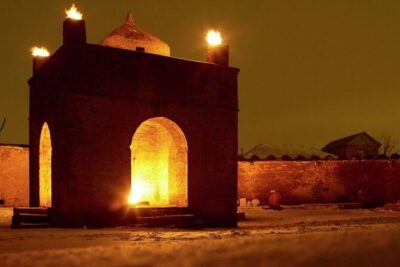
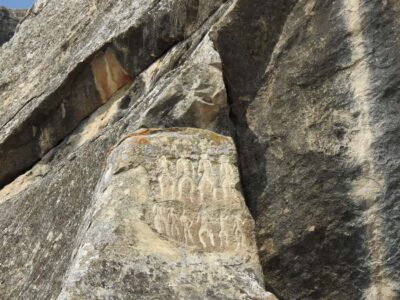
Gobustan, Volcanoes, Fire Temple and Yanardag Day Trip
Read our review →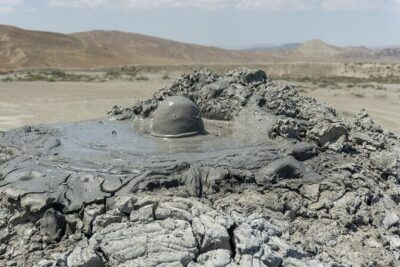
Gobustan & Mud, Fire Temple, Burning Mountain (Group & Private)
Read our review →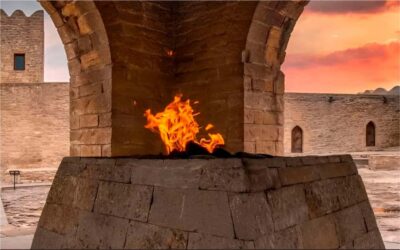
Mud Volcan-Fire Temple and Mountain Tour/Entrance inc
Read our review →
Gobustan Mud Volcanoes Temple & Entry tickets included
Read our review →Browse the lists this tour appears in