
Reviewed · FIRE TEMPLE AND BURNING MOUNTAIN TOURS
Private Ateshgah & Yanardag Tour
A natural gas fire burning from a hillside for thousands of years is the star of this outing. Add a 17th-century temple built around sacred flames, and you get a clear picture of why Azerbaijan has long been linked with fire worship. The private format lets you set a convenient start time and move at your own pace.
I like the personal guide service and the comfort of a private, air-conditioned car. Guides including Tahir, Emin, Ali, Murad, and Nur are repeatedly praised for clear explanations and friendly help. I also like the easy hotel pickup and the chance to stop at the Heydar Aliyev Center for photographs on the way back.
The main thing to watch is the ticket wording. Although the tour highlights mention included entrance fees, the detailed inclusions say museum and entry tickets are not included. Confirm the current arrangement before booking and bring extra money for admission.
Key points to know before booking
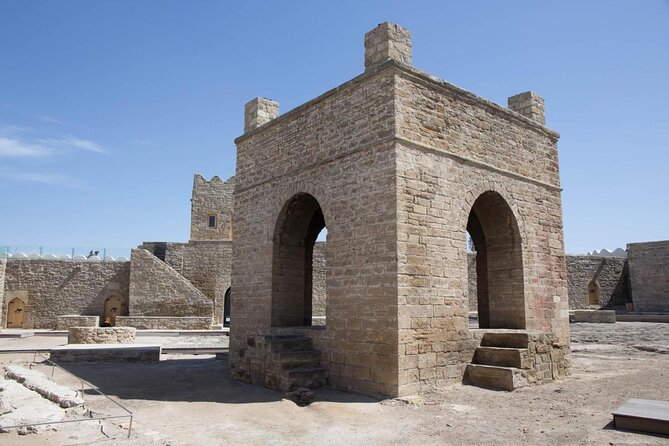
- Ateshgah combines several traditions: The temple has connections with Zoroastrians, Hindus, and Sikhs, along with its role on historic trade routes.
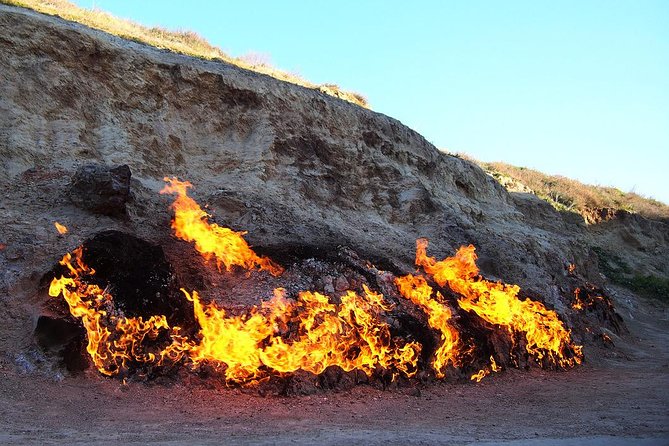
- Yanar Dag is a real natural gas fire: Flames rise from the side of a hill, even in wet or snowy weather, according to the tour information.
- The private car saves time: You avoid organizing your own transport across the Absheron Peninsula and can set a schedule that suits your day.
- Guides add much of the value: Tahir, Emin, Ali, Murad, and Nur are among the guides praised for history explanations and warm service.
- The Heydar Aliyev stop is outside only: Plan on about 20 minutes for photographs rather than an interior museum visit.
- Three to four hours is a sensible estimate: The main site visits take about two and a half hours, with the rest used for driving and the city stop.
Why Azerbaijan’s fire sites are worth your morning
Baku is more than old-city walls, grand oil-era buildings, and modern towers. Out on the Absheron Peninsula, natural gas has shaped religious practice and local identity for centuries. This tour takes you to two places where fire is not just a symbol carved into stone. It is the subject itself.
The contrast makes the half-day work well. Ateshgah is a built site with courtyards, rooms, displays, and religious associations. Yanar Dag is simpler and stranger: a strip of flame coming from the ground at the foot of a hill. One place asks you to think about people who traveled, worshipped, traded, and built around fire. The other gives you the raw natural phenomenon.
I would choose this excursion early in a Baku stay. It gives you context for the country’s fire imagery, and the private format keeps it from taking over your whole day. You return to Baku after roughly three to four hours, leaving time for the Old City, museums, or a long lunch.
The drive also matters. Ateshgah is about 30 kilometers from Baku in the Surakhani settlement, so this is not a practical walk-up attraction from the center. With hotel pickup and a driver, you can use the road time to ask questions about Baku and Azerbaijan. Several guide accounts specifically praise Tahir and Emin for explaining the city while driving, which is useful when you want more than a ride between sites.
More fire-site trips from Baku:
- Baku: Gobustan, Volcanoes, Fire Temple and Yanardag Day Trip
★ 4.7 · 433 reviews - Gobustan & Mud, Fire Temple, Burning Mountain (Group & Private)
★ 4.5 · 418 reviews - Gobustan-Mud Volcan-Fire Temple and Mountain Tour/Entrance inc
★ 5.0 · 267 reviews
Ateshgah Fire Temple, where worship grew around flame
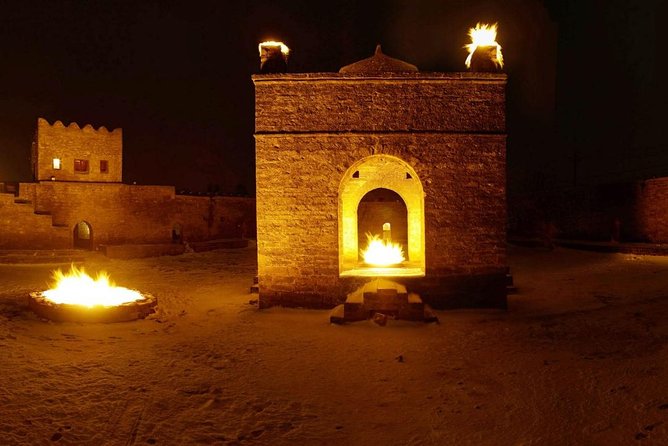
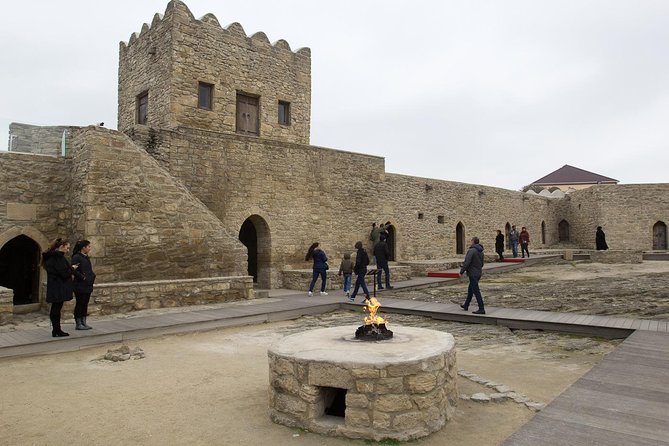
Your first major stop is Ateshgah, also called the Fire Temple. The site was built in the 17th and 18th centuries around natural gas flames. The earliest building cited for the complex dates to 1713, while the central temple was built in 1810 with funds from the merchant Kanchanagara.
That timeline is worth keeping in mind. This is not a single ancient monument preserved exactly as it was. It is a religious complex shaped and rebuilt over time, with different communities connected to it. Zoroastrians, Hindus, and Sikhs all used or sanctified the site at different points.
The setting also reflects the old movement of people across the region. Ateshgah was linked with Indian merchants and worshippers traveling along the Silk Road. You can look for Indian motifs in parts of the structure, an unusual detail that makes the place feel less like an isolated local shrine and more like a meeting point between religious and commercial worlds.
Plan on about 90 minutes here. That is enough time to walk through the complex, examine the rooms, and listen to the guide explain how the temple changed across the centuries. The site works best when you take your time with the interpretation rather than treating it as a quick courtyard photo stop.
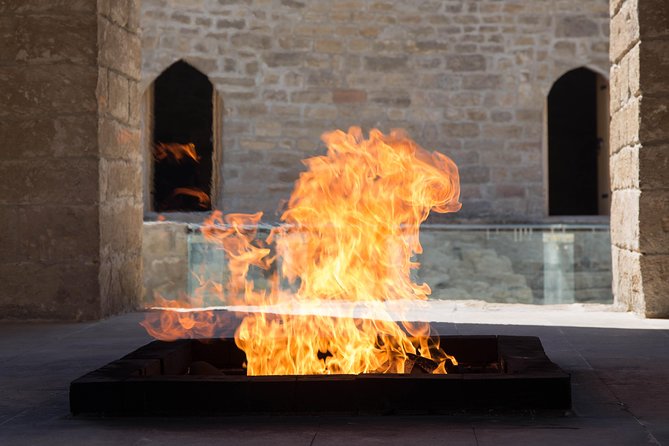
The tour information describes the temple as a place of eternal flames caused by natural gas. Keep your expectations realistic, though. The importance of Ateshgah is not only the visible flame. It is the way the flame shaped worship, architecture, and travel. Guides such as Emin have explained the name as a combination of words meaning fire and place, which gives you a simple starting point for understanding the site.
I would ask your guide to separate the three threads clearly:
- The fire worship associated with Zoroastrian practice
- The later connections with Hindu and Sikh communities
- The role of merchants and travelers moving through the area
That makes the visit easier to follow. Without explanation, the rooms and symbols can seem like a collection of attractive stone details. With a good guide, the building becomes a record of religious exchange.
The temple has been restored, and the displays help explain its use and changing periods. This is a positive for first-time visitors because you get more context than you would from bare ruins. The trade-off is that the restored appearance can feel more museum-like than untouched. If your interest is archaeology, you may want to ask which features are original and which were reconstructed.
There are souvenir shops and art stalls near the temple entrance. You do not need to buy anything to enjoy the site, but the area gives you a chance to browse local paintings and small keepsakes. Keep your visit focused if you have a tight schedule, since Yanar Dag and the city photo stop still lie ahead.
Yanar Dag, the hillside that keeps burning
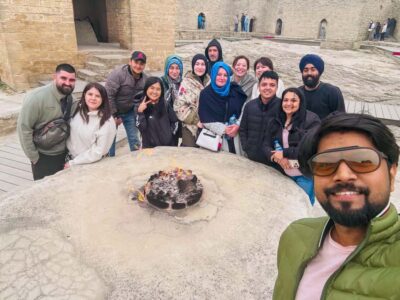
After Ateshgah, you continue to Yanar Dag, often translated as Fire Mountain. Here, natural gas escapes from the ground and burns along the side of a hill. The flames are the reason many people find this stop more immediately memorable than the temple.
The visit takes about an hour. You can watch the fire, feel the heat, and look across the surrounding area. Some descriptions of the stop call it a place that has burned for roughly four thousand years, continuing through rain and snow. The exact visual impact depends on conditions, but the essential point is clear: this is a natural gas fire, not a staged torch or a reconstruction.
You might find Yanar Dag smaller than expected. One account specifically notes that the burning area felt small, while still considering it worth seeing. That is useful advice. Do not picture an entire mountain covered in flames. Think of a fiery seam along a low hillside, unusual because it burns outdoors and comes directly from the earth.
The fire is especially striking in cool or windy weather. The heat is easy to notice when you stand near it, and the setting gives you a strong physical sense of the gas below the ground. If you visit in warmer weather, the flames may feel less dramatic, but the natural oddity remains.
There is also a newer museum area connected with the fire sites, with pictures and displays about Ateshgah, Yanar Dag, and related subjects. The provided tour information does not promise an indoor museum visit as part of the schedule, so ask your guide whether it fits your timing and ticket arrangement.
I like the order of the two main stops. Ateshgah gives you the human story first, then Yanar Dag provides the natural spectacle. Reversing the order could also work, but beginning with the temple helps you understand why a burning hillside mattered so much to people living in this region.
Wear shoes that are comfortable for walking around the temple and hillside area. The tour is not described as strenuous, and most travelers can participate, but you will spend time standing and walking outdoors. A light layer is sensible because the fire itself is warm while the open peninsula can feel windy.
The Heydar Aliyev Center photo stop
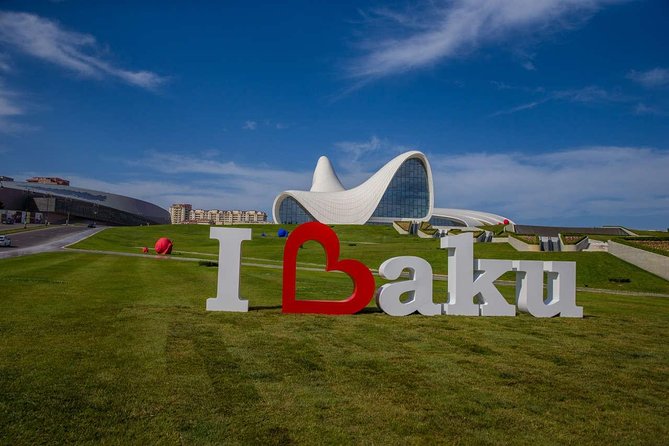
On the return to Baku, the driver stops at the Heydar Aliyev Center for about 20 minutes. This is an outside photo stop, not a full interior museum visit.
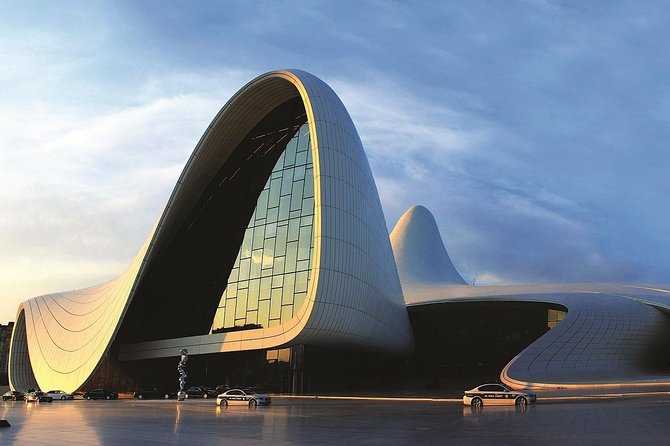
The building was designed by Iraqi-British architect Zaha Hadid and is famous for its flowing white curves. Its shape avoids sharp angles and is often described as an idea of continuous movement between past and present. The center contains conference, gallery, and museum spaces, but this tour does not give you time to explore them in detail.
Use the stop for photographs from the front and for the nearby I LOVE BAKU sign. Twenty minutes is enough for a quick look and a few pictures. It is not enough for a serious architecture visit, so I would return separately if the building itself is high on your list.
This stop adds a modern counterpoint to the religious sites. Ateshgah reflects centuries of faith and trade. Yanar Dag shows the ground still producing fire. The Heydar Aliyev Center brings you back to contemporary Baku and its bold architectural style.
The photo stop may feel tacked on if you care only about the fire sites. Still, it is a convenient use of the return route and gives you a different side of the city without adding another major commitment to your day.
A few more things to do in Baku worth a look
- BEST Gobustan, Volcanoes & Absheron Fire Tour (Group or Private)
★ 5.0 · 1,254 reviews - Guba and Khinaliq trip with HOMEMADE lunch (Group or Private)
★ 5.0 · 169 reviews - Gobustan and Absheron peninsula ( Group or Private ) TOUR ( All inclusive )
★ 5.0 · 130 reviews - Gabala & Shamakhi Nature Tour (Group or Private)
★ 4.5 · 121 reviews
What the private format changes
The advertised price is $70 per person. That is not the cheapest way to see the Absheron Peninsula if you are traveling alone and willing to arrange transport, but it can be fair value for a small party because the price buys private service rather than a seat on a fixed coach itinerary.
You get a professional English-speaking guide, a professional driver, an air-conditioned car, and hotel pickup and drop-off in Baku. For a group of several people, the cost of sharing a private vehicle becomes easier to justify. Group discounts are also offered, so ask about the final price for your party before booking.
The biggest benefit is control. You can choose a start time that fits your plans, spend more time at Ateshgah if the religious history interests you, or keep moving if your group is more excited by Yanar Dag. A fixed group tour may run on a set schedule, while this option is designed around your group.
The second benefit is conversation. A guide can explain details while you travel instead of waiting until you reach a site. Tahir is praised for discussing Baku during the drive, while Emin is repeatedly associated with clear explanations at Ateshgah. Ali, Murad, and Nur are also named in connection with friendly and informative service.
Do not assume every booking will have the same guide. The listed experiences involve several members of the team, including Fuad, Turkan, Arif, and Cavid in guide or driver roles. If a particular guide is important to you, request that person, but understand that the available assignment may vary.
The private setting is also useful for families. Children must be accompanied by an adult, and most people can take part. You can ask questions without holding up a large group, and the car offers a comfortable break between outdoor stops.
Tickets, timing, and practical planning
The stated visit times are about 90 minutes at Ateshgah, one hour at Yanar Dag, and 20 minutes at the Heydar Aliyev Center. Add driving time from and back to Baku, and the total comes to roughly three to four hours.
The ticket information needs clarification. The highlight section says entrance fees are included, but the detailed exclusions say entry tickets to museums are not included, and the itinerary also marks admission as not included at each stop. Treat tickets as an extra cost unless the provider confirms otherwise in writing.
Food and drinks are not included. This is not a problem for a half-day outing, but eat before pickup if you prefer a proper breakfast or lunch. Personal expenses, such as souvenirs, are also your responsibility.
Hotel pickup and drop-off are included at Baku locations. The tour is near public transportation, but you do not need to make your own way to the attractions if your pickup is confirmed. At booking, you receive confirmation, and cancellation is free up to 24 hours before the start time. Cancellations or changes made later are not accepted for a refund.
The best practical question to ask before departure is how much time you will have at each site and what the ticket arrangement is. You can also tell the guide if you want more history at Ateshgah, more time for photographs, or a quicker return to Baku.
Who should book this private fire tour?
I would recommend it to first-time visitors who want to see two unusual Absheron sites without spending a full day away from Baku. It suits people who prefer personal explanations over wandering through displays alone, and it works well for families, couples, and small groups.
History fans will get the most from Ateshgah, especially if they are interested in Zoroastrianism, Hindu and Sikh connections, Silk Road movement, or religious buildings shaped by trade. Photographers will appreciate the flames, the temple courtyard, and the sweeping curves of the Heydar Aliyev Center.
I would be more cautious if you expect a large mountain covered in fire. Yanar Dag is a relatively small burning area, and the outdoor photo stop at the cultural center is brief. Also, solo visitors should compare the $70 price with shared alternatives, since the private format has greater value when several people split the vehicle and guide cost.
Should you book the Ateshgah and Yanar Dag tour?
Book it if you want a comfortable, flexible half-day with a guide who can connect Azerbaijan’s natural gas fires to its religious and cultural past. The combination of Ateshgah and Yanar Dag is strong, and the Heydar Aliyev Center adds a useful modern finish.
Before paying, confirm the exact entrance-fee policy, the pickup point, and the guide assignment. If you accept that Yanar Dag is a compact burning hillside rather than a giant mountain of flame, this is a practical way to see one of the most unusual areas outside Baku.
FAQ
How long does the private Ateshgah and Yanar Dag tour take?
The tour lasts approximately three to four hours. The scheduled time is about 90 minutes at Ateshgah, one hour at Yanar Dag, and 20 minutes at the Heydar Aliyev Center.
Is hotel pickup and drop-off included?
Yes. Pickup and drop-off at Baku hotels are included in the tour.
Are the entrance tickets included in the $70 price?
The supplied tour details are inconsistent. One section says entrance fees are included, while the detailed inclusions and itinerary say admission tickets are not included. Confirm the current ticket policy before booking.
Is this a private tour?
Yes. Only your group participates, and the tour uses a private, climate-controlled vehicle with a professional driver and an English-speaking guide.
Can I choose the tour start time?
The private format allows you to start at a time that works for your schedule. Confirm your preferred pickup time when booking.
What is the cancellation policy?
You can cancel up to 24 hours before the local start time for a full refund. Cancellations or changes made less than 24 hours before the start time are not accepted.
Just added in Baku
- From Baku: Guba-Khinalig Day Trip★ 5.0 · 12 reviews
- From Baku: Gobustan 4×4 Private Tour – Private★ 5.0 · 3 reviews
- From Baku: Gobustan Rock Art and Mud Volcanoes Tour★ 5.0 · 6 reviews
- From Baku: Gobustan Day Tour★ 5.0 · 7 reviews
- From Baku: Gobustan Guided Day Trip with Transfers★ 3.9 · 11 reviews
- From Baku: Shamakhi and Gabala scenic tour★ 5.0 · 4 reviews
- From Baku: Gabala Day Trip★ 4.0 · 11 reviews
- From Baku: Gabala Cable Car, Nohur Lake & Juma Mosque Trip★ 4.5 · 6 reviews
Fire Temple and Burning Mountain Tours, compared.
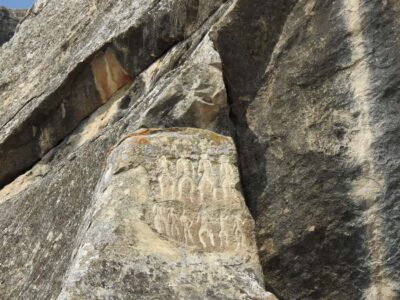
Gobustan, Volcanoes, Fire Temple and Yanardag Day Trip
Read our review →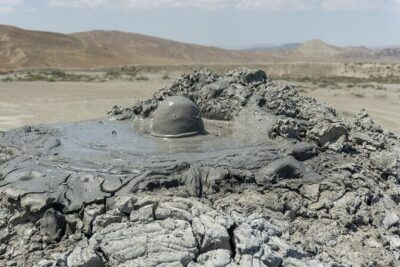
Gobustan & Mud, Fire Temple, Burning Mountain (Group & Private)
Read our review →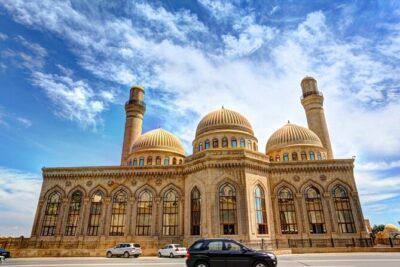
Mud Volcan-Fire Temple and Mountain Tour/Entrance inc
Read our review →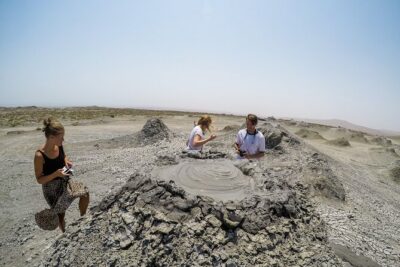
Gobustan, Mud volcanoes, Fire temple, Fire mountain PRIVATE TOUR
Read our review →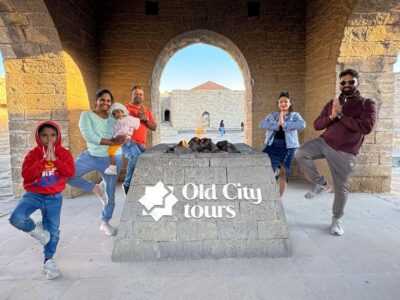
Gobustan & Mud, Fire Temple, Burning Mountain, H.A. Center
Read our review →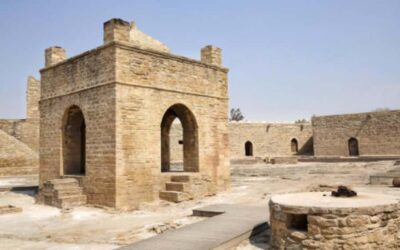
Gobustan, Mud Volcanoes, Fire Temple, & Yanar Dag Tour
Read our review →
Atashgah Fire Temple & Burning Mountain Half-Day Tour
Read our review →Browse the lists this tour appears in